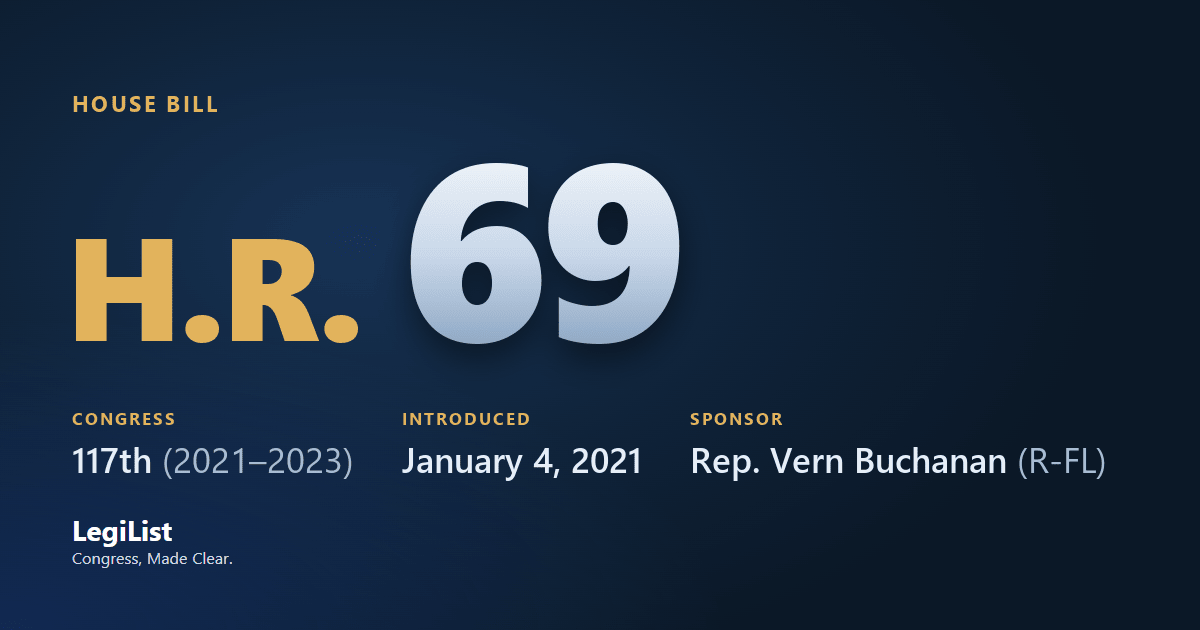
Sunshine Protection Act of 2021
Latest action · Dec 15, 2022 Motion to Discharge Committee filed by Mr. Mooney. Petition No: 117-18.
Progress
Where this bill reached, and when. A stage with no date was not reached; one that failed a vote and later carried shows the date it carried.
- IntroducedJan 4, 2021
- Passed HouseNot reached
- Passed SenateNot reached
- To the PresidentNot reached
- Became lawNot reached
Summary
Sunshine Protection Act of 2021
This bill makes daylight savings time the new, permanent standard time.
States with areas exempt from daylight savings time may choose the standard time for those areas.
Cosponsors 48
Members who signed on, in the order they did. Signatures ran from Feb 25, 2021 to Nov 14, 2022.
| Seat | Cosponsor | Signed on | |
|---|---|---|---|
| D-WA | Adam Smith | Feb 25, 2021 | |
| D-FL | Alcee L. Hastings | Feb 25, 2021 | |
| D-PA | Brendan F. Boyle | Feb 25, 2021 | |
| R-CA | Jay Obernolte | Feb 25, 2021 | |
| R-FL | Michael Waltz | Feb 25, 2021 | |
| R-TN | Tim Burchett | Feb 25, 2021 | |
| R-SC | Tom Rice | Feb 25, 2021 | |
| R-CA | Tom McClintock | Feb 26, 2021 | |
| R-SD | Dusty Johnson | Mar 8, 2021 | |
| R-FL | John H. Rutherford | Mar 8, 2021 | |
| R-FL | W. Gregory Steube | Mar 8, 2021 | |
| R-NE | Don Bacon | Mar 16, 2021 | |
| D-MD | Jamie Raskin | Mar 18, 2021 | |
| R-AL | Jerry L. Carl | Mar 18, 2021 | |
| R-FL | Maria Elvira Salazar | Mar 19, 2021 |
Committees 1
Where it was sent and what each committee and subcommittee did with it, in order.
| Chamber | Committee | What it did |
|---|---|---|
| House | Energy and Commerce Committee | Referred Jan 4, 2021 |
| Commerce, Manufacturing, and Trade Subcommittee | Referred Feb 3, 2021 |
Actions 4
Everything that happened, newest first.
- Dec 15, 2022Motion to Discharge Committee filed by Mr. Mooney. Petition No: 117-18.
- Feb 2, 2021Referred to the Subcommittee on Consumer Protection and Commerce.
- Jan 4, 2021Introduced in House
- Jan 4, 2021Referred to the House Committee on Energy and Commerce.
In the Congressional Record 2
Days the Record’s own index lists this bill, newest first, with the pages and the members it names. Pages starting H are the House, S the Senate, E Extensions of Remarks.
| Where | In the Record | Members | Date |
|---|---|---|---|
| House | Discharge petition H9906 | — | Dec 16, 2022 |
| House | Debate and remarks H9884 | Alexander X. Mooney R-WV | Dec 15, 2022 |
Research
What has been written about this bill: committee reports, cost estimates, the sponsor’s authority statement, printed hearings and the Congressional Research Service’s work.
Constitutional authority
The sponsor’s statement, as printed in the Congressional Record, vol. 167, no. 2, January 4, 2021, page H52.
CRS reports 1
Congressional Research Service work that CRS links to this bill or the law it became, newest first.
Cite it 1
Products on other subjects that cite it, usually among other measures.
| Product | Title | Kind | Published |
|---|---|---|---|
| R45208 | Daylight Saving Time (DST) | Report | Jul 24, 2026 |
Related bills 3
Companion bills and other measures the record links to this one.
| Bill | Title | Relationship | Latest action |
|---|---|---|---|
| S 623 | Sunshine Protection Act of 2021 | Identical bill | Mar 16, 2022 |
| HR 1279 | Sunshine Protection Act of 2023 | Reintroduced Bill | Nov 14, 2024 |
| HR 1556 | Sunshine Protection Act of 2019 | Reintroduction of | Mar 7, 2019 |
Titles 2
Every title it has carried, official and short, at each stage.
- Official Title as Introduced
- To make daylight savings time permanent, and for other purposes.
- Short Title(s) as Introduced
- Sunshine Protection Act of 2021
Subjects
Assigned by the Library of Congress. Policy area: Science, Technology, Communications.
Text 1
Each version as it was printed, newest first.
- Jan 4, 2021Introduced in House
Support LegiList
This page is free, carries no paywall, and is built and maintained by one person. If the record here is useful to you, a few dollars keeps it going.
Everything here is as published by Congress: the summary is the Congressional Research Service's, the action wording is the clerks', and the subjects are the Library of Congress's. How far it got is read from the actions themselves, taking the most recent one of each kind, so a bill that failed a vote and later passed is shown as having passed. Records come from this bill on Congress.gov and govinfo.gov; cost estimates are the Congressional Budget Office's, and the hearings are the printed hearings GovInfo publishes, which can appear months after the hearing.