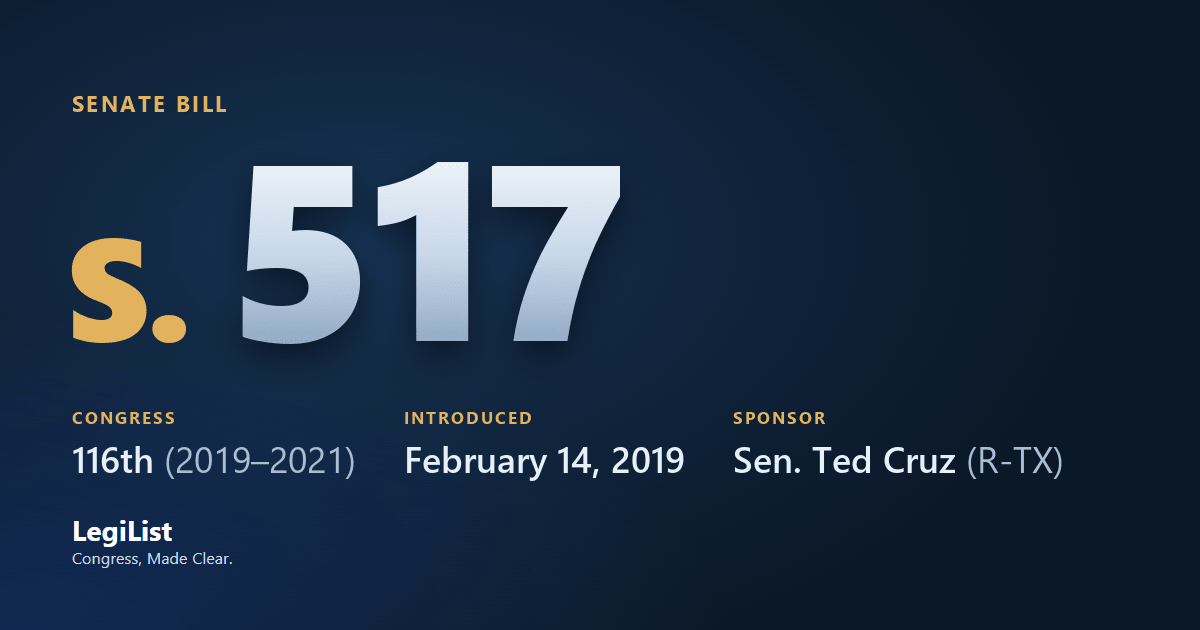
Military Reserve Jobs Act of 2019
Latest action · Feb 14, 2019 Read twice and referred to the Committee on Homeland Security and Governmental Affairs.
Progress
Where this bill reached, and when. A stage with no date was not reached; one that failed a vote and later carried shows the date it carried.
- IntroducedFeb 14, 2019
- Passed SenateNot reached
- Passed HouseNot reached
- To the PresidentNot reached
- Became lawNot reached
Summary
Military Reserve Jobs Act of 2019
This bill establishes tiered hiring preferences for members of the reserve components of the Armed Forces.
The bill grants (1) a 2-point preference to current members of a reserve component who have completed at least 6 years of service in a reserve component and were credited with at least 50 retirement points in each year of service, and (2) a 3-point preference to current members of a reserve component who have completed a least 10 years of service and were credited with at least 50 retirement points in each year of service.
The bill also requires the Government Accountability Office to report to Congress on federal employment opportunities for members of a reserve component and the impact of this bill on the hiring of reservists and veterans by the federal government.
Cosponsors 2
Members who signed on, in the order they did. Signatures ran from Feb 14, 2019 to Apr 4, 2019, with 1 there on the day it was introduced.
| Seat | Cosponsor | Signed on | |
|---|---|---|---|
| D-MT | Jon Tester | Original | Feb 14, 2019 |
| R-SD | Mike Rounds | Apr 4, 2019 |
Actions 2
Everything that happened, newest first.
- Feb 14, 2019Introduced in Senate
- Feb 14, 2019Read twice and referred to the Committee on Homeland Security and Governmental Affairs.
Subjects
Assigned by the Library of Congress. Policy area: Government Operations and Politics.
Text 1
Each version as it was printed, newest first.
- Feb 14, 2019Introduced in Senate
Everything here is as published by Congress: the summary is the Congressional Research Service's, the action wording is the clerks', and the subjects are the Library of Congress's. How far it got is read from the actions themselves, taking the most recent one of each kind, so a bill that failed a vote and later passed is shown as having passed. Records come from this bill on Congress.gov and govinfo.gov.