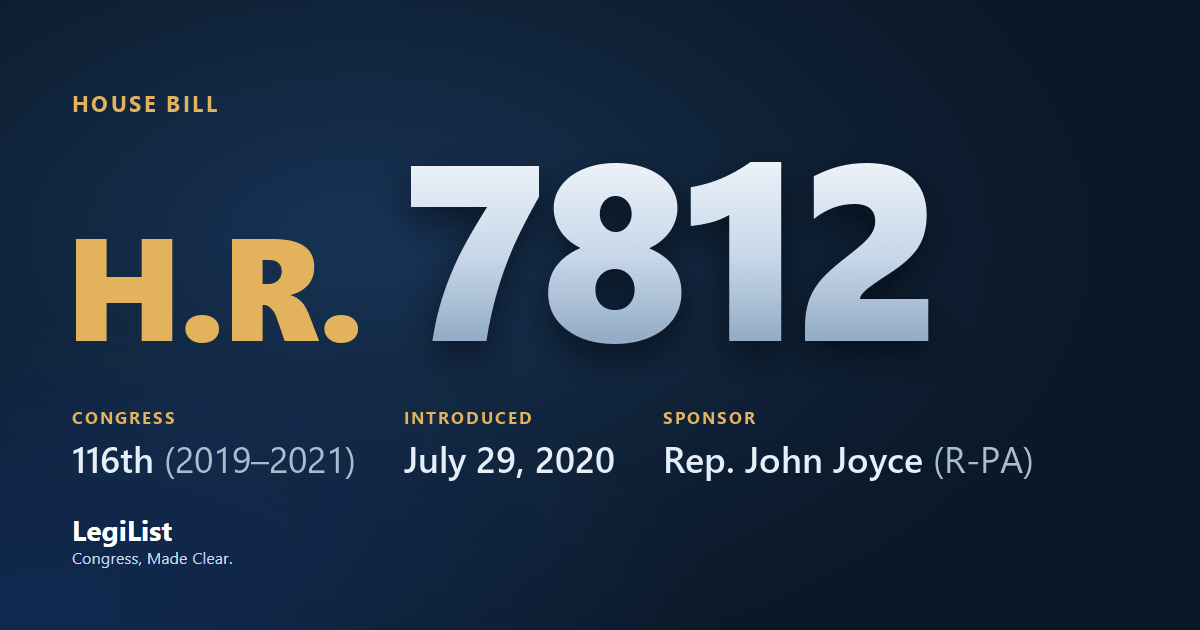
ORE Act
Latest action · Jul 29, 2020 Referred to the Subcommittee on Select Revenue Measures.
Progress
Where this bill reached, and when. A stage with no date was not reached; one that failed a vote and later carried shows the date it carried.
- IntroducedJul 29, 2020
- Passed HouseNot reached
- Passed SenateNot reached
- To the PresidentNot reached
- Became lawNot reached
Summary
Onshoring Rare Earths Act of 2020 or the ORE Act
This bill allows permanent expensing of property used in the extraction of certain critical minerals and metals within the United States and of nonresidential real property used in extracting such minerals and metals. Expensing is the treatment of expenditures as operating costs deductible in full in the current taxable year.
The bill allows a new tax deduction for 200% of the cost of purchasing or acquiring such critical minerals and metals extracted from deposits in the United States.
The bill requires the Department of Defense (DOD) to establish a pilot project grant program for the development of critical minerals and metals in the United States. A grant awarded under such program may not exceed $10 million. In awarding grants, DOD must give priority to projects determined to be economically viable over the long term and must allot 30% of grants funds to the secondary recovery of critical minerals and metals.
Cosponsors
Members who signed on, in the order they did.
Committees 2
Where it was sent and what each committee and subcommittee did with it, in order.
| Chamber | Committee | What it did |
|---|---|---|
| House | Ways and Means Committee | Referred Jul 29, 2020 |
| Tax Subcommittee | Referred Jul 29, 2020 | |
| House | Armed Services Committee | Referred Jul 29, 2020 |
Actions 3
Everything that happened, newest first.
- Jul 29, 2020Introduced in House
- Jul 29, 2020Referred to the Committee on Ways and Means, and in addition to the Committee on Armed Services, for a period to be subsequently determined by the Speaker, in each case for consideration of such provisions as fall within the jurisdiction of the committee concerned.
- Jul 29, 2020Referred to the Subcommittee on Select Revenue Measures.
In the Congressional Record 2
Days the Record’s own index lists this bill, newest first, with the pages and the members it names. Pages starting H are the House, S the Senate, E Extensions of Remarks.
| Where | In the Record | Members | Date |
|---|---|---|---|
| House | Debate and remarks H5109 | John Joyce R-PA | Oct 1, 2020 |
| House | Debate and remarks H5059 | John Joyce R-PA | Sep 30, 2020 |
Research
What has been written about this bill: committee reports, cost estimates, the sponsor’s authority statement, printed hearings and the Congressional Research Service’s work.
Constitutional authority
The sponsor’s statement, as printed in the Congressional Record, vol. 166, no. 134, July 29, 2020, page H3980.
CRS reports 1
Congressional Research Service work that CRS links to this bill or the law it became, newest first.
Cite it 1
Products on other subjects that cite it, usually among other measures.
| Product | Title | Kind | Published |
|---|---|---|---|
| R46618 | An Overview of Rare Earth Elements and Related Issues for Congress Archived | Report | Nov 24, 2020 |
Related bills 3
Companion bills and other measures the record links to this one.
| Bill | Title | Relationship | Latest action |
|---|---|---|---|
| S 3694 | ORE Act | Identical bill | May 12, 2020 |
| S 4537 | RECOVERY Act | Related bill | Sep 8, 2020 |
| HR 8143 | To amend the Internal Revenue Code of 1986 to permanently allow a tax deduction at the time an investment is made in property used for the mining, reclaiming, or recycling of critical minerals and metals from the United States, and for other purposes. | Related bill | Sep 10, 2020 |
Titles 3
Every title it has carried, official and short, at each stage.
- Official Title as Introduced
- To amend the Internal Revenue Code of 1986 to permanently allow a tax deduction at the time an investment is made in property used to extract critical minerals and metals from the United States, to modify the prohibition on the acquisition of certain sensitive materials from non-allied foreign nations, and for other purposes.
- Short Title(s) as Introduced
- ORE Act
- Onshoring Rare Earths Act of 2020
Subjects
Assigned by the Library of Congress. Policy area: Taxation.
Text 1
Each version as it was printed, newest first.
- Jul 29, 2020Introduced in House
Everything here is as published by Congress: the summary is the Congressional Research Service's, the action wording is the clerks', and the subjects are the Library of Congress's. How far it got is read from the actions themselves, taking the most recent one of each kind, so a bill that failed a vote and later passed is shown as having passed. Records come from this bill on Congress.gov and govinfo.gov; cost estimates are the Congressional Budget Office's, and the hearings are the printed hearings GovInfo publishes, which can appear months after the hearing.