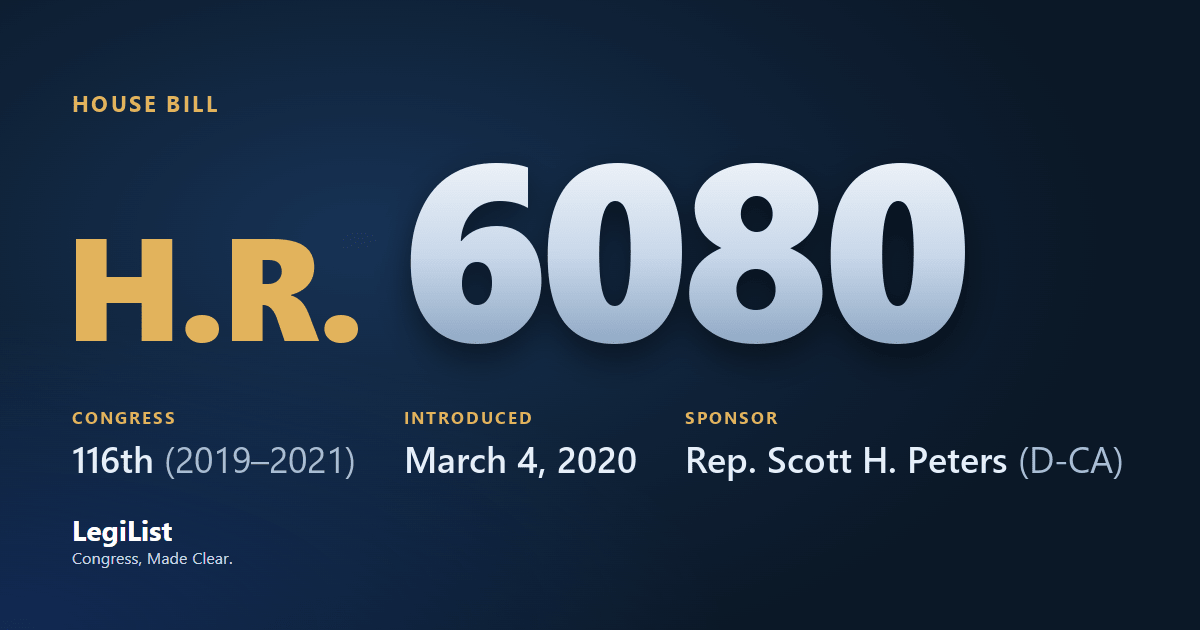
Preventing Drug Shortages Act
Latest action · Mar 4, 2020 Referred to the House Committee on Energy and Commerce.
Progress
Where this bill reached, and when. A stage with no date was not reached; one that failed a vote and later carried shows the date it carried.
- IntroducedMar 4, 2020
- Passed HouseNot reached
- Passed SenateNot reached
- To the PresidentNot reached
- Became lawNot reached
Summary
Preventing Drug Shortages Act
This bill expands existing manufacturer reporting requirements related to shortages of life-saving drugs and contains other related provisions.
The bill requires a manufacturer of an active pharmaceutical ingredient of a life-saving drug to notify the Food and Drug Administration (FDA) of an interruption that is likely to lead to a meaningful disruption in the ingredient's supply, whereas under current law this requirement generally applies only to the manufacturer of a life-saving drug that faces a supply disruption.
The notification must contain specified information, including any alternative sources for the ingredient.
The bill also requires a manufacturer of a life-saving drug or an active pharmaceutical ingredient for such a drug to include in its annual product registration the specific facilities where the drug or ingredient is manufactured. The FDA may also require the manufacturer to conduct periodic risk assessments to address vulnerabilities in its supply chain.
The Government Accountability Office shall report to Congress on the FDA's intra-agency coordination in assessing drug shortage risks.
Cosponsors 8
Members who signed on, in the order they did. Signatures ran from Mar 4, 2020 to Mar 9, 2020; 7 are original cosponsors, there from the day it was introduced.
| Seat | Cosponsor | Signed on | |
|---|---|---|---|
| D-CA | Anna G. Eshoo | Original | Mar 4, 2020 |
| R-KY | Brett Guthrie | Original | Mar 4, 2020 |
| D-NY | Eliot L. Engel | Original | Mar 4, 2020 |
| R-FL | Gus M. Bilirakis | Original | Mar 4, 2020 |
| D-OR | Kurt Schrader | Original | Mar 4, 2020 |
| R-TX | Michael T. McCaul | Original | Mar 4, 2020 |
| R-NC | Richard Hudson | Original | Mar 4, 2020 |
| R-PA | John Joyce | Mar 9, 2020 |
Committees 1
Where it was sent and what each committee and subcommittee did with it, in order.
| Chamber | Committee | What it did |
|---|---|---|
| House | Energy and Commerce Committee | Referred Mar 4, 2020 |
Actions 2
Everything that happened, newest first.
- Mar 4, 2020Introduced in House
- Mar 4, 2020Referred to the House Committee on Energy and Commerce.
Research
What has been written about this bill: committee reports, cost estimates, the sponsor’s authority statement, printed hearings and the Congressional Research Service’s work.
Constitutional authority
The sponsor’s statement, as printed in the Congressional Record, vol. 166, no. 43, March 4, 2020, page H1505.
Related bills 1
Companion bills and other measures the record links to this one.
| Bill | Title | Relationship | Latest action |
|---|---|---|---|
| S 2723 | Mitigating Emergency Drug Shortages Act | Related bill | Oct 29, 2019 |
Titles 2
Every title it has carried, official and short, at each stage.
- Official Title as Introduced
- To amend the Federal Food, Drug, and Cosmetic Act to reduce drug shortages, and for other purposes.
- Short Title(s) as Introduced
- Preventing Drug Shortages Act
Subjects
Assigned by the Library of Congress. Policy area: Health.
Text 1
Each version as it was printed, newest first.
- Mar 4, 2020Introduced in House
Support LegiList
This page is free, carries no paywall, and is built and maintained by one person. If the record here is useful to you, a few dollars keeps it going.
Everything here is as published by Congress: the summary is the Congressional Research Service's, the action wording is the clerks', and the subjects are the Library of Congress's. How far it got is read from the actions themselves, taking the most recent one of each kind, so a bill that failed a vote and later passed is shown as having passed. Records come from this bill on Congress.gov and govinfo.gov; cost estimates are the Congressional Budget Office's, and the hearings are the printed hearings GovInfo publishes, which can appear months after the hearing.