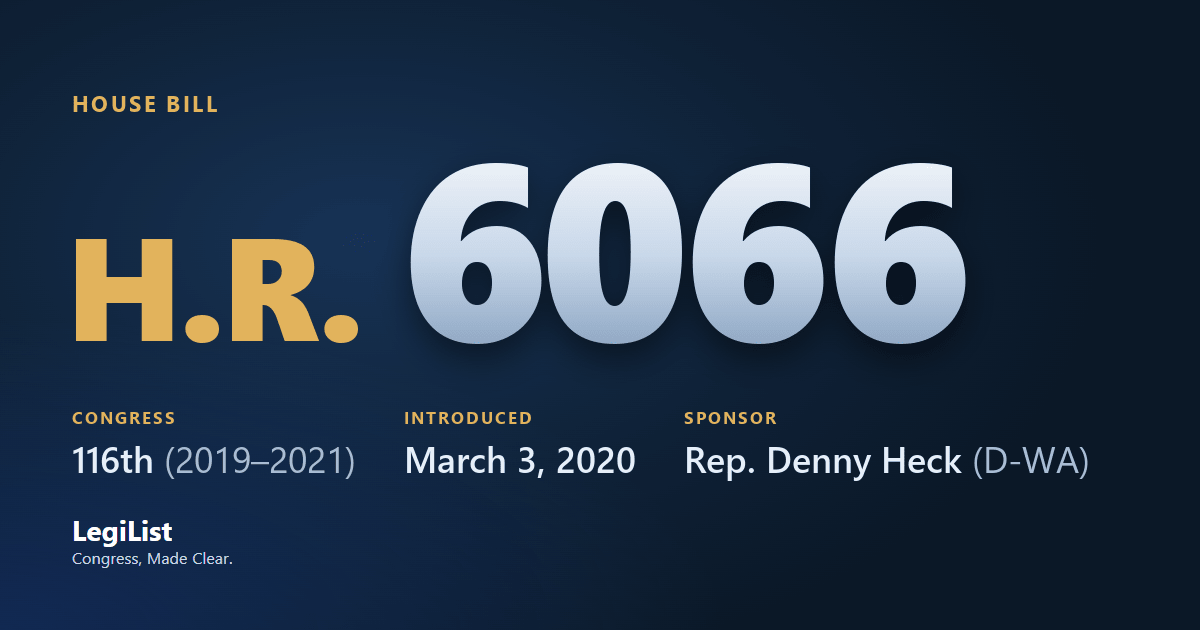
Passenger Train Safety Act
Latest action · Mar 4, 2020 Referred to the Subcommittee on Railroads, Pipelines, and Hazardous Materials.
Progress
Where this bill reached, and when. A stage with no date was not reached; one that failed a vote and later carried shows the date it carried.
- IntroducedMar 3, 2020
- Passed HouseNot reached
- Passed SenateNot reached
- To the PresidentNot reached
- Became lawNot reached
Summary
Passenger Train Safety Act
This bill addresses passenger safety issues aboard trains.
Specifically, the bill
- directs the Federal Railroad Administration to research safety issues relating to speed signs, seat securement mechanisms, and methods for mitigating derailment injuries;
- requires the National Railroad Passenger Corporation (Amtrak) to address various safety issues, including developing policies for the safe use of child safety seats and implementing enhanced crew training;
- directs the Department of Transportation to require each railroad carrier that provides regularly scheduled intercity rail passenger or commuter rail passenger transportation to install inward- and outward-facing audio recording devices in or on all controlling locomotive cabs and cab car operating compartments on such passenger trains;
- prohibits entities providing regularly scheduled intercity or commuter rail passenger transportation from beginning service on certain routes unless a positive train control system is fully implemented and operational on such routes; and
- requires railroad carriers to periodically review and update their speed limit action plans.
Cosponsors 4
Members who signed on, in the order they did. Signatures ran from Mar 3, 2020 to Mar 4, 2020; 3 are original cosponsors, there from the day it was introduced.
| Seat | Cosponsor | Signed on | |
|---|---|---|---|
| D-WA | Derek Kilmer | Original | Mar 3, 2020 |
| R-NV | Mark E. Amodei | Original | Mar 3, 2020 |
| D-WA | Rick Larsen | Original | Mar 3, 2020 |
| R-MI | Tim Walberg | Mar 4, 2020 |
Committees 1
Where it was sent and what each committee and subcommittee did with it, in order.
| Chamber | Committee | What it did |
|---|---|---|
| House | Transportation and Infrastructure Committee | Referred Mar 3, 2020 |
| Railroads, Pipelines, and Hazardous Materials Subcommittee | Referred Mar 4, 2020 |
Actions 3
Everything that happened, newest first.
- Mar 4, 2020Referred to the Subcommittee on Railroads, Pipelines, and Hazardous Materials.
- Mar 3, 2020Introduced in House
- Mar 3, 2020Referred to the House Committee on Transportation and Infrastructure.
Research
What has been written about this bill: committee reports, cost estimates, the sponsor’s authority statement, printed hearings and the Congressional Research Service’s work.
Constitutional authority
The sponsor’s statement, as printed in the Congressional Record, vol. 166, no. 42, March 3, 2020, page H1470.
Titles 2
Every title it has carried, official and short, at each stage.
- Official Title as Introduced
- To require the Federal Railroad Administration and Amtrak to implement and carry out certain National Transportation Safety Board recommendations, and for other purposes.
- Short Title(s) as Introduced
- Passenger Train Safety Act
Subjects
Assigned by the Library of Congress. Policy area: Transportation and Public Works.
Text 1
Each version as it was printed, newest first.
- Mar 3, 2020Introduced in House
Everything here is as published by Congress: the summary is the Congressional Research Service's, the action wording is the clerks', and the subjects are the Library of Congress's. How far it got is read from the actions themselves, taking the most recent one of each kind, so a bill that failed a vote and later passed is shown as having passed. Records come from this bill on Congress.gov and govinfo.gov; cost estimates are the Congressional Budget Office's, and the hearings are the printed hearings GovInfo publishes, which can appear months after the hearing.