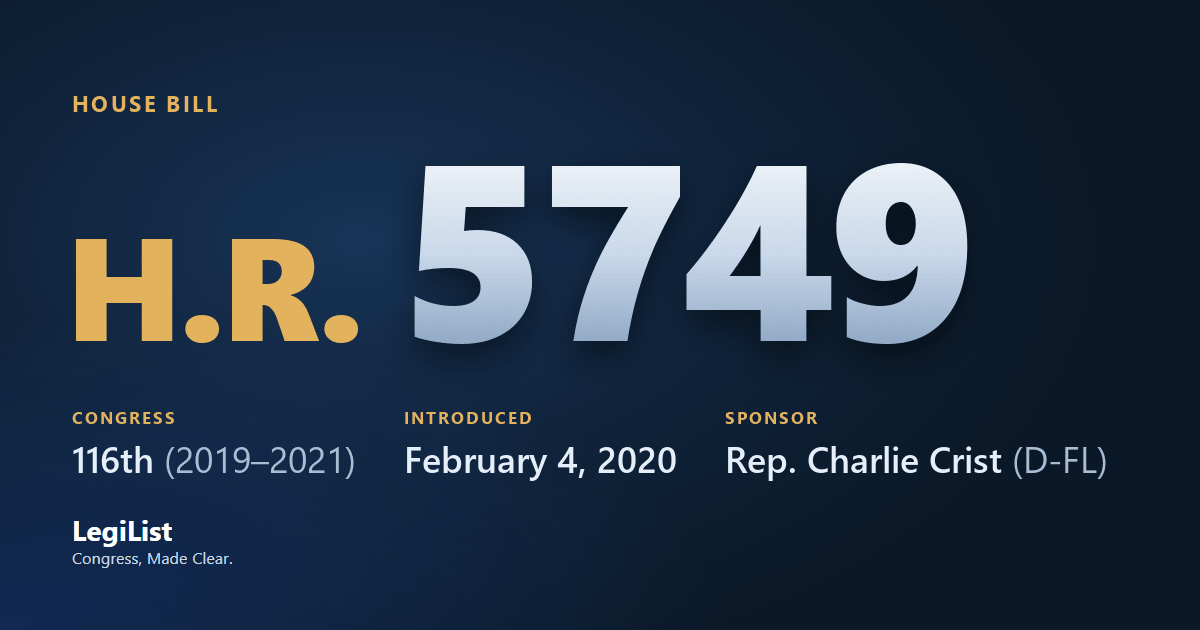
Affordable Insulin for All Act
Latest action · Feb 4, 2020 Referred to the Subcommittee on Health.
Progress
Where this bill reached, and when. A stage with no date was not reached; one that failed a vote and later carried shows the date it carried.
- IntroducedFeb 4, 2020
- Passed HouseNot reached
- Passed SenateNot reached
- To the PresidentNot reached
- Became lawNot reached
Summary
Affordable Insulin for All Act
This bill addresses insulin affordability.
For example, the bill requires the Department of Health and Human Services (HHS) to enter into agreements with insulin manufacturers to enable individuals with diagnosed diabetes to access Medicaid prices for insulin drugs.
Additionally, Medicare and private insurance plans must cap cost-sharing at $10 per month for insulin drugs, and HHS must revise regulations to exclude payments made for insulin drugs from the denominator of the medical loss ratio.
The bill also (1) eliminates a safe harbor for certain rebates, discounts, or price concessions for insulin drugs paid by a drug manufacturer to a pharmacy benefit manager for purposes of federal health care fraud and abuse laws; and (2) prohibits certain drug pricing activities related to supplemental rebates and spread pricing in Medicaid.
The Government Accountability Office must report on the feasibility and affordability of direct manufacturing by the federal government.
Cosponsors
Members who signed on, in the order they did.
Committees 2
Where it was sent and what each committee and subcommittee did with it, in order.
| Chamber | Committee | What it did |
|---|---|---|
| House | Energy and Commerce Committee | Referred Feb 4, 2020 |
| House | Ways and Means Committee | Referred Feb 4, 2020 |
| Health Subcommittee | Referred Feb 4, 2020 |
Actions 3
Everything that happened, newest first.
- Feb 4, 2020Introduced in House
- Feb 4, 2020Referred to the Committee on Energy and Commerce, and in addition to the Committee on Ways and Means, for a period to be subsequently determined by the Speaker, in each case for consideration of such provisions as fall within the jurisdiction of the committee concerned.
- Feb 4, 2020Referred to the Subcommittee on Health.
In the Congressional Record 1
Days the Record’s own index lists this bill, newest first, with the pages and the members it names. Pages starting H are the House, S the Senate, E Extensions of Remarks.
| Where | In the Record | Members | Date |
|---|---|---|---|
| House | Lists H765H.R. 5749–5755 | — | Feb 4, 2020 |
Research
What has been written about this bill: committee reports, cost estimates, the sponsor’s authority statement, printed hearings and the Congressional Research Service’s work.
Constitutional authority
The sponsor’s statement, as printed in the Congressional Record, vol. 166, no. 23, February 4, 2020, page H765.
CRS reports 1
Congressional Research Service work that CRS links to this bill or the law it became, newest first.
Cite it 1
Products on other subjects that cite it, usually among other measures.
| Product | Title | Kind | Published |
|---|---|---|---|
| R46741 | Drug Pricing and Intellectual Property: The Legislative Landscape for the 117th Congress | Report | Mar 31, 2021 |
Titles 2
Every title it has carried, official and short, at each stage.
- Official Title as Introduced
- To amend title XI of the Social Security Act to establish the American Insulin Program to provide for lower prices for insulin drugs, to maintain effort throughout the insulin supply chain, and for other purposes.
- Short Title(s) as Introduced
- Affordable Insulin for All Act
Subjects
Assigned by the Library of Congress. Policy area: Health.
- Civil actions and liability
- Congressional oversight
- Digestive and metabolic diseases
- Employee benefits and pensions
- Government information and archives
- Health
- Health care costs and insurance
- Health care coverage and access
- Health information and medical records
- Health programs administration and funding
- Inflation and prices
- Medicaid
- Prescription drugs
- Public contracts and procurement
- Retail and wholesale trades
Text 1
Each version as it was printed, newest first.
- Feb 4, 2020Introduced in House
Support LegiList
This page is free, carries no paywall, and is built and maintained by one person. If the record here is useful to you, a few dollars keeps it going.
Everything here is as published by Congress: the summary is the Congressional Research Service's, the action wording is the clerks', and the subjects are the Library of Congress's. How far it got is read from the actions themselves, taking the most recent one of each kind, so a bill that failed a vote and later passed is shown as having passed. Records come from this bill on Congress.gov and govinfo.gov; cost estimates are the Congressional Budget Office's, and the hearings are the printed hearings GovInfo publishes, which can appear months after the hearing.