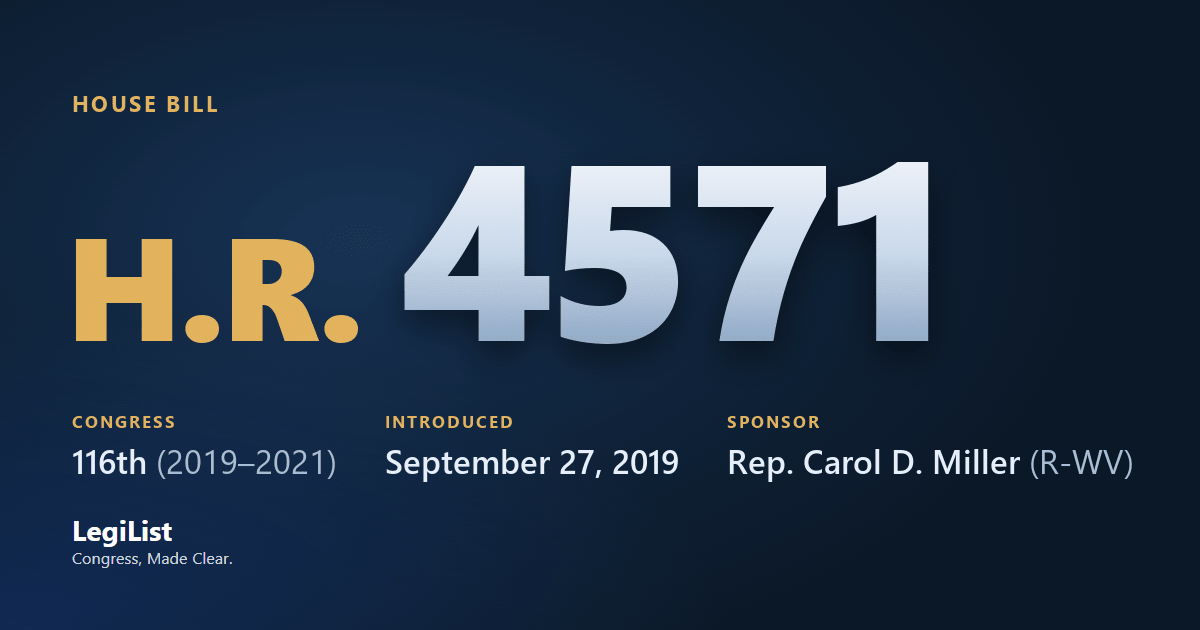
Accelerating Individuals into the Workforce Act
Latest action · Sep 27, 2019 Referred to the Subcommittee on Worker and Family Support.
Progress
Where this bill reached, and when. A stage with no date was not reached; one that failed a vote and later carried shows the date it carried.
- IntroducedSep 27, 2019
- Passed HouseNot reached
- Passed SenateNot reached
- To the PresidentNot reached
- Became lawNot reached
Summary
Accelerating Individuals into the Workforce Act
This bill requires the Administration for Children and Families (ACF) to make grants to states for demonstration projects that provide wage subsidies to enable low-income individuals to enter and retain employment.
States may use grant funds to subsidize an individual's wages for up to 12 months. The subsidy may be up to 50% of an individual's wages. Individuals are eligible for subsidized wages if they (1) are recipients of Temporary Assistance for Needy Families or similar state assistance or a noncustodial parent of a child receiving such assistance, and (2) are unemployed when the subsidy begins or have an income below 200% of the poverty line.
States must ensure that participants in subsidized job programs do not displace current workers.
The ACF must reserve funding to carry out this bill from amounts in the Contingency Fund for State Welfare Programs.Cosponsors 4
Members who signed on, in the order they did. Signatures ran from Sep 27, 2019 to Nov 18, 2019; 2 are original cosponsors, there from the day it was introduced.
| Seat | Cosponsor | Signed on | |
|---|---|---|---|
| R-IN | Jackie Walorski | Original | Sep 27, 2019 |
| R-KS | Ron Estes | Original | Sep 27, 2019 |
| R-PA | Mike Kelly | Oct 1, 2019 | |
| R-WV | Alexander X. Mooney | Nov 18, 2019 |
Committees 1
Where it was sent and what each committee and subcommittee did with it, in order.
| Chamber | Committee | What it did |
|---|---|---|
| House | Ways and Means Committee | Referred Sep 27, 2019 |
| Work and Welfare Subcommittee | Referred Sep 27, 2019 |
Actions 3
Everything that happened, newest first.
- Sep 27, 2019Introduced in House
- Sep 27, 2019Referred to the House Committee on Ways and Means.
- Sep 27, 2019Referred to the Subcommittee on Worker and Family Support.
Research
What has been written about this bill: committee reports, cost estimates, the sponsor’s authority statement, printed hearings and the Congressional Research Service’s work.
Constitutional authority
The sponsor’s statement, as printed in the Congressional Record, vol. 165, no. 157, September 27, 2019, page H8082.
CRS reports 1
Congressional Research Service work that CRS links to this bill or the law it became, newest first.
Cite it 1
Products on other subjects that cite it, usually among other measures.
| Product | Title | Kind | Published |
|---|---|---|---|
| R46365 | Child Support Enforcement-Led Employment Services for Noncustodial Parents: In Brief | Report | May 18, 2020 |
Related bills 1
Companion bills and other measures the record links to this one.
| Bill | Title | Relationship | Latest action |
|---|---|---|---|
| HR 4532 | Accelerating Individuals into the Workforce Act | Reintroduced Bill | Jul 19, 2021 |
Titles 2
Every title it has carried, official and short, at each stage.
- Official Title as Introduced
- To provide for the conduct of demonstration projects to test the effectiveness of subsidized employment for TANF recipients.
- Short Title(s) as Introduced
- Accelerating Individuals into the Workforce Act
Subjects
Assigned by the Library of Congress. Policy area: Social Welfare.
Text 1
Each version as it was printed, newest first.
- Sep 27, 2019Introduced in House
Support LegiList
This page is free, carries no paywall, and is built and maintained by one person. If the record here is useful to you, a few dollars keeps it going.
Everything here is as published by Congress: the summary is the Congressional Research Service's, the action wording is the clerks', and the subjects are the Library of Congress's. How far it got is read from the actions themselves, taking the most recent one of each kind, so a bill that failed a vote and later passed is shown as having passed. Records come from this bill on Congress.gov and govinfo.gov; cost estimates are the Congressional Budget Office's, and the hearings are the printed hearings GovInfo publishes, which can appear months after the hearing.