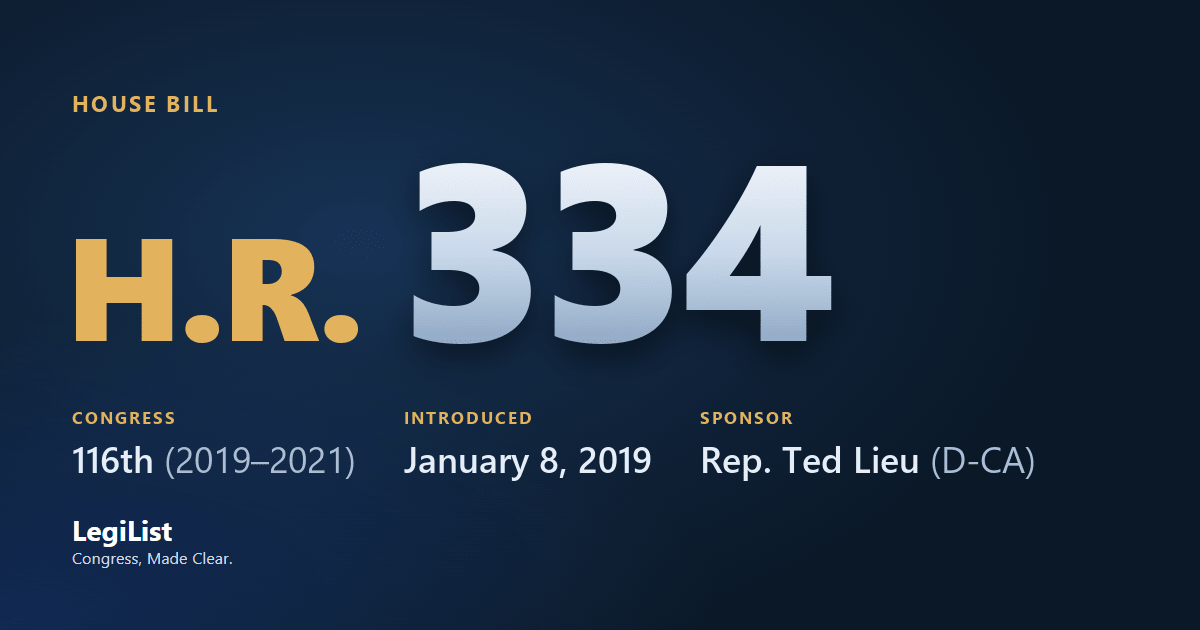
New Collar Jobs Act of 2019
Latest action · Feb 12, 2019 Referred to the Subcommittee on Research and Technology.
Progress
Where this bill reached, and when. A stage with no date was not reached; one that failed a vote and later carried shows the date it carried.
- IntroducedJan 8, 2019
- Passed HouseNot reached
- Passed SenateNot reached
- To the PresidentNot reached
- Became lawNot reached
Summary
New Collar Jobs Act of 2019
This bill provides incentives for cybersecurity education.
It establishes an employee cybersecurity education tax credit for an employer who incurs costs for an employee who earns a certain cybersecurity certificate or degree. If a business claims such a credit, then executive agencies must award a score increase to each competitive proposal submitted by the business for a federal contract valued at more than $5 million.
In addition, the Department of Education may cancel eligible student loans for borrowers who have (1) made 36 consecutive monthly payments, and (2) held a cybersecurity job in an economically distressed area during at least 12 months of payments.
Finally, the bill makes cybersecurity course instructors eligible for awards under the CyberCorps Scholarship-for-Service program.
Cosponsors 3
Members who signed on, in the order they did. All signed on Jan 8, 2019.
| Seat | Cosponsor | Signed on | |
|---|---|---|---|
| D-NH | Ann M. Kuster | Original | Jan 8, 2019 |
| D-PA | Matt Cartwright | Original | Jan 8, 2019 |
| D-CA | Norma J. Torres | Original | Jan 8, 2019 |
Committees 4
Where it was sent and what each committee and subcommittee did with it, in order.
| Chamber | Committee | What it did |
|---|---|---|
| House | Science, Space, and Technology Committee | Referred Jan 8, 2019 |
| Research and Technology Subcommittee | Referred Feb 12, 2019 | |
| House | Ways and Means Committee | Referred Jan 8, 2019 |
| House | Education and Workforce Committee | Referred Jan 8, 2019 |
| House | Oversight and Government Reform Committee | Referred Jan 8, 2019 |
Actions 3
Everything that happened, newest first.
- Feb 12, 2019Referred to the Subcommittee on Research and Technology.
- Jan 8, 2019Introduced in House
- Jan 8, 2019Referred to the Committee on Science, Space, and Technology, and in addition to the Committees on Ways and Means, Education and Labor, and Oversight and Reform, for a period to be subsequently determined by the Speaker, in each case for consideration of such provisions as fall within the jurisdiction of the committee concerned.
Research
What has been written about this bill: committee reports, cost estimates, the sponsor’s authority statement, printed hearings and the Congressional Research Service’s work.
Constitutional authority
The sponsor’s statement, as printed in the Congressional Record, vol. 165, no. 3, January 8, 2019, page H287.
Related bills 2
Companion bills and other measures the record links to this one.
| Bill | Title | Relationship | Latest action |
|---|---|---|---|
| HR 3393 | New Collar Jobs Act of 2017 | Reintroduction of | May 22, 2018 |
| HR 4389 | New Collar Jobs Act of 2021 | Reintroduced Bill | Jul 9, 2021 |
Titles 2
Every title it has carried, official and short, at each stage.
- Official Title as Introduced
- To increase cybersecurity education and job growth, and for other purposes.
- Short Title(s) as Introduced
- New Collar Jobs Act of 2019
Subjects
Assigned by the Library of Congress. Policy area: Education.
- Administrative law and regulatory procedures
- Computer security and identity theft
- Computers and information technology
- Economic development
- Education
- Education programs funding
- Government lending and loan guarantees
- Higher education
- Income tax credits
- Public contracts and procurement
- Student aid and college costs
- Teaching, teachers, curricula
Text 1
Each version as it was printed, newest first.
- Jan 8, 2019Introduced in House
Support LegiList
This page is free, carries no paywall, and is built and maintained by one person. If the record here is useful to you, a few dollars keeps it going.
Everything here is as published by Congress: the summary is the Congressional Research Service's, the action wording is the clerks', and the subjects are the Library of Congress's. How far it got is read from the actions themselves, taking the most recent one of each kind, so a bill that failed a vote and later passed is shown as having passed. Records come from this bill on Congress.gov and govinfo.gov; cost estimates are the Congressional Budget Office's, and the hearings are the printed hearings GovInfo publishes, which can appear months after the hearing.