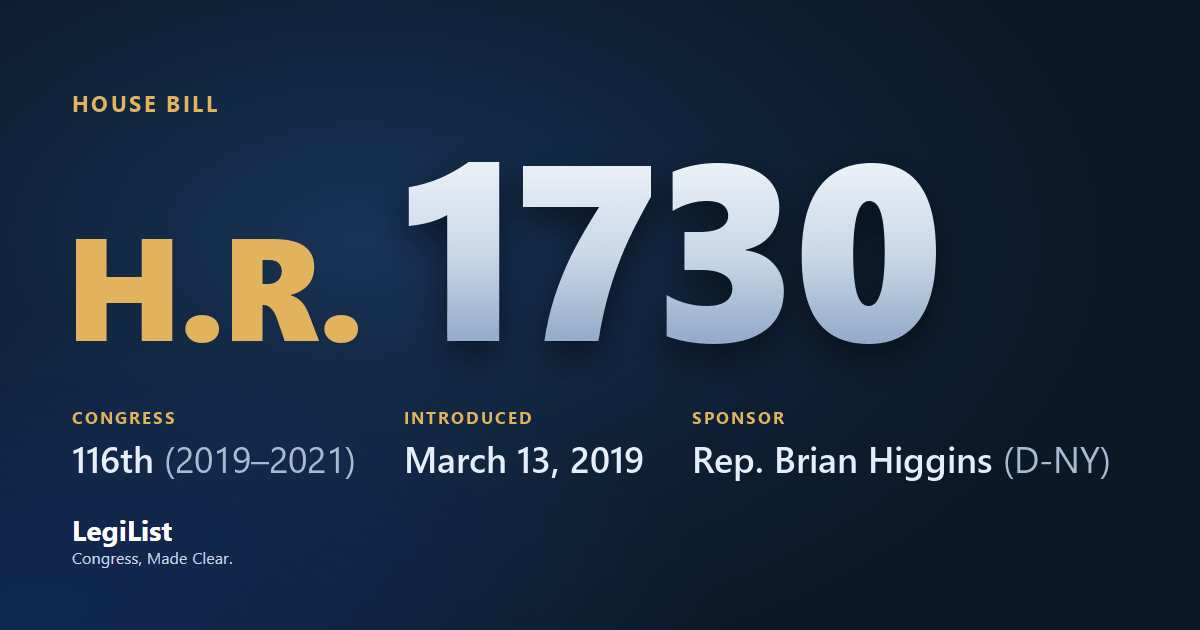
Cancer Drug Parity Act of 2019
Latest action · Mar 14, 2019 Referred to the Subcommittee on Health.
Progress
Where this bill reached, and when. A stage with no date was not reached; one that failed a vote and later carried shows the date it carried.
- IntroducedMar 13, 2019
- Passed HouseNot reached
- Passed SenateNot reached
- To the PresidentNot reached
- Became lawNot reached
Summary
Cancer Drug Parity Act of 2019
This bill requires health plans that cover anticancer medications administered by a health care provider to provide no less favorable cost sharing for patient-administered anticancer medications. This requirement applies to medications that are (1) approved by the Food and Drug Administration; (2) medically necessary for the cancer treatment; and (3) clinically appropriate in terms of type, frequency, extent site, and duration.
To comply with this requirement, health plans may not, with respect to anticancer medications (1) change or replace benefits to increase out-of-pocket costs, (2) reclassify benefits to increase costs, or (3) apply more restrictive limitations to orally administered medications than to intravenously administered or injected medications.Cosponsors 170
Members who signed on, in the order they did. Signatures ran from Mar 13, 2019 to Dec 18, 2020; 17 are original cosponsors, there from the day it was introduced.
| Seat | Cosponsor | Signed on | |
|---|---|---|---|
| D-FL | Alcee L. Hastings | Original | Mar 13, 2019 |
| D-CA | Ami Bera | Original | Mar 13, 2019 |
| R-KY | Brett Guthrie | Original | Mar 13, 2019 |
| R-PA | Brian K. Fitzpatrick | Original | Mar 13, 2019 |
| D-FL | Debbie Wasserman Schultz | Original | Mar 13, 2019 |
| D-WA | Derek Kilmer | Original | Mar 13, 2019 |
| D-CA | Doris O. Matsui | Original | Mar 13, 2019 |
| D-DC | Eleanor Holmes Norton | Original | Mar 13, 2019 |
| R-FL | Gus M. Bilirakis | Original | Mar 13, 2019 |
| D-NY | Jerrold Nadler | Original | Mar 13, 2019 |
| R-TX | Michael T. McCaul | Original | Mar 13, 2019 |
| R-TX | Pete Olson | Original | Mar 13, 2019 |
| D-OR | Peter A. DeFazio | Original | Mar 13, 2019 |
| R-NY | Peter T. King | Original | Mar 13, 2019 |
| D-CA | Ro Khanna | Original | Mar 13, 2019 |
Committees 1
Where it was sent and what each committee and subcommittee did with it, in order.
| Chamber | Committee | What it did |
|---|---|---|
| House | Energy and Commerce Committee | Referred Mar 13, 2019 |
| Health Subcommittee | Referred Mar 14, 2019 |
Actions 3
Everything that happened, newest first.
- Mar 14, 2019Referred to the Subcommittee on Health.
- Mar 13, 2019Introduced in House
- Mar 13, 2019Referred to the House Committee on Energy and Commerce.
Research
What has been written about this bill: committee reports, cost estimates, the sponsor’s authority statement, printed hearings and the Congressional Research Service’s work.
Constitutional authority
The sponsor’s statement, as printed in the Congressional Record, vol. 165, no. 45, March 13, 2019, page H2718.
Related bills 1
Companion bills and other measures the record links to this one.
| Bill | Title | Relationship | Latest action |
|---|---|---|---|
| S 741 | Cancer Drug Parity Act of 2019 | Identical bill | Mar 12, 2019 |
Titles 2
Every title it has carried, official and short, at each stage.
- Official Title as Introduced
- To amend the Public Health Service Act to require group and individual health insurance coverage and group health plans to provide for cost sharing for oral anticancer drugs on terms no less favorable than the cost sharing provided for anticancer medications administered by a health care provider.
- Short Title(s) as Introduced
- Cancer Drug Parity Act of 2019
Subjects
Assigned by the Library of Congress. Policy area: Health.
Text 1
Each version as it was printed, newest first.
- Mar 13, 2019Introduced in House
Support LegiList
This page is free, carries no paywall, and is built and maintained by one person. If the record here is useful to you, a few dollars keeps it going.
Everything here is as published by Congress: the summary is the Congressional Research Service's, the action wording is the clerks', and the subjects are the Library of Congress's. How far it got is read from the actions themselves, taking the most recent one of each kind, so a bill that failed a vote and later passed is shown as having passed. Records come from this bill on Congress.gov and govinfo.gov; cost estimates are the Congressional Budget Office's, and the hearings are the printed hearings GovInfo publishes, which can appear months after the hearing.