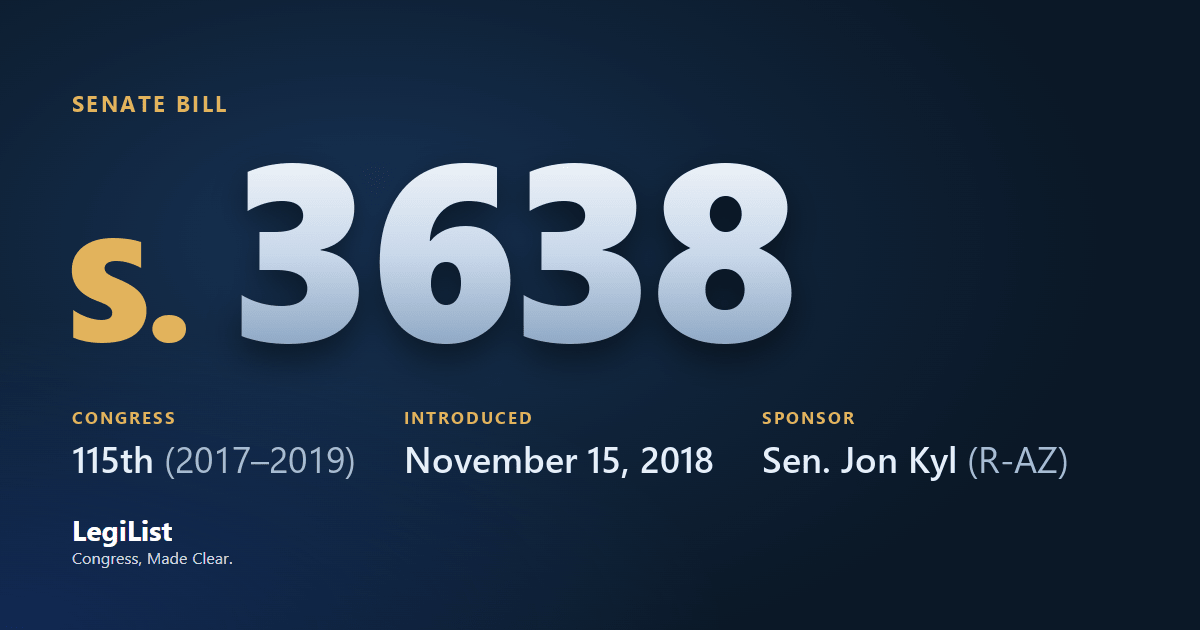
Estate Tax Rate Reduction Act
Latest action · Nov 15, 2018 Read twice and referred to the Committee on Finance.
Progress
Where this bill reached, and when. A stage with no date was not reached; one that failed a vote and later carried shows the date it carried.
- IntroducedNov 15, 2018
- Passed SenateNot reached
- Passed HouseNot reached
- To the PresidentNot reached
- Became lawNot reached
Summary
Estate Tax Rate Reduction Act
This bill amends the Internal Revenue Code to reduce the rate for the tax on estates, gifts, and generation-skipping transfers to 20%. (Under current law, the highest rate is 40%.)
The bill also exempts the budgetary effects of the tax reduction from the Pay-As-You-Go (PAYGO) rules established by the Statutory Pay-As-You-Go Act of 2010 and the FY2018 congressional budget resolution.
Cosponsors 4
Members who signed on, in the order they did. Signatures ran from Nov 29, 2018 to Dec 19, 2018.
| Seat | Cosponsor | Signed on | |
|---|---|---|---|
| R-AR | John Boozman | Nov 29, 2018 | |
| R-AR | Tom Cotton | Nov 29, 2018 | |
| R-MO | Roy Blunt | Dec 10, 2018 | |
| R-IA | Joni Ernst | Dec 19, 2018 |
Committees 1
Where it was sent and what each committee and subcommittee did with it, in order.
| Chamber | Committee | What it did |
|---|---|---|
| Senate | Finance Committee | Referred Nov 15, 2018 |
Actions 2
Everything that happened, newest first.
- Nov 15, 2018Introduced in Senate
- Nov 15, 2018Read twice and referred to the Committee on Finance.
Titles 2
Every title it has carried, official and short, at each stage.
- Official Title as Introduced
- A bill to amend the Internal Revenue Code of 1986 to reduce the rate of tax on estates, gifts, and generation-skipping transfers.
- Short Titles as Introduced
- Estate Tax Rate Reduction Act
Subjects
Assigned by the Library of Congress. Policy area: Taxation.
Text 1
Each version as it was printed, newest first.
- Nov 15, 2018Introduced in Senate
Everything here is as published by Congress: the summary is the Congressional Research Service's, the action wording is the clerks', and the subjects are the Library of Congress's. How far it got is read from the actions themselves, taking the most recent one of each kind, so a bill that failed a vote and later passed is shown as having passed. Records come from this bill on Congress.gov and govinfo.gov; cost estimates are the Congressional Budget Office's, and the hearings are the printed hearings GovInfo publishes, which can appear months after the hearing.