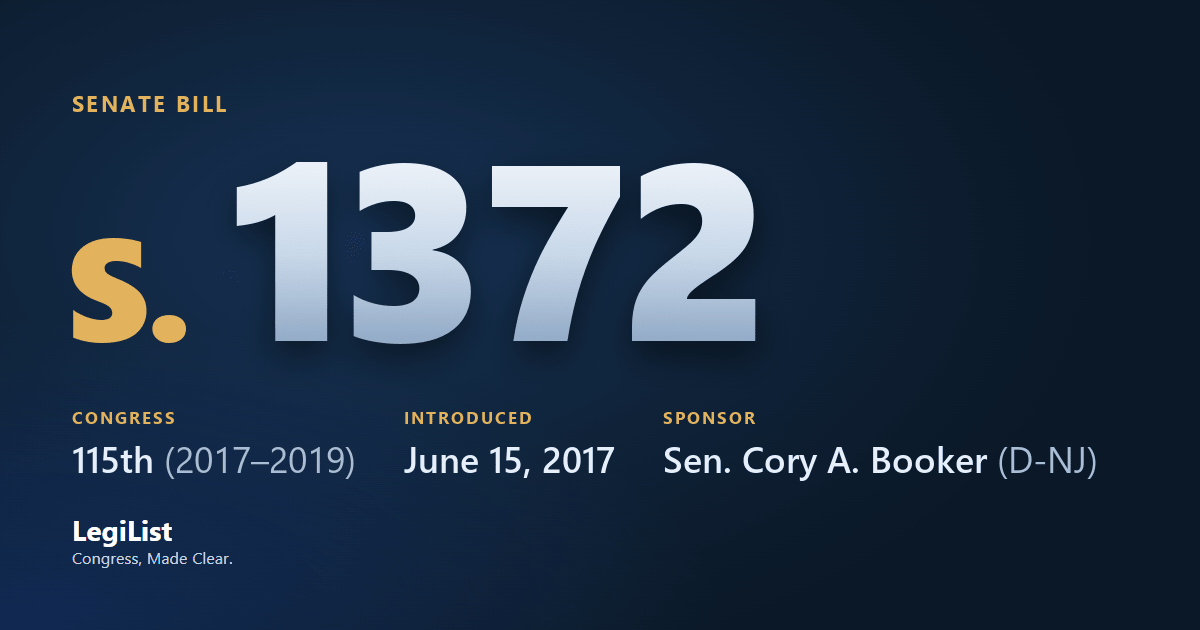
Limiting LEAD in Children's Foods Act
Latest action · Jun 15, 2017 Read twice and referred to the Committee on Health, Education, Labor, and Pensions.
Progress
Where this bill reached, and when. A stage with no date was not reached; one that failed a vote and later carried shows the date it carried.
- IntroducedJun 15, 2017
- Passed SenateNot reached
- Passed HouseNot reached
- To the PresidentNot reached
- Became lawNot reached
Summary
Limiting Lead Exposure & Advancing Detection in Children's Foods Act or the Limiting LEAD in Children's Foods Act
This bill requires the Food and Drug Administration (FDA) to establish: (1) a maximum level of lead permitted in fruit juices that is not greater than the maximum level of lead permitted in bottled water, and (2) a recommended maximum daily level of lead exposure from food. These levels must be based on the cumulative health risks of lead exposure.
The FDA must report on lead in foods frequently consumed by infants and children, including levels of lead in different foods, sources of lead in food, and the FDA's actions and plans regarding reducing lead in foods and detecting lead. The FDA must make recommendations on reducing the amount of lead in foods.Cosponsors
Members who signed on, in the order they did.
Actions 2
Everything that happened, newest first.
- Jun 15, 2017Introduced in Senate
- Jun 15, 2017Read twice and referred to the Committee on Health, Education, Labor, and Pensions.
Subjects
Assigned by the Library of Congress. Policy area: Health.
Text 1
Each version as it was printed, newest first.
- Jun 15, 2017Introduced in Senate
Everything here is as published by Congress: the summary is the Congressional Research Service's, the action wording is the clerks', and the subjects are the Library of Congress's. How far it got is read from the actions themselves, taking the most recent one of each kind, so a bill that failed a vote and later passed is shown as having passed. Records come from this bill on Congress.gov and govinfo.gov.