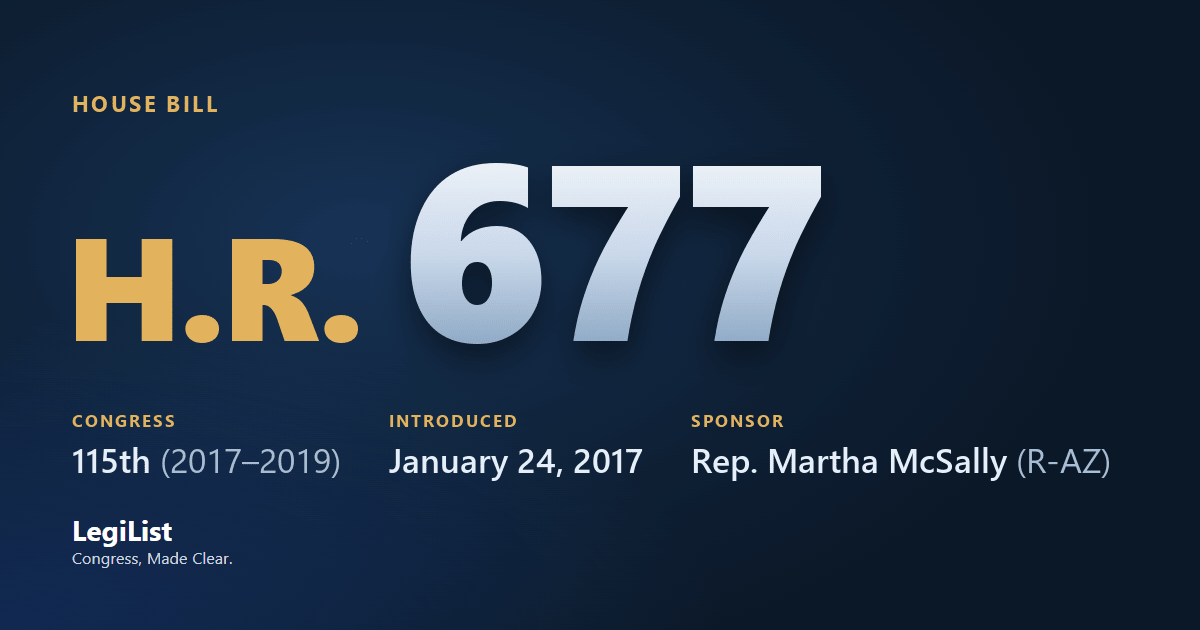
CBRN Intelligence and Information Sharing Act of 2017
Latest action · Feb 1, 2017 Received in the Senate and Read twice and referred to the Committee on Homeland Security and Governmental Affairs.
Progress
Where this bill reached, and when. A stage with no date was not reached; one that failed a vote and later carried shows the date it carried.
- IntroducedJan 24, 2017
- Passed HouseJan 31, 2017
- Passed SenateNot reached
- To the PresidentNot reached
- Became lawNot reached
Summary
(This measure has not been amended since it was introduced. The summary has been expanded because action occurred on the measure.)
CBRN Intelligence and Information Sharing Act of 2017
(Sec. 2) This bill amends the Homeland Security Act of 2002 to direct the Office of Intelligence and Analysis of the Department of Homeland Security (DHS) to: (1) support homeland security-focused intelligence analysis of terrorist actors, their claims, and their plans to conduct attacks involving chemical, biological, radiological, and nuclear materials against the United States and of global infectious disease, public health, food, agricultural, and veterinary issues; (2) support homeland security-focused risk analysis and risk assessments of such homeland security hazards by providing quantitative and nonquantitative threat information; (3) leverage homeland security intelligence capabilities and structures to enhance prevention, protection, response, and recovery efforts with respect to a chemical, biological, radiological, or nuclear attack; and (4) share information and provide tailored analytical support on these threats to state, local, and tribal authorities as well as relevant national biosecurity and biodefense stakeholders and other federal agencies.
The Office shall coordinate with other DHS components, other intelligence community agencies, and federal, state, local, and tribal authorities and enable such entities to provide recommendations on optimal information sharing mechanisms and on how they can provide information to DHS.
DHS shall report annually for five years on: (1) intelligence and information sharing activities to counter the threat from attacks using chemical, biological, radiological, and nuclear materials, and (2) DHS's activities in accordance with relevant intelligence strategies.
(Sec. 3) DHS shall ensure that homeland security information analyzed by it concerning terrorist threats is provided to state, local, tribal, and private entities and the public.
Cosponsors 3
Members who signed on, in the order they did. All signed on Jan 24, 2017.
| Seat | Cosponsor | Signed on | |
|---|---|---|---|
| R-NY | Daniel M. Donovan, Jr. | Original | Jan 24, 2017 |
| R-TX | Michael T. McCaul | Original | Jan 24, 2017 |
| R-NY | Peter T. King | Original | Jan 24, 2017 |
Committees 2
Where it was sent and what each committee and subcommittee did with it, in order.
| Chamber | Committee | What it did |
|---|---|---|
| House | Homeland Security Committee | Referred Jan 24, 2017 |
| Senate | Homeland Security and Governmental Affairs Committee | Referred Feb 1, 2017 |
Actions 8
Everything that happened, newest first.
- Feb 1, 2017Received in the Senate and Read twice and referred to the Committee on Homeland Security and Governmental Affairs.
- Jan 31, 2017Ms. McSally moved to suspend the rules and pass the bill.
- Jan 31, 2017Considered under suspension of the rules. (consideration: CR H785-786)
- Jan 31, 2017DEBATE - The House proceeded with forty minutes of debate on H.R. 677.
- Jan 31, 2017Passed/agreed to in House: On motion to suspend the rules and pass the bill Agreed to by voice vote. (text: CR H785)
In the Congressional Record 1
Days the Record’s own index lists this bill, newest first, with the pages and the members it names. Pages starting H are the House, S the Senate, E Extensions of Remarks.
| Where | In the Record | Members | Date |
|---|---|---|---|
| House | Debate and remarks H785, H786Text printed H785 | Martha McSally R-AZ, William R. Keating D-MA | Jan 31, 2017 |
Research
What has been written about this bill: committee reports, cost estimates, the sponsor’s authority statement, printed hearings and the Congressional Research Service’s work.
Constitutional authority
The sponsor’s statement, as printed in the Congressional Record, vol. 163, no. 13, January 24, 2017, page H689.
Printed hearings 1
Hearings whose printed record names this bill, newest first: hearings on it, and wider hearings where it came up.
| Number | Hearing | Committee | Held |
|---|---|---|---|
| Serial No. 115-29 | H.R. 1721; H.R. 1900; H.R. 3122; H.R. 3656; H.R. 3657; AND, A DRAFT BILL ENTITLED "VETERANS FAIR DEBT NOTICE ACT OF 2017"57 pages | Veterans' Affairs Committee | Sep 13, 2017 |
Titles 3
Every title it has carried, official and short, at each stage.
- Official Title as Introduced
- To amend the Homeland Security Act of 2002 to establish chemical, biological, radiological, and nuclear intelligence and information sharing functions of the Office of Intelligence and Analysis of the Department of Homeland Security and to require dissemination of information analyzed by the Department to entities with responsibilities relating to homeland security, and for other purposes.
- Short Titles as Introduced
- CBRN Intelligence and Information Sharing Act of 2017
- Short Titles as Passed House
- CBRN Intelligence and Information Sharing Act of 2017
Subjects
Assigned by the Library of Congress. Policy area: Emergency Management.
- Arms control and nonproliferation
- Chemical and biological weapons
- Congressional oversight
- Emergency Management
- Food supply, safety, and labeling
- Government information and archives
- Hazardous wastes and toxic substances
- Homeland security
- Infectious and parasitic diseases
- Intelligence activities, surveillance, classified information
- Nuclear weapons
- Radioactive wastes and releases
- Terrorism
Text 3
Each version as it was printed, newest first.
- Feb 1, 2017Referred in Senate
- Jan 31, 2017Engrossed in House
- Jan 24, 2017Introduced in House
Support LegiList
This page is free, carries no paywall, and is built and maintained by one person. If the record here is useful to you, a few dollars keeps it going.
Everything here is as published by Congress: the summary is the Congressional Research Service's, the action wording is the clerks', and the subjects are the Library of Congress's. How far it got is read from the actions themselves, taking the most recent one of each kind, so a bill that failed a vote and later passed is shown as having passed. Records come from this bill on Congress.gov and govinfo.gov; cost estimates are the Congressional Budget Office's, and the hearings are the printed hearings GovInfo publishes, which can appear months after the hearing.