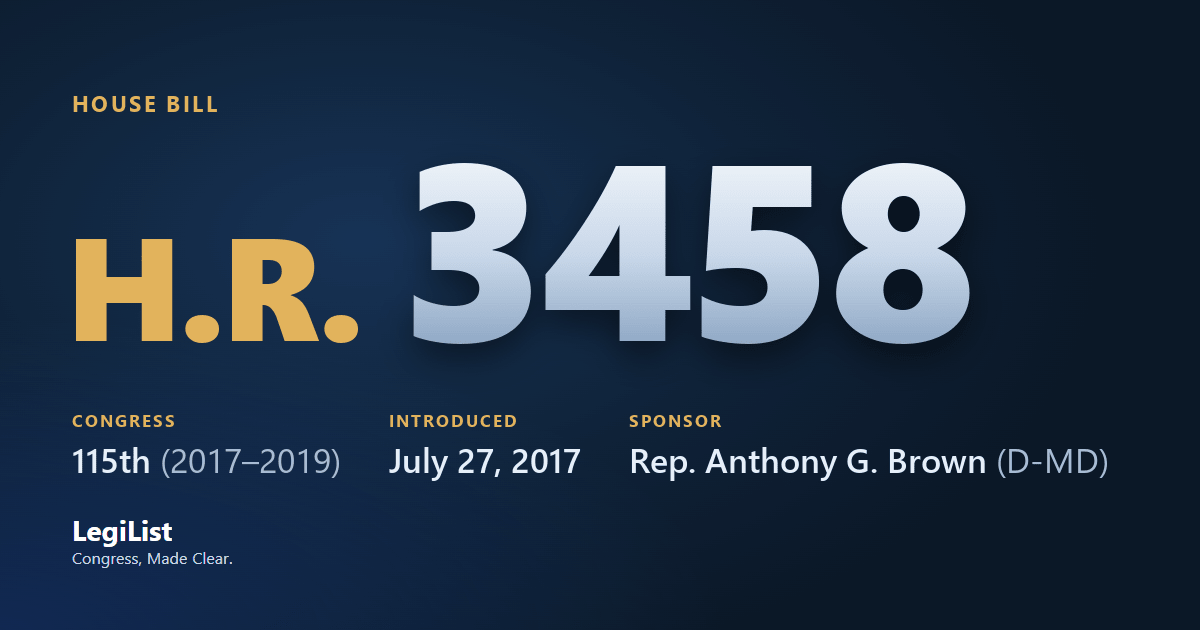
MICRO Act
Latest action · Sep 6, 2017 Referred to the Subcommittee on Crime, Terrorism, Homeland Security, and Investigations.
Progress
Where this bill reached, and when. A stage with no date was not reached; one that failed a vote and later carried shows the date it carried.
- IntroducedJul 27, 2017
- Passed HouseNot reached
- Passed SenateNot reached
- To the PresidentNot reached
- Became lawNot reached
Summary
Make Identifiable Criminal Rounds Obvious Act or the MICRO Act
This bill amends the federal criminal code to require that certain semiautomatic pistols manufactured, imported, or sold by federal firearms licensees be capable of microstamping ammunition. A pistol is capable of microstamping if it can copy certain characters identifying the make, model, and serial number of the firearm onto the cartridge case of the ammunition. This rule only applies to semiautomatic pistols manufactured or imported into the United States after the date of enactment of this bill.
The bill establishes fines for violation of the microstamping requirement.
It shall also be unlawful to alter the microstamping capability of a firearm that has been transported in interstate or foreign commerce. Violators of this prohibition are subject to fines and suspension or revocation of any firearms license.
Cosponsors 16
Members who signed on, in the order they did. Signatures ran from Jul 27, 2017 to Jul 13, 2018; 12 are original cosponsors, there from the day it was introduced.
| Seat | Cosponsor | Signed on | |
|---|---|---|---|
| D-VA | A. Donald McEachin | Original | Jul 27, 2017 |
| D-RI | David N. Cicilline | Original | Jul 27, 2017 |
| D-DC | Eleanor Holmes Norton | Original | Jul 27, 2017 |
| D-VA | Gerald E. Connolly | Original | Jul 27, 2017 |
| D-MD | Jamie Raskin | Original | Jul 27, 2017 |
| D-IL | Janice D. Schakowsky | Original | Jul 27, 2017 |
| D-CT | John B. Larson | Original | Jul 27, 2017 |
| D-NY | Jose E. Serrano | Original | Jul 27, 2017 |
| D-CA | Juan Vargas | Original | Jul 27, 2017 |
| D-IL | Luis V. Gutierrez | Original | Jul 27, 2017 |
| D-PA | Robert A. Brady | Original | Jul 27, 2017 |
| D-NY | Thomas R. Suozzi | Original | Jul 27, 2017 |
| D-CA | Grace F. Napolitano | Sep 7, 2017 | |
| D-NY | Gregory W. Meeks | Feb 5, 2018 | |
| D-FL | Alcee L. Hastings | Jun 1, 2018 | |
| D-CA | Jerry McNerney | Jul 13, 2018 |
Committees 1
Where it was sent and what each committee and subcommittee did with it, in order.
| Chamber | Committee | What it did |
|---|---|---|
| House | Judiciary Committee | Referred Jul 27, 2017 |
| Crime and Federal Government Surveillance Subcommittee | Referred Sep 6, 2017 |
Actions 3
Everything that happened, newest first.
- Sep 6, 2017Referred to the Subcommittee on Crime, Terrorism, Homeland Security, and Investigations.
- Jul 27, 2017Introduced in House
- Jul 27, 2017Referred to the House Committee on the Judiciary.
Research
What has been written about this bill: committee reports, cost estimates, the sponsor’s authority statement, printed hearings and the Congressional Research Service’s work.
Constitutional authority
The sponsor’s statement, as printed in the Congressional Record, vol. 163, no. 127, July 27, 2017, page H6518.
Related bills 1
Companion bills and other measures the record links to this one.
| Bill | Title | Relationship | Latest action |
|---|---|---|---|
| HR 719 | MICRO Act | Reintroduced Bill | Mar 4, 2019 |
Titles 3
Every title it has carried, official and short, at each stage.
- Official Title as Introduced
- To require certain semiautomatic pistols manufactured, imported, or sold by Federal firearms licensees to be capable of microstamping ammunition, and to prohibit the removal, obliteration, or alteration of the microstamped code or microstamping capability of a firearm.
- Short Titles as Introduced
- MICRO Act
- Make Identifiable Criminal Rounds Obvious Act
Subjects
Assigned by the Library of Congress. Policy area: Crime and Law Enforcement.
Text 1
Each version as it was printed, newest first.
- Jul 27, 2017Introduced in House
Support LegiList
This page is free, carries no paywall, and is built and maintained by one person. If the record here is useful to you, a few dollars keeps it going.
Everything here is as published by Congress: the summary is the Congressional Research Service's, the action wording is the clerks', and the subjects are the Library of Congress's. How far it got is read from the actions themselves, taking the most recent one of each kind, so a bill that failed a vote and later passed is shown as having passed. Records come from this bill on Congress.gov and govinfo.gov; cost estimates are the Congressional Budget Office's, and the hearings are the printed hearings GovInfo publishes, which can appear months after the hearing.