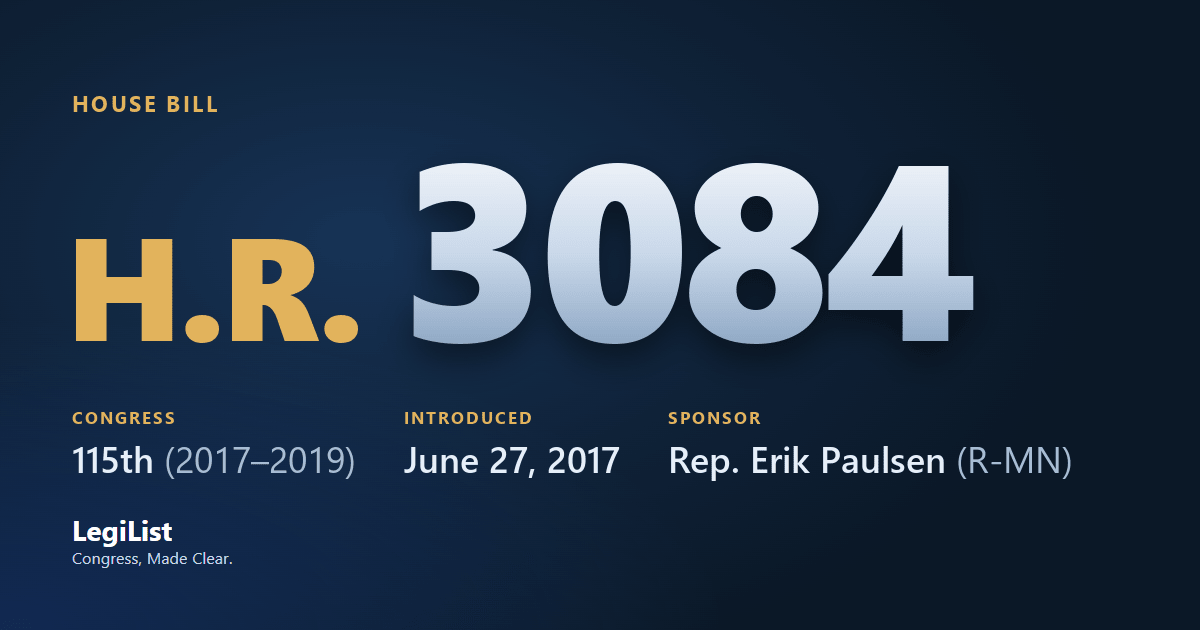
Empowering Employees through Stock Ownership Act
Latest action · Jun 27, 2017 Referred to the House Committee on Ways and Means.
Progress
Where this bill reached, and when. A stage with no date was not reached; one that failed a vote and later carried shows the date it carried.
- IntroducedJun 27, 2017
- Passed HouseNot reached
- Passed SenateNot reached
- To the PresidentNot reached
- Became lawNot reached
Summary
Empowering Employees through Stock Ownership Act
This bill amends the Internal Revenue Code to allow an employee to elect to defer, for income tax purposes, income attributable to certain stock transferred to the employee by an employer.
The employee may defer the inclusion of income from the stock until the year that includes the earliest of the dates on which:
- the stock becomes transferable;
- the employee becomes an excluded employee;
- stock of the corporation becomes readily tradable on an established securities market;
- seven years have passed after the rights of the employee in the stock are transferable or are not subject to a substantial risk of forfeiture, whichever occurs earlier; or
- the employee revokes the election with respect to the stock.
The stock must meet specified requirements and be transferred to the employee from an eligible corporation in connection with the performance of services as an employee.
A corporation is eligible if: (1) no stock of the corporation or a predecessor is readily tradable on an established securities market during any preceding year; and (2) it has a written plan under which at least 80% of certain employees are granted stock options, or restricted stock units, with the same rights and privileges to receive qualified stock.
Employees are excluded if they: (1) are a 1% owner, the chief executive officer, or the chief financial officer of the corporation or have been at any time during the 10 preceding calendar years; (2) are a family member of the specified individuals; or (3) have been one of the four highest compensated officers of the corporation during any of the 10 preceding taxable years.
Cosponsors 6
Members who signed on, in the order they did. Signatures ran from Jun 27, 2017 to Jul 20, 2017; 1 is an original cosponsor, there from the day it was introduced.
| Seat | Cosponsor | Signed on | |
|---|---|---|---|
| D-NY | Joseph Crowley | Original | Jun 27, 2017 |
| D-CA | Anna G. Eshoo | Jun 28, 2017 | |
| D-WI | Ron Kind | Jun 28, 2017 | |
| D-NC | G. K. Butterfield | Jul 13, 2017 | |
| R-OH | Patrick J. Tiberi | Jul 13, 2017 | |
| R-IN | Jackie Walorski | Jul 20, 2017 |
Committees 1
Where it was sent and what each committee and subcommittee did with it, in order.
| Chamber | Committee | What it did |
|---|---|---|
| House | Ways and Means Committee | Referred Jun 27, 2017 |
Actions 2
Everything that happened, newest first.
- Jun 27, 2017Introduced in House
- Jun 27, 2017Referred to the House Committee on Ways and Means.
Research
What has been written about this bill: committee reports, cost estimates, the sponsor’s authority statement, printed hearings and the Congressional Research Service’s work.
Constitutional authority
The sponsor’s statement, as printed in the Congressional Record, vol. 163, no. 110, June 27, 2017, page H5232.
Related bills 3
Companion bills and other measures the record links to this one.
| Bill | Title | Relationship | Latest action |
|---|---|---|---|
| HR 1 | An act to provide for reconciliation pursuant to titles II and V of the concurrent resolution on the budget for fiscal year 2018. | Related bill | Dec 22, 2017 |
| S 1 | An original bill to provide for reconciliation pursuant to title II of the concurrent resolution on the budget for fiscal year 2018. | Related bill | Nov 28, 2017 |
| S 1444 | Empowering Employees through Stock Ownership Act | Identical bill | Jun 27, 2017 |
Titles 2
Every title it has carried, official and short, at each stage.
- Official Title as Introduced
- To amend the Internal Revenue Code of 1986 to modify the tax treatment of certain equity grants.
- Short Titles as Introduced
- Empowering Employees through Stock Ownership Act
Subjects
Assigned by the Library of Congress. Policy area: Taxation.
Text 1
Each version as it was printed, newest first.
- Jun 27, 2017Introduced in House
Support LegiList
This page is free, carries no paywall, and is built and maintained by one person. If the record here is useful to you, a few dollars keeps it going.
Everything here is as published by Congress: the summary is the Congressional Research Service's, the action wording is the clerks', and the subjects are the Library of Congress's. How far it got is read from the actions themselves, taking the most recent one of each kind, so a bill that failed a vote and later passed is shown as having passed. Records come from this bill on Congress.gov and govinfo.gov; cost estimates are the Congressional Budget Office's, and the hearings are the printed hearings GovInfo publishes, which can appear months after the hearing.