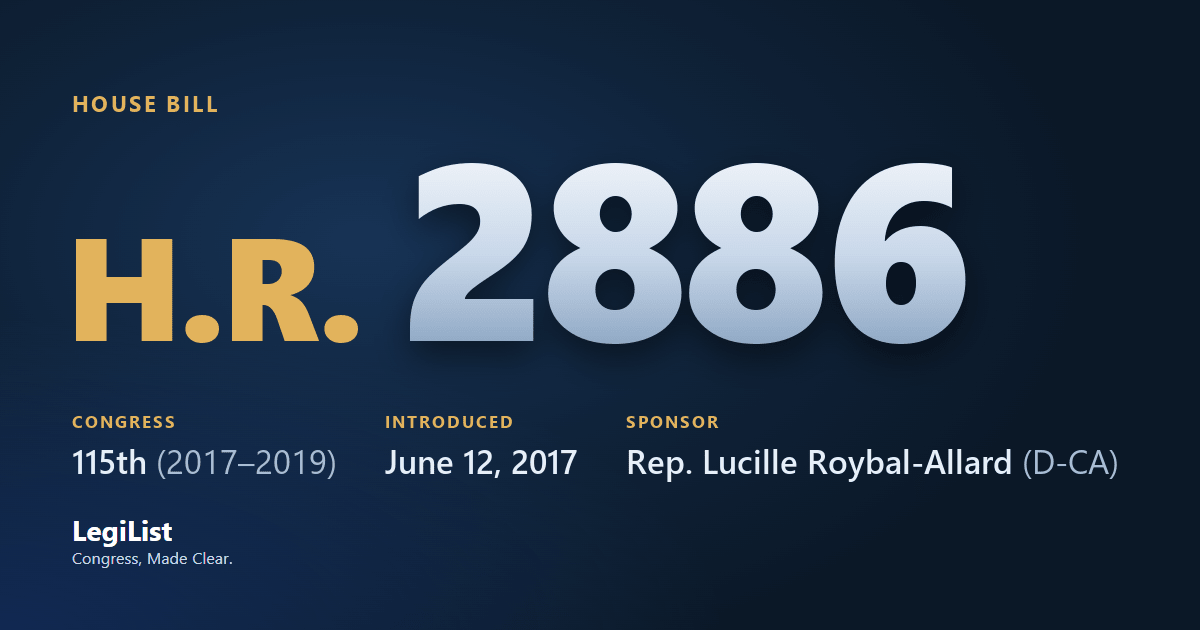
CARE Act of 2017
Latest action · Jun 12, 2017 Referred to the House Committee on Education and the Workforce.
Progress
Where this bill reached, and when. A stage with no date was not reached; one that failed a vote and later carried shows the date it carried.
- IntroducedJun 12, 2017
- Passed HouseNot reached
- Passed SenateNot reached
- To the PresidentNot reached
- Became lawNot reached
Summary
Children's Act for Responsible Employment of 2017 or the CARE Act of 2017
This bill amends the Fair Labor Standards Act of 1938 to redefine "oppressive child labor," for purposes of the Act's child labor prohibitions, as the employment of any employee who is:
- 16 or 17 years of age in any occupation found by the Department of Labor to be particularly hazardous or detrimental to such employee's health or well-being;
- 14 or 15 years of age, unless the employment is confined to periods which do not interfere with the employee's schooling, health, and well-being; or
- under age 14.
The bill revises exemptions for child agricultural employment.
The bill increases civil penalties for child labor violations and imposes new criminal penalties for repeated or willful violations of child labor prohibitions that result in serious illness or injury of an employee under age 18.
Labor shall revise regulations to prohibit the employment of children under age 18 in duties involving the handling of pesticides.
Cosponsors 41
Members who signed on, in the order they did. Signatures ran from Jun 12, 2017 to Dec 10, 2018; 12 are original cosponsors, there from the day it was introduced.
| Seat | Cosponsor | Signed on | |
|---|---|---|---|
| D-CA | Adam B. Schiff | Original | Jun 12, 2017 |
| D-CA | Alan S. Lowenthal | Original | Jun 12, 2017 |
| D-CA | Barbara Lee | Original | Jun 12, 2017 |
| D-RI | David N. Cicilline | Original | Jun 12, 2017 |
| D-CA | Grace F. Napolitano | Original | Jun 12, 2017 |
| D-NY | Jose E. Serrano | Original | Jun 12, 2017 |
| D-IL | Luis V. Gutierrez | Original | Jun 12, 2017 |
| D-CA | Mark Takano | Original | Jun 12, 2017 |
| D-AZ | Raúl M. Grijalva | Original | Jun 12, 2017 |
| D-CT | Rosa L. DeLauro | Original | Jun 12, 2017 |
| D-AZ | Ruben Gallego | Original | Jun 12, 2017 |
| D-MA | Stephen F. Lynch | Original | Jun 12, 2017 |
| D-NJ | Albio Sires | Jun 20, 2017 | |
| D-DC | Eleanor Holmes Norton | Jun 20, 2017 | |
| D-OH | Marcy Kaptur | Jun 20, 2017 |
Committees 1
Where it was sent and what each committee and subcommittee did with it, in order.
| Chamber | Committee | What it did |
|---|---|---|
| House | Education and Workforce Committee | Referred Jun 12, 2017 |
Actions 2
Everything that happened, newest first.
- Jun 12, 2017Introduced in House
- Jun 12, 2017Referred to the House Committee on Education and the Workforce.
Research
What has been written about this bill: committee reports, cost estimates, the sponsor’s authority statement, printed hearings and the Congressional Research Service’s work.
Constitutional authority
The sponsor’s statement, as printed in the Congressional Record, vol. 163, no. 99, June 12, 2017, page H4855.
Related bills 1
Companion bills and other measures the record links to this one.
| Bill | Title | Relationship | Latest action |
|---|---|---|---|
| HR 2764 | CARE Act of 2015 | Reintroduction of | Nov 16, 2015 |
Titles 3
Every title it has carried, official and short, at each stage.
- Official Title as Introduced
- To amend the Fair Labor Standards Act of 1938 to strengthen the provisions relating to child labor.
- Short Titles as Introduced
- CARE Act of 2017
- Children's Act for Responsible Employment of 2017
Subjects
Assigned by the Library of Congress. Policy area: Labor and Employment.
Text 1
Each version as it was printed, newest first.
- Jun 12, 2017Introduced in House
Everything here is as published by Congress: the summary is the Congressional Research Service's, the action wording is the clerks', and the subjects are the Library of Congress's. How far it got is read from the actions themselves, taking the most recent one of each kind, so a bill that failed a vote and later passed is shown as having passed. Records come from this bill on Congress.gov and govinfo.gov; cost estimates are the Congressional Budget Office's, and the hearings are the printed hearings GovInfo publishes, which can appear months after the hearing.