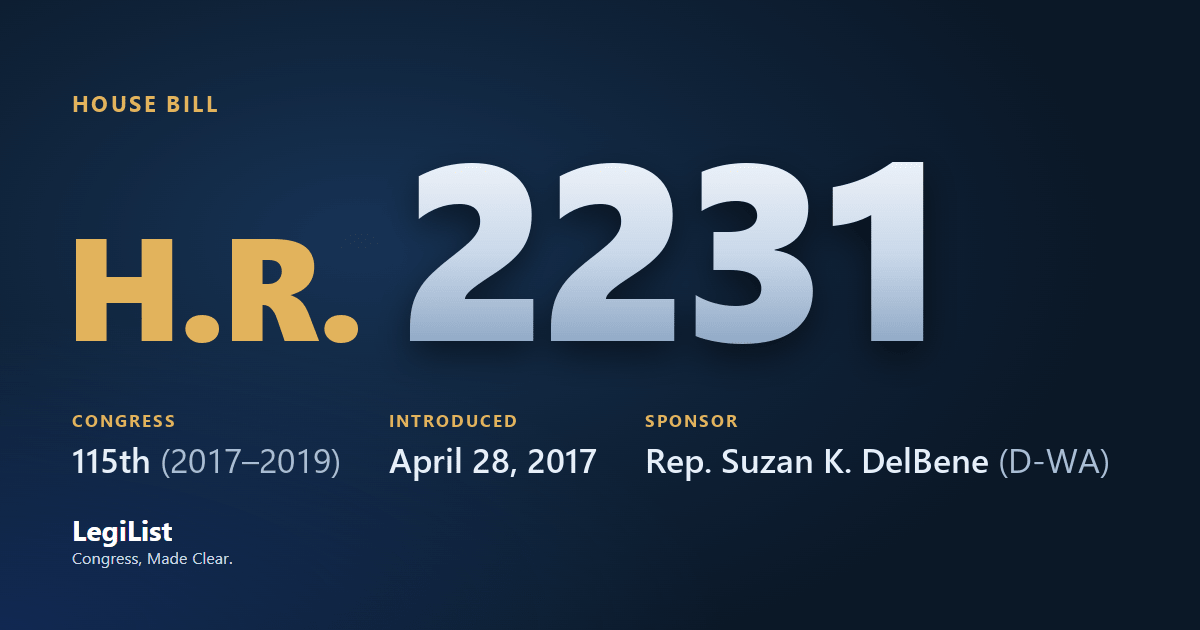
To establish a joint commission on North Korea, and for other purposes.
Latest action · May 18, 2017 Referred to the Subcommittee on Asia and the Pacific.
Progress
Where this bill reached, and when. A stage with no date was not reached; one that failed a vote and later carried shows the date it carried.
- IntroducedApr 28, 2017
- Passed HouseNot reached
- Passed SenateNot reached
- To the PresidentNot reached
- Became lawNot reached
Summary
This bill authorizes the Department of State to seek to establish a joint commission with countries in the Indo-Asia Pacific region to:
- support professional dialogues to coordinate the detection of North Korean violations of United Nations Security Council resolutions, develop responses, and enhance monitoring of nuclear weapons proliferation capabilities;
- coordinate sub-cabinet level political discussions on contingency responses to such violations;
- facilitate technical discussions among the Departments of State, Defense (DOD), Energy, and the Treasury, the Intelligence Community, and their counterparts in countries in the region on technical aspects of North Korea's nuclear program and accompanying U.S. sanctions;
- coordinate information sharing among the intelligence services of the participating countries to identify immediate threats; and
- create guidelines for coordinating multilateral direct action against shared threats.
The bill declares that it is U.S. policy: (1) to continue to maintain robust and multifaceted diplomatic engagement in the region, to include promoting U.S. values and economic interests and a strong military posture; and (2) that diplomacy, development, and defense should be used to enhance U.S. national security, promote U.S. interests, reassure U.S. allies, deter aggression, and respond swiftly to crises.
DOD may conduct routine and enhanced ports of call with key allies in the region.
Cosponsors 4
Members who signed on, in the order they did. Signatures ran from Apr 28, 2017 to May 11, 2017; 3 are original cosponsors, there from the day it was introduced.
| Seat | Cosponsor | Signed on | |
|---|---|---|---|
| D-CA | Scott H. Peters | Original | Apr 28, 2017 |
| D-MA | Seth Moulton | Original | Apr 28, 2017 |
| D-FL | Stephanie N. Murphy | Original | Apr 28, 2017 |
| D-CA | Ami Bera | May 11, 2017 |
Committees 2
Where it was sent and what each committee and subcommittee did with it, in order.
| Chamber | Committee | What it did |
|---|---|---|
| House | Foreign Affairs Committee | Referred Apr 28, 2017 |
| East Asia and Pacific Subcommittee | Referred May 18, 2017 | |
| House | Armed Services Committee | Referred Apr 28, 2017 |
Actions 3
Everything that happened, newest first.
- May 18, 2017Referred to the Subcommittee on Asia and the Pacific.
- Apr 28, 2017Introduced in House
- Apr 28, 2017Referred to the Committee on Foreign Affairs, and in addition to the Committee on Armed Services, for a period to be subsequently determined by the Speaker, in each case for consideration of such provisions as fall within the jurisdiction of the committee concerned.
Research
What has been written about this bill: committee reports, cost estimates, the sponsor’s authority statement, printed hearings and the Congressional Research Service’s work.
Constitutional authority
The sponsor’s statement, as printed in the Congressional Record, vol. 163, no. 73, April 28, 2017, page H2972.
Titles 1
Every title it has carried, official and short, at each stage.
- Official Title as Introduced
- To establish a joint commission on North Korea, and for other purposes.
Subjects
Assigned by the Library of Congress. Policy area: International Affairs.
- Alliances
- Arms control and nonproliferation
- Asia
- Diplomacy, foreign officials, Americans abroad
- Intelligence activities, surveillance, classified information
- International Affairs
- International organizations and cooperation
- Military operations and strategy
- North Korea
- Nuclear weapons
- Sanctions
- United Nations
Text 1
Each version as it was printed, newest first.
- Apr 28, 2017Introduced in House
Support LegiList
This page is free, carries no paywall, and is built and maintained by one person. If the record here is useful to you, a few dollars keeps it going.
Everything here is as published by Congress: the summary is the Congressional Research Service's, the action wording is the clerks', and the subjects are the Library of Congress's. How far it got is read from the actions themselves, taking the most recent one of each kind, so a bill that failed a vote and later passed is shown as having passed. Records come from this bill on Congress.gov and govinfo.gov; cost estimates are the Congressional Budget Office's, and the hearings are the printed hearings GovInfo publishes, which can appear months after the hearing.