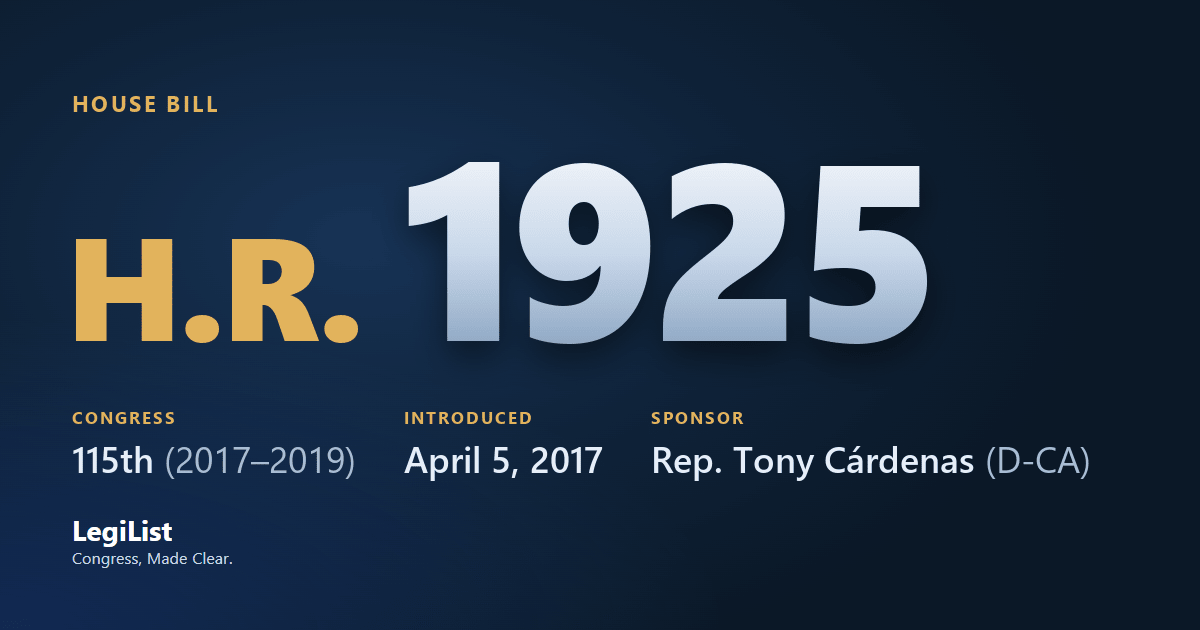
At-Risk Youth Medicaid Protection Act of 2018
Latest action · Jun 12, 2018 Placed on the Union Calendar, Calendar No. 572.
Progress
Where this bill reached, and when. A stage with no date was not reached; one that failed a vote and later carried shows the date it carried.
- IntroducedApr 5, 2017
- Passed HouseNot reached
- Passed SenateNot reached
- To the PresidentNot reached
- Became lawNot reached
Summary
At-Risk Youth Medicaid Protection Act of 2018
This bill prohibits a state Medicaid program from terminating a juvenile's medical assistance eligibility because the juvenile is incarcerated. A state may suspend coverage while the juvenile is an inmate, but must reevaluate the juvenile's eligibility prior to the juvenile's release (without requiring a new application) and, if appropriate, restore coverage upon release.
A state must also process an application submitted by, or on behalf of, an incarcerated juvenile in a manner that ensures the juvenile's eligibility is determined upon release.
A "juvenile" is an individual who: (1) is under 21 years of age; or (2) has aged out of the state's foster care system, was enrolled in the state plan while in foster care, and is under 26 years of age.
Cosponsors 2
Members who signed on, in the order they did. Signatures ran from Apr 5, 2017 to Jun 5, 2018; 1 is an original cosponsor, there from the day it was introduced.
| Seat | Cosponsor | Signed on | |
|---|---|---|---|
| R-VA | H. Morgan Griffith | Original | Apr 5, 2017 |
| R-OR | Greg Walden | Jun 5, 2018 |
Committees 1
Where it was sent and what each committee and subcommittee did with it, in order.
| Chamber | Committee | What it did |
|---|---|---|
| House | Energy and Commerce Committee | Referred Apr 5, 2017Markup May 17, 2018Reported Jun 12, 2018 |
| Health Subcommittee | Referred Apr 7, 2017Markup Apr 25, 2018Reported Apr 25, 2018 |
Actions 9
Everything that happened, newest first.
- Jun 12, 2018Reported (Amended) by the Committee on Energy and Commerce. H. Rept. 115-738.
- Jun 12, 2018Placed on the Union Calendar, Calendar No. 572.
- May 17, 2018Committee Consideration and Mark-up Session Held.
- May 17, 2018Ordered to be Reported by Voice Vote.
- Apr 25, 2018Subcommittee Consideration and Mark-up Session Held.
Research
What has been written about this bill: committee reports, cost estimates, the sponsor’s authority statement, printed hearings and the Congressional Research Service’s work.
Committee report
Congressional Budget Office cost estimate
- Jun 7, 2018H.R. 1925, At-Risk Youth Medicaid Protection Act of 2017As ordered reported by the House Committee on Energy and Commerce on May 17, 2018
Constitutional authority
The sponsor’s statement, as printed in the Congressional Record, vol. 163, no. 59, April 5, 2017, page H2754.
Related bills 6
Companion bills and other measures the record links to this one.
| Bill | Title | Relationship | Latest action |
|---|---|---|---|
| HR 6 | SUPPORT for Patients and Communities Act | Related bill | Oct 24, 2018 |
| S 874 | At-Risk Youth Medicaid Protection Act of 2017 | Related bill | Apr 6, 2017 |
| HRES 1099 | Providing for the concurrence by the House in the Senate amendment to H.R. 6, with an amendment. | Related bill | Sep 28, 2018 |
| S 3660 | Health Equity and Accountability Act of 2018 | Related bill | Nov 27, 2018 |
| HR 5100 | At-Risk Youth Medicaid Protection Act of 2016 | Reintroduction of | Apr 29, 2016 |
Titles 3
Every title it has carried, official and short, at each stage.
- Official Title as Introduced
- To amend title XIX of the Social Security Act to protect at-risk youth against termination of Medicaid eligibility while an inmate of a public institution.
- Short Titles as Introduced
- At-Risk Youth Medicaid Protection Act of 2017
- Short Titles as Reported to House
- At-Risk Youth Medicaid Protection Act of 2018
Subjects
Assigned by the Library of Congress. Policy area: Health.
Text 2
Each version as it was printed, newest first.
- Jun 12, 2018Reported in House
- Apr 5, 2017Introduced in House
Support LegiList
This page is free, carries no paywall, and is built and maintained by one person. If the record here is useful to you, a few dollars keeps it going.
Everything here is as published by Congress: the summary is the Congressional Research Service's, the action wording is the clerks', and the subjects are the Library of Congress's. How far it got is read from the actions themselves, taking the most recent one of each kind, so a bill that failed a vote and later passed is shown as having passed. Records come from this bill on Congress.gov and govinfo.gov; cost estimates are the Congressional Budget Office's, and the hearings are the printed hearings GovInfo publishes, which can appear months after the hearing.