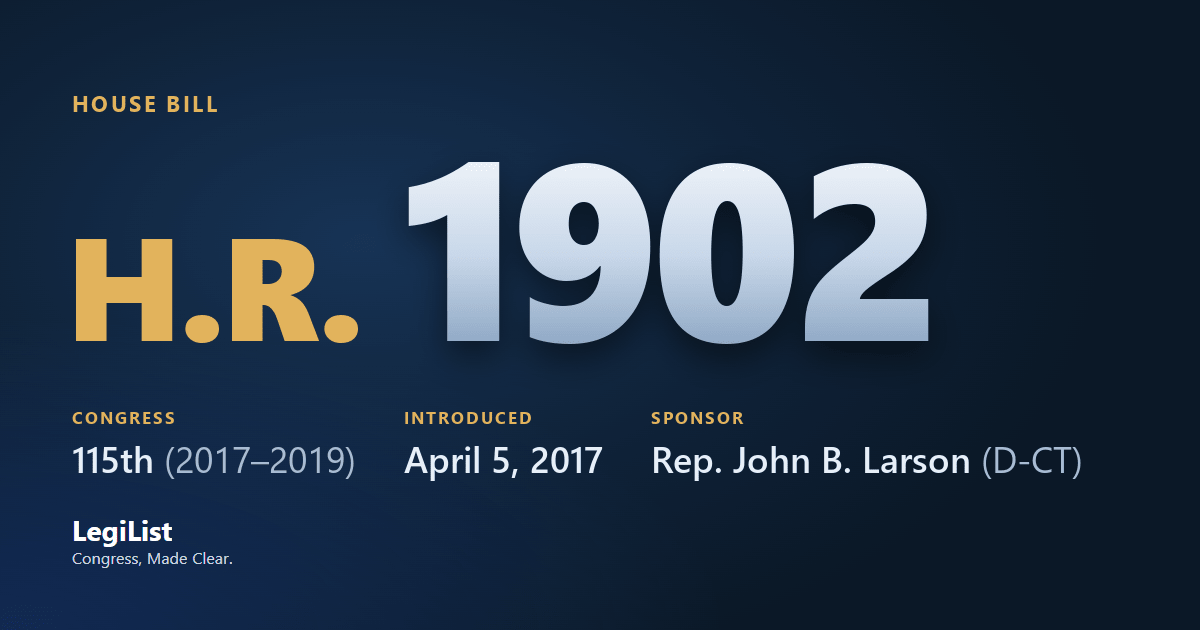
Social Security 2100 Act
Latest action · Apr 17, 2017 Referred to the Subcommittee on Social Security.
Progress
Where this bill reached, and when. A stage with no date was not reached; one that failed a vote and later carried shows the date it carried.
- IntroducedApr 5, 2017
- Passed HouseNot reached
- Passed SenateNot reached
- To the PresidentNot reached
- Became lawNot reached
Summary
Social Security 2100 Act
This bill increases various Old Age, Survivors, and Disability Insurance (OASDI) benefits and related taxes.
The bill increases the primary insurance amount (e.g., the amount a Social Security beneficiary receives if the beneficiary begins receiving benefits at normal retirement age) by increasing the percentage of the beneficiary's average indexed monthly earnings used to calculate the amount.
The Bureau of Labor Statistics shall publish a Consumer Price Index for Elderly Consumers, which the Social Security Administration (SSA) shall use to calculate cost-of-living adjustments to benefits. Currently, the SSA uses a price index for wage earners to make such adjustments.
The bill increases the minimum benefit amount for individuals who worked for more than 10 years by creating an alternative minimum benefit. A qualifying beneficiary shall receive that alternative minimum if it is higher than the standard calculated benefit amount.
The bill increases the income threshold that a beneficiary must reach before Social Security benefits are taxable.
Increased benefits from this bill shall not count as income when determining an individual's eligibility or benefit amounts for (1) Medicaid, (2) the Children's Health Insurance Program, or (3) the Supplemental Security Income program.
Income above $400,000 shall be included when calculating Social Security benefits and taxes. The bill also increases rates for the payroll and self-employment taxes that fund OASDI.
The bill establishes the Social Security Trust Fund, which replaces the Federal Old-Age and Survivors Insurance Trust Fund and the Federal Disability Insurance Trust Fund.
Cosponsors 174
Members who signed on, in the order they did. Signatures ran from Apr 5, 2017 to Sep 12, 2018; 156 are original cosponsors, there from the day it was introduced.
| Seat | Cosponsor | Signed on | |
|---|---|---|---|
| D-VA | A. Donald McEachin | Original | Apr 5, 2017 |
| D-TX | Al Green | Original | Apr 5, 2017 |
| D-FL | Al Lawson, Jr. | Original | Apr 5, 2017 |
| D-CA | Alan S. Lowenthal | Original | Apr 5, 2017 |
| D-NJ | Albio Sires | Original | Apr 5, 2017 |
| D-FL | Alcee L. Hastings | Original | Apr 5, 2017 |
| D-NC | Alma S. Adams | Original | Apr 5, 2017 |
| D-CA | Ami Bera | Original | Apr 5, 2017 |
| D-IN | André Carson | Original | Apr 5, 2017 |
| D-NH | Ann M. Kuster | Original | Apr 5, 2017 |
| D-CA | Anna G. Eshoo | Original | Apr 5, 2017 |
| D-CA | Barbara Lee | Original | Apr 5, 2017 |
| D-NM | Ben Ray Luján | Original | Apr 5, 2017 |
| D-MS | Bennie G. Thompson | Original | Apr 5, 2017 |
| D-TX | Beto O'Rourke | Original | Apr 5, 2017 |
Committees 3
Where it was sent and what each committee and subcommittee did with it, in order.
| Chamber | Committee | What it did |
|---|---|---|
| House | Ways and Means Committee | Referred Apr 5, 2017 |
| Social Security Subcommittee | Referred Apr 17, 2017 | |
| House | Education and Workforce Committee | Referred Apr 5, 2017 |
| House | Energy and Commerce Committee | Referred Apr 5, 2017 |
| Health Subcommittee | Referred Apr 7, 2017 |
Actions 4
Everything that happened, newest first.
- Apr 17, 2017Referred to the Subcommittee on Social Security.
- Apr 7, 2017Referred to the Subcommittee on Health.
- Apr 5, 2017Introduced in House
- Apr 5, 2017Referred to the Committee on Ways and Means, and in addition to the Committees on Education and the Workforce, and Energy and Commerce, for a period to be subsequently determined by the Speaker, in each case for consideration of such provisions as fall within the jurisdiction of the committee concerned.
In the Congressional Record 2
Days the Record’s own index lists this bill, newest first, with the pages and the members it names. Pages starting H are the House, S the Senate, E Extensions of Remarks.
| Where | In the Record | Members | Date |
|---|---|---|---|
| Extensions | Debate and remarks E992 | Terri A. Sewell D-AL | Jul 14, 2017 |
| House | Debate and remarks H2707Lists H2753–H2755H.R. 1902–1964 | Marcy Kaptur D-OH | Apr 5, 2017 |
Research
What has been written about this bill: committee reports, cost estimates, the sponsor’s authority statement, printed hearings and the Congressional Research Service’s work.
Constitutional authority
The sponsor’s statement, as printed in the Congressional Record, vol. 163, no. 59, April 5, 2017, pages H2754, H2753.
Related bills 3
Companion bills and other measures the record links to this one.
| Bill | Title | Relationship | Latest action |
|---|---|---|---|
| HR 860 | Social Security 2100 Act | Reintroduced Bill | Jan 30, 2019 |
| S 2671 | Social Security 2100 Act | Related bill | Apr 16, 2018 |
| HR 2855 | Social Security for Future Generations Act of 2017 | Related bill | Jun 20, 2017 |
Titles 2
Every title it has carried, official and short, at each stage.
- Official Title as Introduced
- To protect our Social Security system and improve benefits for current and future generations.
- Short Titles as Introduced
- Social Security 2100 Act
Subjects
Assigned by the Library of Congress. Policy area: Social Welfare.
Text 1
Each version as it was printed, newest first.
- Apr 5, 2017Introduced in House
Support LegiList
This page is free, carries no paywall, and is built and maintained by one person. If the record here is useful to you, a few dollars keeps it going.
Everything here is as published by Congress: the summary is the Congressional Research Service's, the action wording is the clerks', and the subjects are the Library of Congress's. How far it got is read from the actions themselves, taking the most recent one of each kind, so a bill that failed a vote and later passed is shown as having passed. Records come from this bill on Congress.gov and govinfo.gov; cost estimates are the Congressional Budget Office's, and the hearings are the printed hearings GovInfo publishes, which can appear months after the hearing.