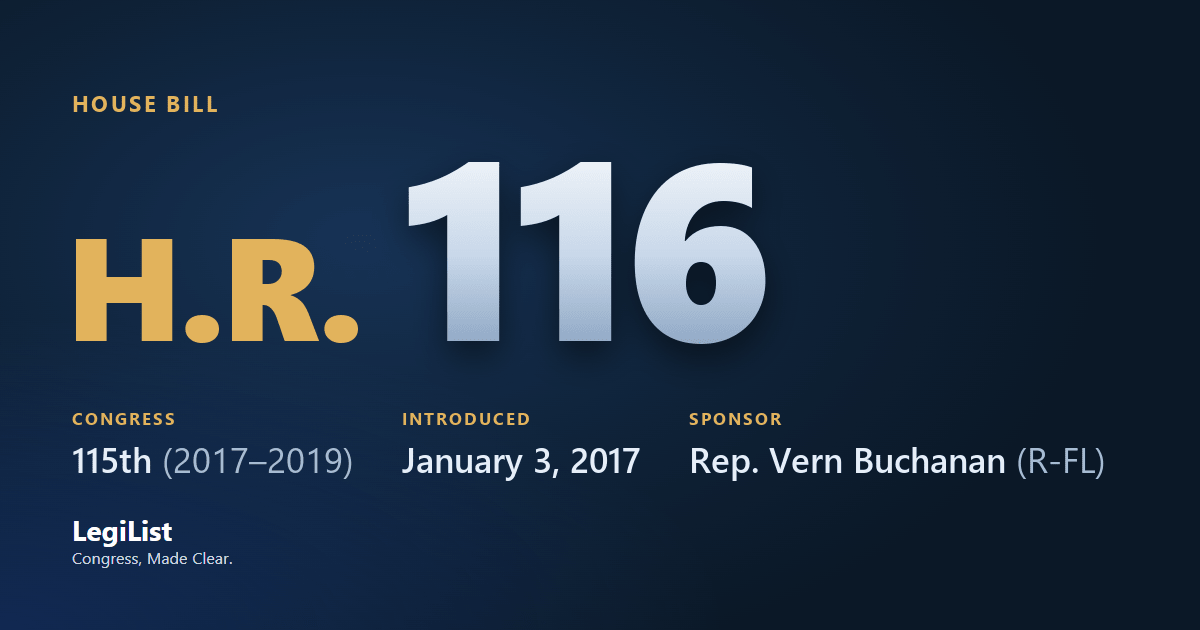
Main Street Fairness Act
Latest action · Jan 3, 2017 Referred to the House Committee on Ways and Means.
Progress
Where this bill reached, and when. A stage with no date was not reached; one that failed a vote and later carried shows the date it carried.
- IntroducedJan 3, 2017
- Passed HouseNot reached
- Passed SenateNot reached
- To the PresidentNot reached
- Became lawNot reached
Summary
Main Street Fairness Act
This bill amends the Internal Revenue Code to prevent qualified business income attributed to individuals from being taxed at a higher rate than corporate income.
(Under current law, business income attributed to individuals is taxed using individual income tax rates rather than the corporate tax rate.)
Qualified business income is all items of income, deduction, loss, or credit properly attributable to the taxpayer from the active conduct of a trade or business, including:
- a partnership in which the taxpayer holds a capital or profits interest;
- an S corporation in which the taxpayer is a shareholder;
- a sole proprietorship or an entity otherwise disregarded as separate from its sole owner, in which the taxpayer is the sole owner; and
- a trust or estate in which the taxpayer is a beneficiary.
Qualified business income does not include any item taken into account in determining net capital gain or the financial services income of partnerships.
Cosponsors 5
Members who signed on, in the order they did. Signatures ran from Jan 13, 2017 to Nov 1, 2017.
| Seat | Cosponsor | Signed on | |
|---|---|---|---|
| R-VA | Robert J. Wittman | Jan 13, 2017 | |
| D-TX | Henry Cuellar | Apr 6, 2017 | |
| D-FL | Darren Soto | Apr 25, 2017 | |
| R-CO | Scott R. Tipton | May 1, 2017 | |
| R-NC | Robert Pittenger | Nov 1, 2017 |
Committees 1
Where it was sent and what each committee and subcommittee did with it, in order.
| Chamber | Committee | What it did |
|---|---|---|
| House | Ways and Means Committee | Referred Jan 3, 2017 |
Actions 2
Everything that happened, newest first.
- Jan 3, 2017Introduced in House
- Jan 3, 2017Referred to the House Committee on Ways and Means.
Research
What has been written about this bill: committee reports, cost estimates, the sponsor’s authority statement, printed hearings and the Congressional Research Service’s work.
Constitutional authority
The sponsor’s statement, as printed in the Congressional Record, vol. 163, no. 1, January 3, 2017, page H49.
Related bills 2
Companion bills and other measures the record links to this one.
| Bill | Title | Relationship | Latest action |
|---|---|---|---|
| S 707 | Main Street Fairness Act | Identical bill | Mar 23, 2017 |
| HR 5076 | Main Street Fairness Act | Reintroduction of | Apr 27, 2016 |
Titles 2
Every title it has carried, official and short, at each stage.
- Official Title as Introduced
- To amend the Internal Revenue Code of 1986 to ensure that pass-through businesses do not pay tax at a higher rate than corporations.
- Short Titles as Introduced
- Main Street Fairness Act
Subjects
Assigned by the Library of Congress. Policy area: Taxation.
Text 1
Each version as it was printed, newest first.
- Jan 3, 2017Introduced in House
Everything here is as published by Congress: the summary is the Congressional Research Service's, the action wording is the clerks', and the subjects are the Library of Congress's. How far it got is read from the actions themselves, taking the most recent one of each kind, so a bill that failed a vote and later passed is shown as having passed. Records come from this bill on Congress.gov and govinfo.gov; cost estimates are the Congressional Budget Office's, and the hearings are the printed hearings GovInfo publishes, which can appear months after the hearing.