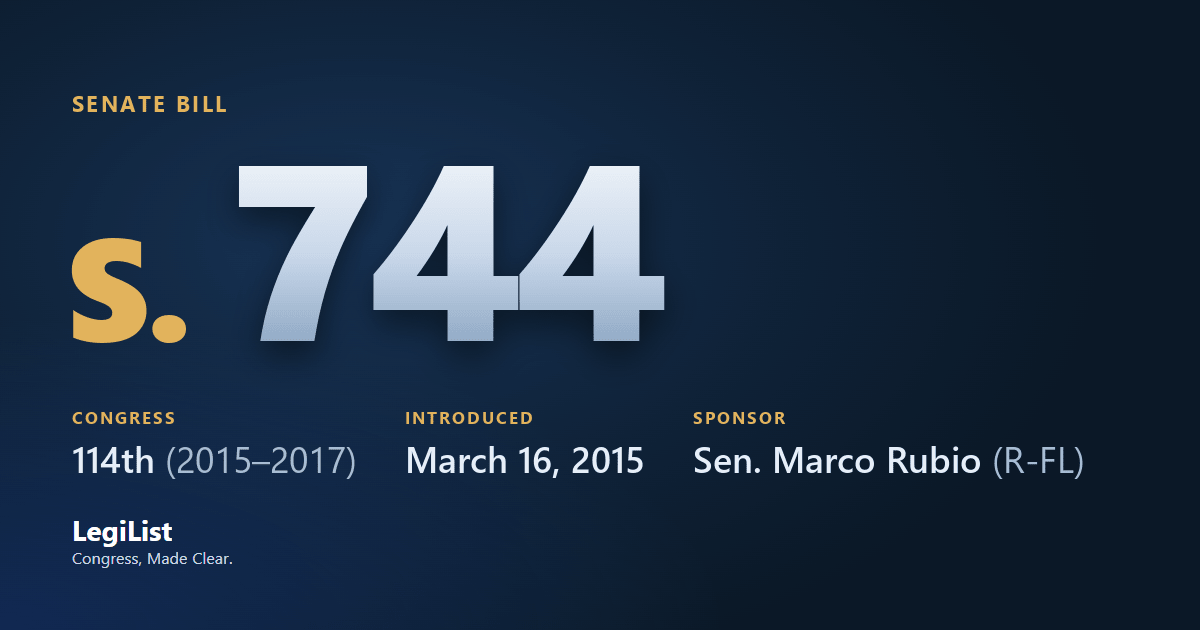
REFUND Act
Latest action · Mar 16, 2015 Read twice and referred to the Committee on Appropriations.
Progress
Where this bill reached, and when. A stage with no date was not reached; one that failed a vote and later carried shows the date it carried.
- IntroducedMar 16, 2015
- Passed SenateNot reached
- Passed HouseNot reached
- To the PresidentNot reached
- Became lawNot reached
Summary
Returned Exclusively For Unpaid National Debt Act or the REFUND Act
This bill rescinds federal funds identified by a state as unwanted and requires the funds to be used for debt reduction. The bill applies to federal funds required to be allocated by formula among all states that agree to use the funds for a specified purpose. To identify the funds as unwanted, a state legislature must pass a concurrent resolution, and the state must then notify the head of the federal agency responsible for allocating the funds. The Department of the Treasury must deposit the rescinded funds in the Gifts to the United States for Reduction of the Public Debt account, use the funds to reduce the debt, and submit an annual report to Congress identifying funds received.
Cosponsors 7
Members who signed on, in the order they did. Signatures ran from Mar 16, 2015 to Apr 22, 2015; 6 are original cosponsors, there from the day it was introduced.
| Seat | Cosponsor | Signed on | |
|---|---|---|---|
| R-IN | Daniel Coats | Original | Mar 16, 2015 |
| R-ID | James E. Risch | Original | Mar 16, 2015 |
| R-OK | James M. Inhofe | Original | Mar 16, 2015 |
| R-WY | John Barrasso | Original | Mar 16, 2015 |
| R-OH | Rob Portman | Original | Mar 16, 2015 |
| R-WI | Ron Johnson | Original | Mar 16, 2015 |
| R-MO | Roy Blunt | Apr 22, 2015 |
Committees 1
Where it was sent and what each committee and subcommittee did with it, in order.
| Chamber | Committee | What it did |
|---|---|---|
| Senate | Appropriations Committee | Referred Mar 16, 2015 |
Actions 2
Everything that happened, newest first.
- Mar 16, 2015Introduced in Senate
- Mar 16, 2015Read twice and referred to the Committee on Appropriations.
Research
What has been written about this bill: committee reports, cost estimates, the sponsor’s authority statement, printed hearings and the Congressional Research Service’s work.
Printed hearings 6
Hearings whose printed record names this bill, newest first: hearings on it, and wider hearings where it came up.
| Number | Hearing | Committee | Held |
|---|---|---|---|
| S. Hrg. 114-831 | IMMIGRATION REFORMS NEEDED TO PROTECT SKILLED AMERICAN WORKERS386 pages | Judiciary Committee | Mar 17, 2015 |
| S. Hrg. 114-156 | PRESIDENT'S FISCAL YEAR 2016 HEALTH CARE PROPOSALS266 pages | Finance Committee | Feb 4, 2015 |
| S. Hrg. 114-68 | ENDING MODERN SLAVERY: WHAT IS THE BEST WAY FORWARD?98 pages | Foreign Relations Committee | Feb 4, 2015–Feb 11, 2015 |
| S. Hrg. 114-516 | BORDER SECURITY_2015 (VOLUME 1 OF 2)946 pages | Homeland Security and Governmental Affairs Committee | Feb 4, 2015–Mar 26, 2015 |
| Serial No. 114-11 | HEARING ON THE LEGAL WORKFORCE ACT163 pages | Judiciary Committee | Feb 4, 2015 |
| Serial No. 114-1 | EXAMINING THE ADEQUACY AND ENFORCEMENT OF OUR NATION'S IMMIGRATION LAWS175 pages | Judiciary Committee | Feb 3, 2015 |
Related bills 1
Companion bills and other measures the record links to this one.
| Bill | Title | Relationship | Latest action |
|---|---|---|---|
| HR 5933 | REFUND Act | Identical bill | Sep 6, 2016 |
Titles 3
Every title it has carried, official and short, at each stage.
- Official Title as Introduced
- A bill to rescind certain Federal funds identified by States as unwanted and use the funds to reduce the Federal debt.
- Short Titles as Introduced
- REFUND Act
- Returned Exclusively For Unpaid National Debt Act
Subjects
Assigned by the Library of Congress. Policy area: Economics and Public Finance.
Text 1
Each version as it was printed, newest first.
- Mar 16, 2015Introduced in Senate
Support LegiList
This page is free, carries no paywall, and is built and maintained by one person. If the record here is useful to you, a few dollars keeps it going.
Everything here is as published by Congress: the summary is the Congressional Research Service's, the action wording is the clerks', and the subjects are the Library of Congress's. How far it got is read from the actions themselves, taking the most recent one of each kind, so a bill that failed a vote and later passed is shown as having passed. Records come from this bill on Congress.gov and govinfo.gov; cost estimates are the Congressional Budget Office's, and the hearings are the printed hearings GovInfo publishes, which can appear months after the hearing.