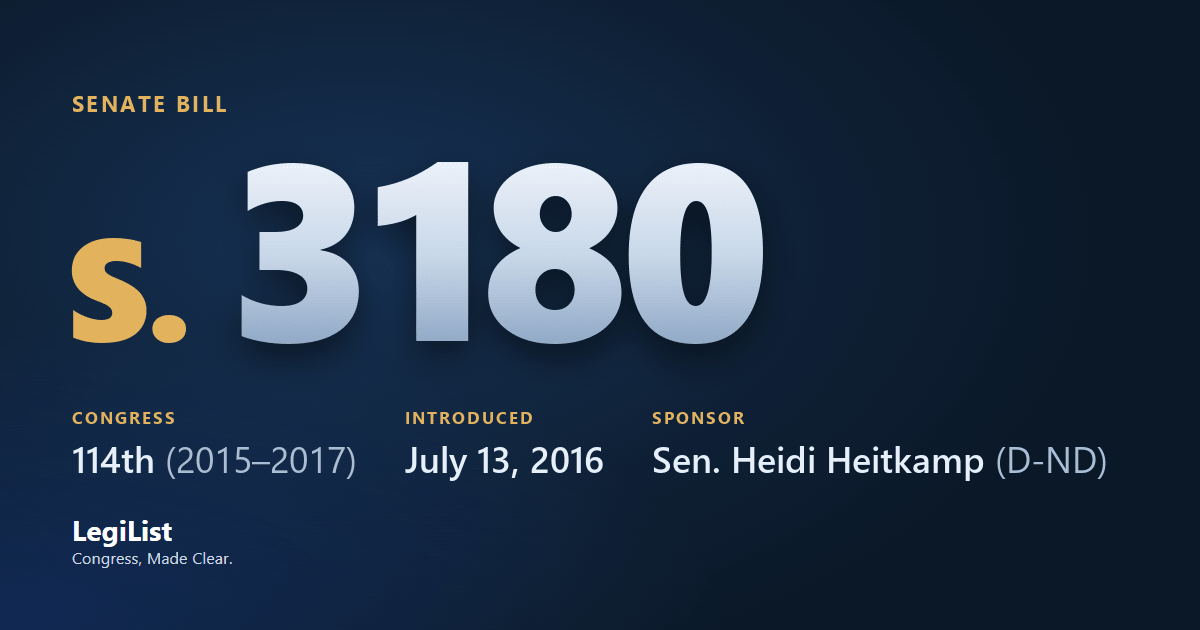
Flexible HIRE Act
Latest action · Jul 13, 2016 Read twice and referred to the Committee on Homeland Security and Governmental Affairs.
Progress
Where this bill reached, and when. A stage with no date was not reached; one that failed a vote and later carried shows the date it carried.
- IntroducedJul 13, 2016
- Passed SenateNot reached
- Passed HouseNot reached
- To the PresidentNot reached
- Became lawNot reached
Summary
Flexible Hiring and Improving Recruitment, Retention, and Education Act of 2016 or the Flexible HIRE Act
This bill allows the President to authorize agencies to appoint candidates directly to positions that the Office of Personnel Management (OPM) has determined are in geographic areas affected by a unique situation or circumstance that has directly and significantly affected employee recruitment and retention.
In areas within the continental United States in which recruitment and retention have become a severe challenge as the direct result of a dramatic economic development, hardship, or remoteness, the President may permit agencies to appoint candidates without using the statutory preference eligible veteran procedures that would otherwise require such agencies to provide experience credits, award examination points, or restrict competition to certain veterans and families of disabled or deceased veterans. Agencies must still prioritize the hiring of veterans by following regulatory principles regarding the appointment of qualified veterans to competitive service positions.
For positions in such areas, the OPM may establish higher minimum rates of pay and authorize agencies to pay bonuses for recruitment, relocation, or retention.
The OPM must replace the $10 per day cap on the commuting allowance for employees assigned to remote worksites with the mileage reimbursement rate prescribed by the General Services Administration for the use of privately owned automobiles for official government business.
Agencies may pay an allowance to employees assigned to sites remote from: (1) established communities, suitable residences, or affordable housing; (2) medical care, child care, or schools; (3) employment options for spouses; or (4) consumer goods and services.
The OPM must establish a permanent hiring working group to help agencies prepare and deal with such geographic areas.
Agencies must: (1) create pilot programs to increase the number of new employees placed in these unique geographic areas; (2) develop strategies to aide employees' spouses and families; and (3) enhance recruiting methods targeting colleges, veterans transition centers, and job placement programs in such areas.
The OPM must establish a centralized electronic database of individuals completing a federal internship program who are seeking full-time federal employment.
Cosponsors
Members who signed on, in the order they did.
Committees 1
Where it was sent and what each committee and subcommittee did with it, in order.
| Chamber | Committee | What it did |
|---|---|---|
| Senate | Homeland Security and Governmental Affairs Committee | Referred Jul 13, 2016 |
Actions 2
Everything that happened, newest first.
- Jul 13, 2016Introduced in Senate
- Jul 13, 2016Read twice and referred to the Committee on Homeland Security and Governmental Affairs.
Titles 3
Every title it has carried, official and short, at each stage.
- Official Title as Introduced
- A bill to improve hiring and human resources flexibilities for Federal agencies in geographic areas affected by unique situations or circumstances, including remoteness, that cause recruitment and retention challenges, and to provide agencies experiencing such challenges with a toolkit of resources to overcome those challenges.
- Short Titles as Introduced
- Flexible HIRE Act
- Flexible Hiring and Improving Recruitment, Retention, and Education Act of 2016
Subjects
Assigned by the Library of Congress. Policy area: Government Operations and Politics.
Text 1
Each version as it was printed, newest first.
- Jul 13, 2016Introduced in Senate
Support LegiList
This page is free, carries no paywall, and is built and maintained by one person. If the record here is useful to you, a few dollars keeps it going.
Everything here is as published by Congress: the summary is the Congressional Research Service's, the action wording is the clerks', and the subjects are the Library of Congress's. How far it got is read from the actions themselves, taking the most recent one of each kind, so a bill that failed a vote and later passed is shown as having passed. Records come from this bill on Congress.gov and govinfo.gov; cost estimates are the Congressional Budget Office's, and the hearings are the printed hearings GovInfo publishes, which can appear months after the hearing.