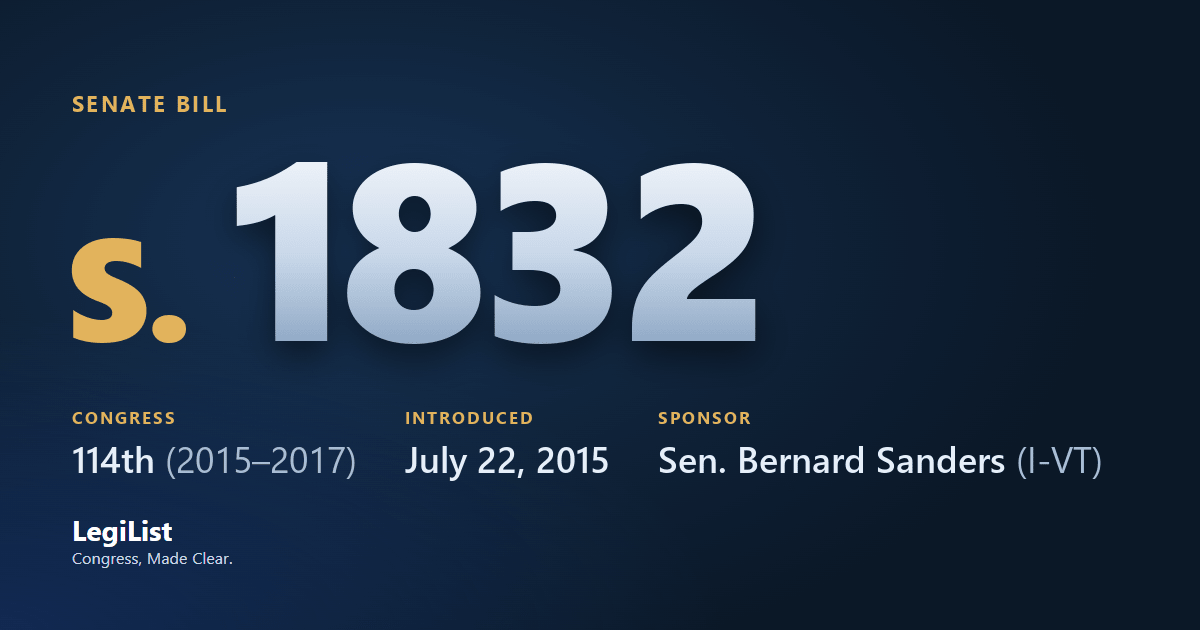
Pay Workers a Living Wage Act
Latest action · Jul 22, 2015 Read twice and referred to the Committee on Health, Education, Labor, and Pensions.
Progress
Where this bill reached, and when. A stage with no date was not reached; one that failed a vote and later carried shows the date it carried.
- IntroducedJul 22, 2015
- Passed SenateNot reached
- Passed HouseNot reached
- To the PresidentNot reached
- Became lawNot reached
Summary
Pay Workers a Living Wage Act
This bill amends the Fair Labor Standards Act of 1938 (FLSA) to increase the federal minimum wage for employees to: (1) $9.00 an hour on January 1, 2016, or, if later, on the first day of the third month after enactment of this Act; (2) $10.50 an hour after one year; (3) $12.00 an hour after two years; (4) $13.50 an hour after three years; (5) $15.00 an hour after four years; and (6) the amount the Secretary of Labor determines (based on increases in the median hourly wage of all employees) after five years, and annually thereafter.The federal minimum wage for tipped employees shall increase to $3.15 an hour for one year on January 1, 2016, or the first day of the third month after enactment of this Act, whichever is later. Subsequent annual adjustments of the wage increase, according to a specified formula, shall ensure that it remains equal to the wage in effect under FLSA for other employees.
Employers must notify their employees of the right to retain any received tips.
The separate minimum wage requirements for tipped employees shall end, effective one day after the hourly wage established for them under this Act takes effect.
Any employer may pay any newly hired employee who is less than 20 years old, during the first 90 consecutive days after that employee's initial employment, a wage at a rate that is not less than the rate prescribed for employees who are engaged in commerce, reduced by $3.00 per hour.
The Secretary must publish the amount of any adjusted required wage in the Federal Register and on the Department of Labor's website 60 days before it takes effect.
Cosponsors 5
Members who signed on, in the order they did. Signatures ran from Jul 22, 2015 to Dec 2, 2015; 1 is an original cosponsor, there from the day it was introduced.
| Seat | Cosponsor | Signed on | |
|---|---|---|---|
| D-MA | Edward J. Markey | Original | Jul 22, 2015 |
| D-NY | Kirsten E. Gillibrand | Jul 23, 2015 | |
| D-OH | Sherrod Brown | Jul 29, 2015 | |
| D-MA | Elizabeth Warren | Sep 8, 2015 | |
| D-IL | Richard J. Durbin | Dec 2, 2015 |
Committees 1
Where it was sent and what each committee and subcommittee did with it, in order.
| Chamber | Committee | What it did |
|---|---|---|
| Senate | Health, Education, Labor, and Pensions Committee | Referred Jul 22, 2015 |
Actions 2
Everything that happened, newest first.
- Jul 22, 2015Introduced in Senate
- Jul 22, 2015Read twice and referred to the Committee on Health, Education, Labor, and Pensions.
Research
What has been written about this bill: committee reports, cost estimates, the sponsor’s authority statement, printed hearings and the Congressional Research Service’s work.
CRS reports 1
Congressional Research Service work that CRS links to this bill or the law it became, newest first.
Cite it 1
Products on other subjects that cite it, usually among other measures.
| Product | Title | Kind | Published |
|---|---|---|---|
| R44667 | The Federal Minimum Wage: Indexation Archived | Report | Oct 26, 2016 |
Related bills 1
Companion bills and other measures the record links to this one.
| Bill | Title | Relationship | Latest action |
|---|---|---|---|
| HR 3164 | Pay Workers a Living Wage Act | Related bill | Nov 16, 2015 |
Titles 2
Every title it has carried, official and short, at each stage.
- Official Title as Introduced
- A bill to provide for increases in the Federal minimum wage.
- Short Titles as Introduced
- Pay Workers a Living Wage Act
Subjects
Assigned by the Library of Congress. Policy area: Labor and Employment.
Text 1
Each version as it was printed, newest first.
- Jul 22, 2015Introduced in Senate
Everything here is as published by Congress: the summary is the Congressional Research Service's, the action wording is the clerks', and the subjects are the Library of Congress's. How far it got is read from the actions themselves, taking the most recent one of each kind, so a bill that failed a vote and later passed is shown as having passed. Records come from this bill on Congress.gov and govinfo.gov; cost estimates are the Congressional Budget Office's, and the hearings are the printed hearings GovInfo publishes, which can appear months after the hearing.