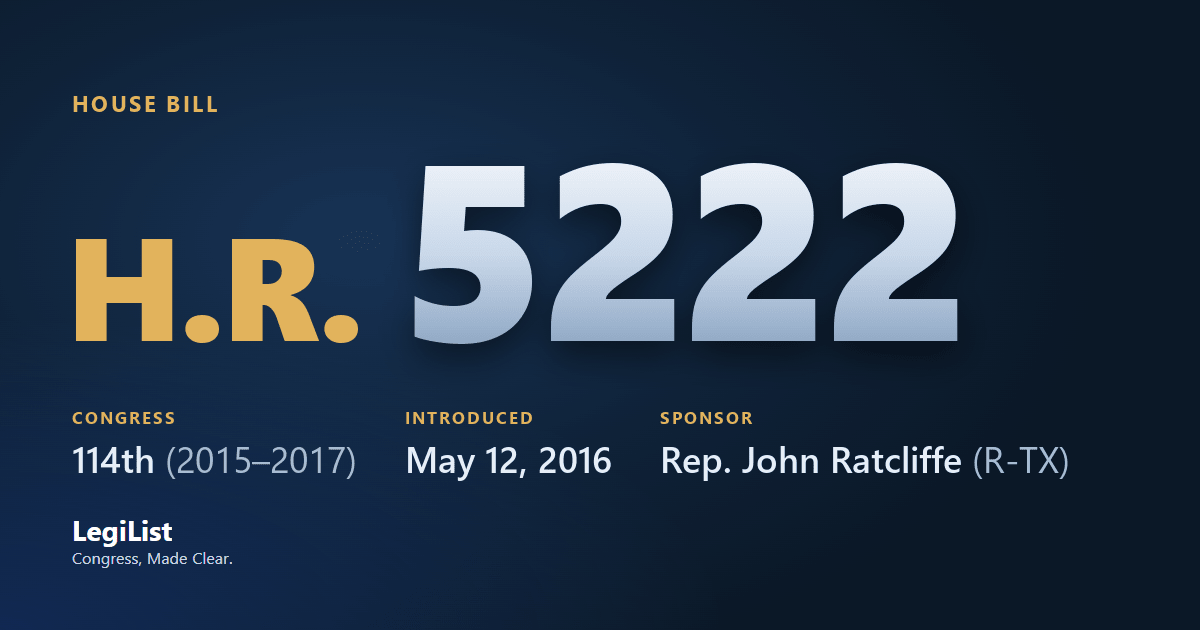
Iran Cyber Sanctions Act of 2016
Latest action · May 18, 2016 Referred to the Subcommittee on Crime, Terrorism, Homeland Security, and Investigations.
Progress
Where this bill reached, and when. A stage with no date was not reached; one that failed a vote and later carried shows the date it carried.
- IntroducedMay 12, 2016
- Passed HouseNot reached
- Passed SenateNot reached
- To the PresidentNot reached
- Became lawNot reached
Summary
Iran Cyber Sanctions Act of 2016
This bill requires the President to report to Congress at least every 180 days regarding significant activities undermining cybersecurity conducted by persons on behalf of or at the direction of the government of Iran (including members of paramilitary organizations such as Ansar-e-Hezbollah and Basij-e Mostaz'afin) against the United States (including U.S. persons, entities, or federal, state, or local governments). The reports must: (1) identify persons that have knowingly facilitated, participated or assisted in, engaged in, directed, or provided material support for such activities; (2) describe their conduct; (3) assess the Iranian government's or other foreign governments' direction, facilitation, or material support in such activities; and (4) provide a strategy to counter efforts by persons to conduct such activities, which shall include engaging foreign governments to halt the capabilities of such persons.
The President must include on the Office of Foreign Assets Control's specially designated nationals and blocked persons list persons who are: (1) identified in such reports; or (2) indicted by the Department of Justice in connection with such activities undermining U.S. cybersecurity. Under an exception, the President may exclude such a person from the list by submitting an explanation to Congress.
The President must use Executive Order 13694 (relating to blocking the property of certain persons engaging in significant malicious cyber-enabled activities) to impose sanctions against persons included on such list.
Cosponsors
Members who signed on, in the order they did.
Committees 2
Where it was sent and what each committee and subcommittee did with it, in order.
| Chamber | Committee | What it did |
|---|---|---|
| House | Foreign Affairs Committee | Referred May 12, 2016 |
| House | Judiciary Committee | Referred May 12, 2016 |
| Crime and Federal Government Surveillance Subcommittee | Referred May 18, 2016 |
Actions 3
Everything that happened, newest first.
- May 18, 2016Referred to the Subcommittee on Crime, Terrorism, Homeland Security, and Investigations.
- May 12, 2016Introduced in House
- May 12, 2016Referred to the Committee on Foreign Affairs, and in addition to the Committee on the Judiciary, for a period to be subsequently determined by the Speaker, in each case for consideration of such provisions as fall within the jurisdiction of the committee concerned.
Research
What has been written about this bill: committee reports, cost estimates, the sponsor’s authority statement, printed hearings and the Congressional Research Service’s work.
Constitutional authority
The sponsor’s statement, as printed in the Congressional Record, vol. 162, no. 75, May 12, 2016, page H2342.
Related bills 1
Companion bills and other measures the record links to this one.
| Bill | Title | Relationship | Latest action |
|---|---|---|---|
| S 2756 | Iran Cyber Sanctions Act of 2016 | Related bill | Apr 6, 2016 |
Titles 2
Every title it has carried, official and short, at each stage.
- Official Title as Introduced
- To impose sanctions with respect to persons responsible for knowingly engaging in significant activities undermining cybersecurity on behalf of or at the direction of the Government of Iran, and for other purposes.
- Short Titles as Introduced
- Iran Cyber Sanctions Act of 2016
Subjects
Assigned by the Library of Congress. Policy area: International Affairs.
Text 1
Each version as it was printed, newest first.
- May 12, 2016Introduced in House
Support LegiList
This page is free, carries no paywall, and is built and maintained by one person. If the record here is useful to you, a few dollars keeps it going.
Everything here is as published by Congress: the summary is the Congressional Research Service's, the action wording is the clerks', and the subjects are the Library of Congress's. How far it got is read from the actions themselves, taking the most recent one of each kind, so a bill that failed a vote and later passed is shown as having passed. Records come from this bill on Congress.gov and govinfo.gov; cost estimates are the Congressional Budget Office's, and the hearings are the printed hearings GovInfo publishes, which can appear months after the hearing.