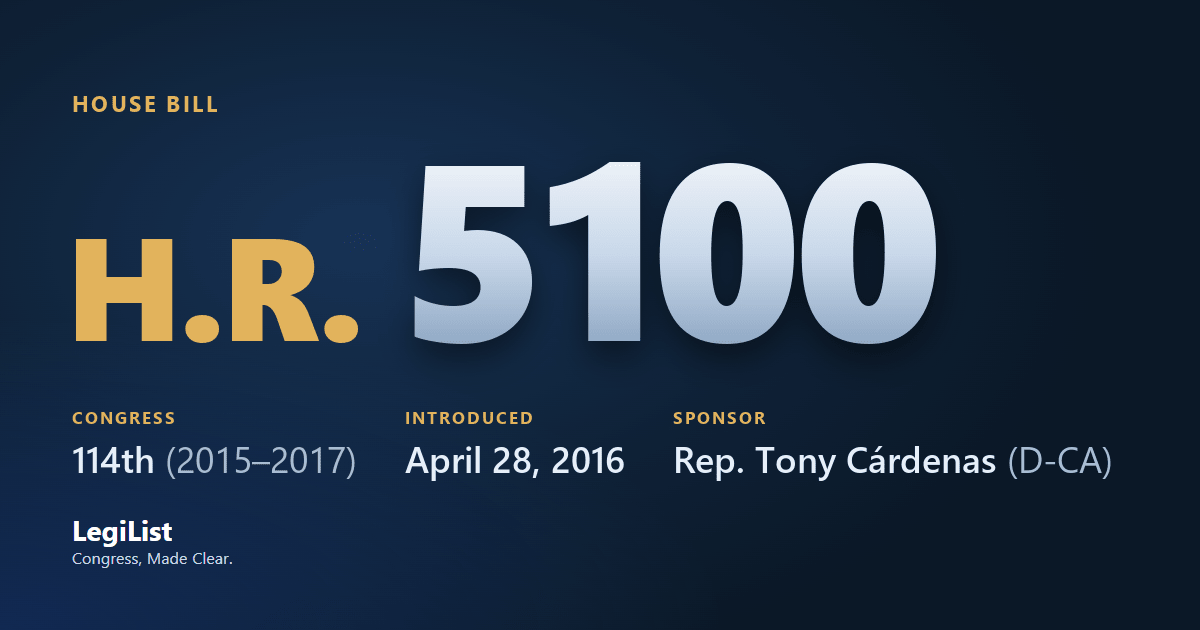
At-Risk Youth Medicaid Protection Act of 2016
Latest action · Apr 29, 2016 Referred to the Subcommittee on Health.
Progress
Where this bill reached, and when. A stage with no date was not reached; one that failed a vote and later carried shows the date it carried.
- IntroducedApr 28, 2016
- Passed HouseNot reached
- Passed SenateNot reached
- To the PresidentNot reached
- Became lawNot reached
Summary
At-Risk Youth Medicaid Protection Act of 2016
This bill amends title XIX (Medicaid) of the Social Security Act to specify that a state Medicaid program may not terminate a juvenile's medical assistance eligibility because the juvenile is incarcerated. A state may suspend coverage while the juvenile is an inmate, but must restore coverage upon release without requiring a new application unless the individual no longer meets the eligibility requirements for medical assistance.
A state must process an application submitted by, or on behalf of, an incarcerated juvenile, notwithstanding that the juvenile is an inmate.
A "juvenile" is an individual who: (1) is under 21 years of age; or (2) has aged out of the state's foster care system, was enrolled in the state plan while in foster care, and is under 26 years of age.
Cosponsors 2
Members who signed on, in the order they did. Signatures ran from Apr 28, 2016 to May 11, 2016; 1 is an original cosponsor, there from the day it was introduced.
| Seat | Cosponsor | Signed on | |
|---|---|---|---|
| R-VA | H. Morgan Griffith | Original | Apr 28, 2016 |
| D-NE | Brad Ashford | May 11, 2016 |
Committees 1
Where it was sent and what each committee and subcommittee did with it, in order.
| Chamber | Committee | What it did |
|---|---|---|
| House | Energy and Commerce Committee | Referred Apr 28, 2016 |
| Health Subcommittee | Referred Apr 29, 2016 |
Actions 3
Everything that happened, newest first.
- Apr 29, 2016Referred to the Subcommittee on Health.
- Apr 28, 2016Introduced in House
- Apr 28, 2016Referred to the House Committee on Energy and Commerce.
Research
What has been written about this bill: committee reports, cost estimates, the sponsor’s authority statement, printed hearings and the Congressional Research Service’s work.
Constitutional authority
The sponsor’s statement, as printed in the Congressional Record, vol. 162, no. 66, April 28, 2016, page H2110.
Related bills 3
Companion bills and other measures the record links to this one.
| Bill | Title | Relationship | Latest action |
|---|---|---|---|
| HR 1925 | At-Risk Youth Medicaid Protection Act of 2018 | Reintroduced Bill | Jun 12, 2018 |
| S 2874 | At-Risk Youth Medicaid Protection Act of 2016 | Related bill | Apr 28, 2016 |
| HR 4435 | Comprehensive Behavioral Health Reform and Recovery Act of 2016 | Related bill | Feb 10, 2016 |
Titles 2
Every title it has carried, official and short, at each stage.
- Official Title as Introduced
- To amend title XIX of the Social Security Act to protect at-risk youth against termination of Medicaid eligibility while an inmate of a public institution.
- Short Titles as Introduced
- At-Risk Youth Medicaid Protection Act of 2016
Subjects
Assigned by the Library of Congress. Policy area: Health.
Text 1
Each version as it was printed, newest first.
- Apr 28, 2016Introduced in House
Support LegiList
This page is free, carries no paywall, and is built and maintained by one person. If the record here is useful to you, a few dollars keeps it going.
Everything here is as published by Congress: the summary is the Congressional Research Service's, the action wording is the clerks', and the subjects are the Library of Congress's. How far it got is read from the actions themselves, taking the most recent one of each kind, so a bill that failed a vote and later passed is shown as having passed. Records come from this bill on Congress.gov and govinfo.gov; cost estimates are the Congressional Budget Office's, and the hearings are the printed hearings GovInfo publishes, which can appear months after the hearing.