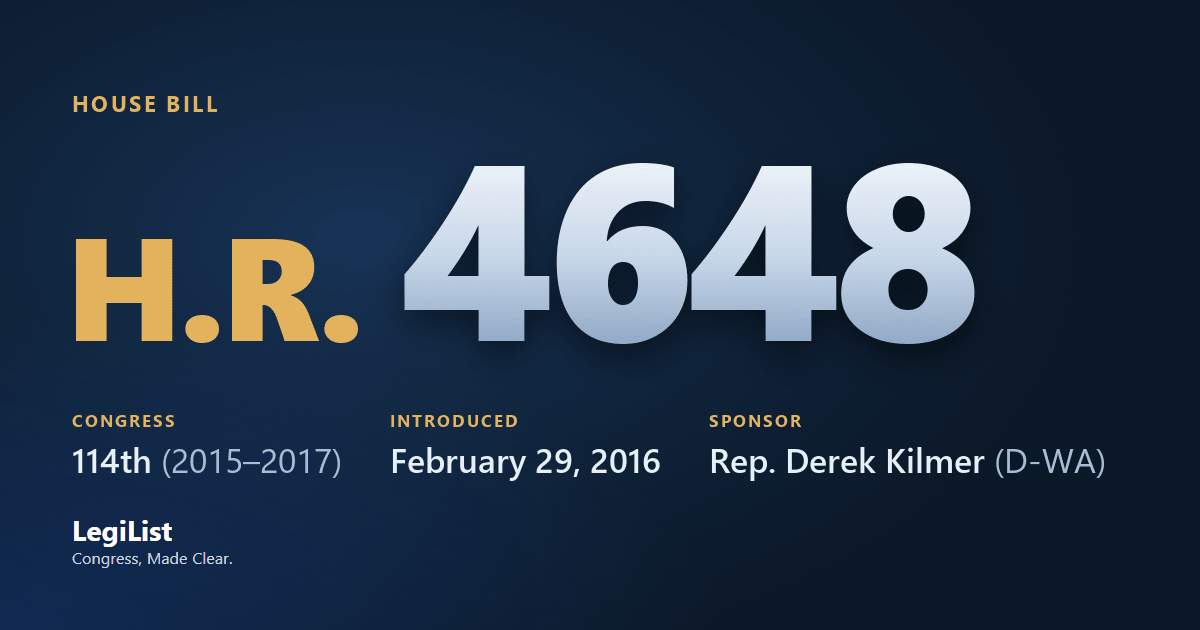
Green Stormwater Infrastructure Investment Act
Latest action · Mar 1, 2016 Referred to the Subcommittee on Water Resources and Environment.
Progress
Where this bill reached, and when. A stage with no date was not reached; one that failed a vote and later carried shows the date it carried.
- IntroducedFeb 29, 2016
- Passed HouseNot reached
- Passed SenateNot reached
- To the PresidentNot reached
- Became lawNot reached
Summary
Green Stormwater Infrastructure Investment Act
This bill amends the Federal Water Pollution Control Act (commonly known as the Clean Water Act) to assist state, tribal, and local governments to invest in green stormwater infrastructure. Green stormwater infrastructure is a stormwater management technique that uses natural or engineered systems designed to promote the uptake and filtration of stormwater at its source to protect habitats and reduce flood risks.
The bill establishes a 20% reserve within each state's Water Pollution Control Revolving Fund for installation, operation, and maintenance of green stormwater infrastructure.
The Department of Transportation must prioritize projects that include green stormwater infrastructure for competitive federal transportation infrastructure grants.
The bill also authorizes the Environmental Protection Agency to extend National Pollutant Discharge Elimination System permits for green stormwater infrastructure systems for up to 10 years.
Cosponsors 2
Members who signed on, in the order they did. Signatures ran from Feb 29, 2016 to Apr 12, 2016; 1 is an original cosponsor, there from the day it was introduced.
| Seat | Cosponsor | Signed on | |
|---|---|---|---|
| D-WA | Denny Heck | Original | Feb 29, 2016 |
| D-WA | Adam Smith | Apr 12, 2016 |
Committees 1
Where it was sent and what each committee and subcommittee did with it, in order.
| Chamber | Committee | What it did |
|---|---|---|
| House | Transportation and Infrastructure Committee | Referred Feb 29, 2016 |
| Water Resources and Environment Subcommittee | Referred Mar 1, 2016 |
Actions 3
Everything that happened, newest first.
- Mar 1, 2016Referred to the Subcommittee on Water Resources and Environment.
- Feb 29, 2016Introduced in House
- Feb 29, 2016Referred to the House Committee on Transportation and Infrastructure.
In the Congressional Record 1
Days the Record’s own index lists this bill, newest first, with the pages and the members it names. Pages starting H are the House, S the Senate, E Extensions of Remarks.
| Where | In the Record | Members | Date |
|---|---|---|---|
| House | Lists H1045H.R. 4648–4653 | — | Feb 29, 2016 |
Research
What has been written about this bill: committee reports, cost estimates, the sponsor’s authority statement, printed hearings and the Congressional Research Service’s work.
Constitutional authority
The sponsor’s statement, as printed in the Congressional Record, vol. 162, no. 32, February 29, 2016, page H1045.
CRS reports 1
Congressional Research Service work that CRS links to this bill or the law it became, newest first.
Cite it 1
Products on other subjects that cite it, usually among other measures.
| Product | Title | Kind | Published |
|---|---|---|---|
| R44482 | Water Use Efficiency Legislation in the 114th Congress Archived | Report | Dec 15, 2016 |
Titles 2
Every title it has carried, official and short, at each stage.
- Official Title as Introduced
- To provide incentives for investment in green stormwater infrastructure, and for other purposes.
- Short Titles as Introduced
- Green Stormwater Infrastructure Investment Act
Subjects
Assigned by the Library of Congress. Policy area: Environmental Protection.
Text 1
Each version as it was printed, newest first.
- Feb 29, 2016Introduced in House
Everything here is as published by Congress: the summary is the Congressional Research Service's, the action wording is the clerks', and the subjects are the Library of Congress's. How far it got is read from the actions themselves, taking the most recent one of each kind, so a bill that failed a vote and later passed is shown as having passed. Records come from this bill on Congress.gov and govinfo.gov; cost estimates are the Congressional Budget Office's, and the hearings are the printed hearings GovInfo publishes, which can appear months after the hearing.