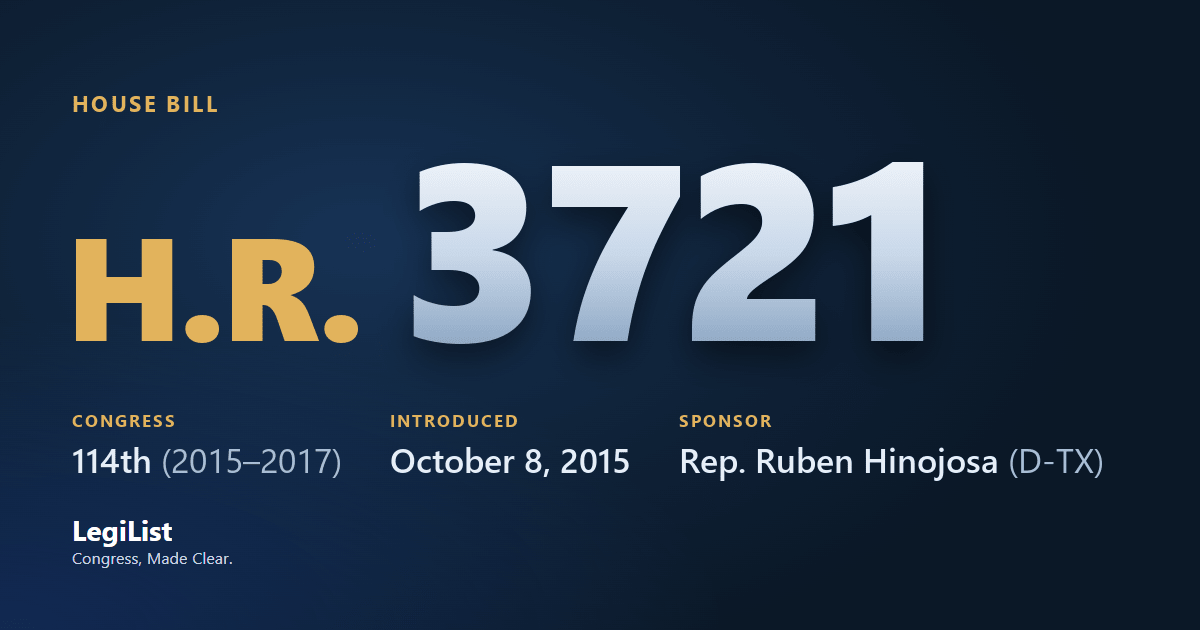
Affordable College Textbook Act
Latest action · Mar 23, 2016 Referred to the Subcommittee on Higher Education and Workforce Training.
Progress
Where this bill reached, and when. A stage with no date was not reached; one that failed a vote and later carried shows the date it carried.
- IntroducedOct 8, 2015
- Passed HouseNot reached
- Passed SenateNot reached
- To the PresidentNot reached
- Became lawNot reached
Summary
Affordable College Textbook Act
This bill directs the Department of Education (ED) to make competitive grants to institutions of higher education (IHEs) to support pilot programs that expand the use of open textbooks in order to achieve savings for students.
It requires the full and complete digital content of the educational resources created or adopted using grant funds to be made available free of charge to the public: (1) on an easily accessible and interoperable website; and (2) in a machine readable, digital format that anyone can directly download, edit with attribution, and redistribute.
ED must give special consideration to grant applicants that demonstrate the greatest potential to:
- achieve the highest level of savings for students;
- expand the use of open textbooks at other IHEs; and
- produce open textbooks that are of the highest quality, that can be most easily utilized and adapted by faculty members, that correspond to the highest enrollment courses, and that are created or adopted in partnership with entities that will assist in their marketing and distribution.
The bill amends the Higher Education Act of 1965 to include any educational material developed to accompany a college textbook as supplemental material that is subject to college textbook information disclosure requirements.
Cosponsors 6
Members who signed on, in the order they did. Signatures ran from Oct 8, 2015 to Sep 9, 2016; 2 are original cosponsors, there from the day it was introduced.
| Seat | Cosponsor | Signed on | |
|---|---|---|---|
| D-CO | Jared Polis | Original | Oct 8, 2015 |
| D-AZ | Raúl M. Grijalva | Original | Oct 8, 2015 |
| D-FL | Alcee L. Hastings | Nov 2, 2015 | |
| D-TX | Beto O'Rourke | Nov 2, 2015 | |
| D-CT | Joe Courtney | Dec 3, 2015 | |
| D-CA | Scott H. Peters | Sep 9, 2016 |
Committees 1
Where it was sent and what each committee and subcommittee did with it, in order.
| Chamber | Committee | What it did |
|---|---|---|
| House | Education and Workforce Committee | Referred Oct 8, 2015 |
| Higher Education and Workforce Development Subcommittee | Referred Mar 23, 2016 |
Actions 3
Everything that happened, newest first.
- Mar 23, 2016Referred to the Subcommittee on Higher Education and Workforce Training.
- Oct 8, 2015Introduced in House
- Oct 8, 2015Referred to the House Committee on Education and the Workforce.
Research
What has been written about this bill: committee reports, cost estimates, the sponsor’s authority statement, printed hearings and the Congressional Research Service’s work.
Constitutional authority
The sponsor’s statement, as printed in the Congressional Record, vol. 161, no. 148, October 8, 2015, page H6937.
Related bills 1
Companion bills and other measures the record links to this one.
| Bill | Title | Relationship | Latest action |
|---|---|---|---|
| S 2176 | Affordable College Textbook Act | Identical bill | Oct 8, 2015 |
Titles 2
Every title it has carried, official and short, at each stage.
- Official Title as Introduced
- To expand the use of open textbooks in order to achieve savings for students.
- Short Titles as Introduced
- Affordable College Textbook Act
Subjects
Assigned by the Library of Congress. Policy area: Education.
Text 1
Each version as it was printed, newest first.
- Oct 8, 2015Introduced in House
Support LegiList
This page is free, carries no paywall, and is built and maintained by one person. If the record here is useful to you, a few dollars keeps it going.
Everything here is as published by Congress: the summary is the Congressional Research Service's, the action wording is the clerks', and the subjects are the Library of Congress's. How far it got is read from the actions themselves, taking the most recent one of each kind, so a bill that failed a vote and later passed is shown as having passed. Records come from this bill on Congress.gov and govinfo.gov; cost estimates are the Congressional Budget Office's, and the hearings are the printed hearings GovInfo publishes, which can appear months after the hearing.