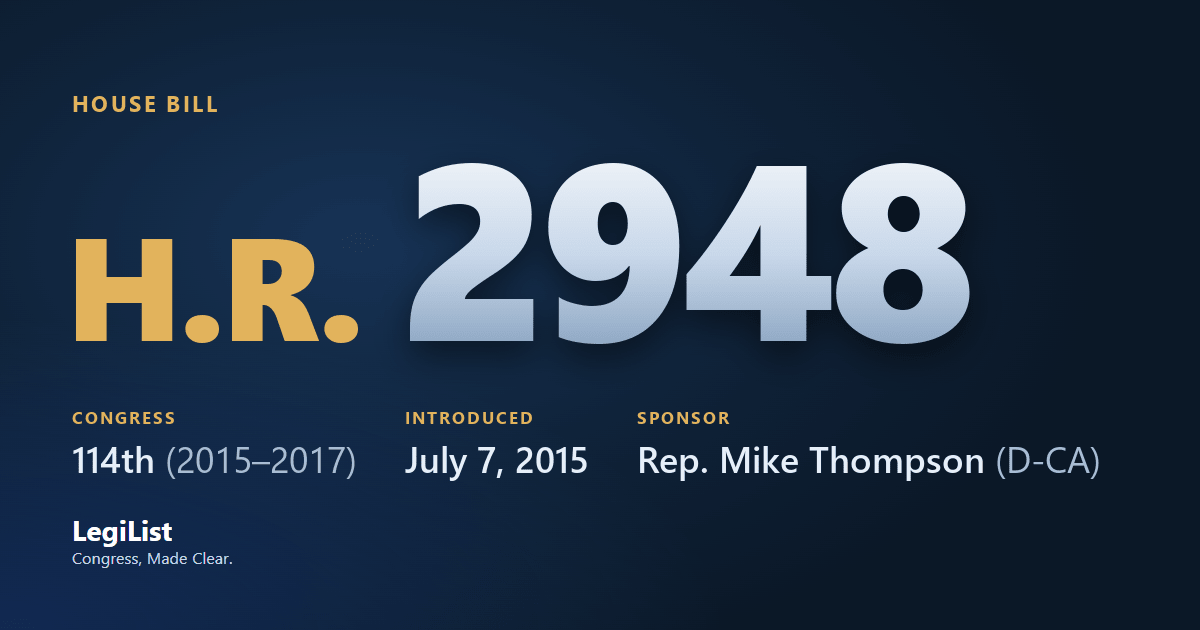
Medicare Telehealth Parity Act of 2015
Latest action · Jul 13, 2015 Referred to the Subcommittee on Health.
Progress
Where this bill reached, and when. A stage with no date was not reached; one that failed a vote and later carried shows the date it carried.
- IntroducedJul 7, 2015
- Passed HouseNot reached
- Passed SenateNot reached
- To the PresidentNot reached
- Became lawNot reached
Summary
Medicare Telehealth Parity Act of 2015
Amends title XVIII (Medicare) of the Social Security Act to expand telehealth coverage in three phases.
Extends the term "originating site," for telehealth service payment purposes, to additional sites, including any federally qualified health center and any rural health clinic, at which the eligible telehealth individual is located at the time the service is furnished via a telecommunications system.
Prohibits application of the originating site facility fee to the additional sites.
Authorizes additional telehealth providers, including a certified diabetes educator or licensed respiratory therapist, audiologist, occupational therapist, physical therapist, or speech language pathologist.
Authorizes the Department of Health and Human Services (HHS) to develop payment methods to apply in the case of anyone who would be an eligible telehealth individual except that the telehealth services are furnished at a site other than an originating site.
Extends Medicare coverage to remote patient management services for certain chronic health conditions.
Authorizes home telehealth sites as additional originating sites.
Requires the monthly fee or other basis of payment for physicians' services to individuals with end stage renal disease (ESRD) to allow for a patient-specific waiver process to permit a physician, clinical nurse specialist, nurse practitioner, or physician's assistant to request a waiver of face-to-face visit requirements for home dialysis of ESRD patients.
Requires all ESRD patients receiving home dialysis to receive a face-to-face examination at least once every three consecutive months and, in the intervening months, to receive a monthly clinical assessment which may be furnished, if the patient so chooses, via remote monitoring by a physician, clinical nurse specialist, nurse practitioner, or physician's assistant.
Directs HHS, in determining the component of a physician's fee corresponding to practice expense relative value units for diagnostic tests provided remotely, to include in direct costs of supplies and equipment the costs of the diagnostic device, clinical systems (including hardware and software), information transmission, and device delivery and installation.
Directs the Government Accountability Office to study the effectiveness of using specified telehealth services between therapy providers and patients, any associated savings, and the potential for greater use of telehealth services for other forms of therapy.
Cosponsors 67
Members who signed on, in the order they did. Signatures ran from Jul 7, 2015 to Sep 28, 2016; 3 are original cosponsors, there from the day it was introduced.
| Seat | Cosponsor | Signed on | |
|---|---|---|---|
| R-TN | Diane Black | Original | Jul 7, 2015 |
| R-MS | Gregg Harper | Original | Jul 7, 2015 |
| D-VT | Peter Welch | Original | Jul 7, 2015 |
| D-CT | Elizabeth H. Esty | Jul 14, 2015 | |
| D-CA | Anna G. Eshoo | Jul 15, 2015 | |
| R-FL | David W. Jolly | Jul 15, 2015 | |
| D-CA | Mark DeSaulnier | Jul 23, 2015 | |
| D-CA | Zoe Lofgren | Jul 23, 2015 | |
| D-CO | Jared Polis | Jul 28, 2015 | |
| D-AZ | Ann Kirkpatrick | Jul 29, 2015 | |
| R-MT | Ryan K. Zinke | Jul 29, 2015 | |
| R-MS | Steven M. Palazzo | Jul 29, 2015 | |
| D-FL | Alcee L. Hastings | Sep 8, 2015 | |
| R-TX | Kenny Marchant | Sep 8, 2015 | |
| R-FL | Richard B. Nugent | Sep 8, 2015 |
Committees 2
Where it was sent and what each committee and subcommittee did with it, in order.
| Chamber | Committee | What it did |
|---|---|---|
| House | Energy and Commerce Committee | Referred Jul 7, 2015 |
| Health Subcommittee | Referred Jul 10, 2015 | |
| House | Ways and Means Committee | Referred Jul 7, 2015 |
| Health Subcommittee | Referred Jul 13, 2015 |
Actions 4
Everything that happened, newest first.
- Jul 13, 2015Referred to the Subcommittee on Health.
- Jul 10, 2015Referred to the Subcommittee on Health.
- Jul 7, 2015Introduced in House
- Jul 7, 2015Referred to the Committee on Energy and Commerce, and in addition to the Committee on Ways and Means, for a period to be subsequently determined by the Speaker, in each case for consideration of such provisions as fall within the jurisdiction of the committee concerned.
Research
What has been written about this bill: committee reports, cost estimates, the sponsor’s authority statement, printed hearings and the Congressional Research Service’s work.
Constitutional authority
The sponsor’s statement, as printed in the Congressional Record, vol. 161, no. 104, July 7, 2015, page H4861.
Related bills 1
Companion bills and other measures the record links to this one.
| Bill | Title | Relationship | Latest action |
|---|---|---|---|
| HR 2550 | Medicare Telehealth Parity Act of 2017 | Reintroduced Bill | Jun 1, 2017 |
Titles 2
Every title it has carried, official and short, at each stage.
- Official Title as Introduced
- To amend title XVIII of the Social Security Act to provide for an incremental expansion of telehealth coverage under the Medicare program.
- Short Titles as Introduced
- Medicare Telehealth Parity Act of 2015
Subjects
Assigned by the Library of Congress. Policy area: Health.
- Cardiovascular and respiratory health
- Congressional oversight
- Digestive and metabolic diseases
- Government studies and investigations
- Health
- Health care costs and insurance
- Health facilities and institutions
- Health personnel
- Health technology, devices, supplies
- Hearing, speech, and vision care
- Home and outpatient care
- Medical tests and diagnostic methods
- Medicare
Text 1
Each version as it was printed, newest first.
- Jul 7, 2015Introduced in House
Support LegiList
This page is free, carries no paywall, and is built and maintained by one person. If the record here is useful to you, a few dollars keeps it going.
Everything here is as published by Congress: the summary is the Congressional Research Service's, the action wording is the clerks', and the subjects are the Library of Congress's. How far it got is read from the actions themselves, taking the most recent one of each kind, so a bill that failed a vote and later passed is shown as having passed. Records come from this bill on Congress.gov and govinfo.gov; cost estimates are the Congressional Budget Office's, and the hearings are the printed hearings GovInfo publishes, which can appear months after the hearing.