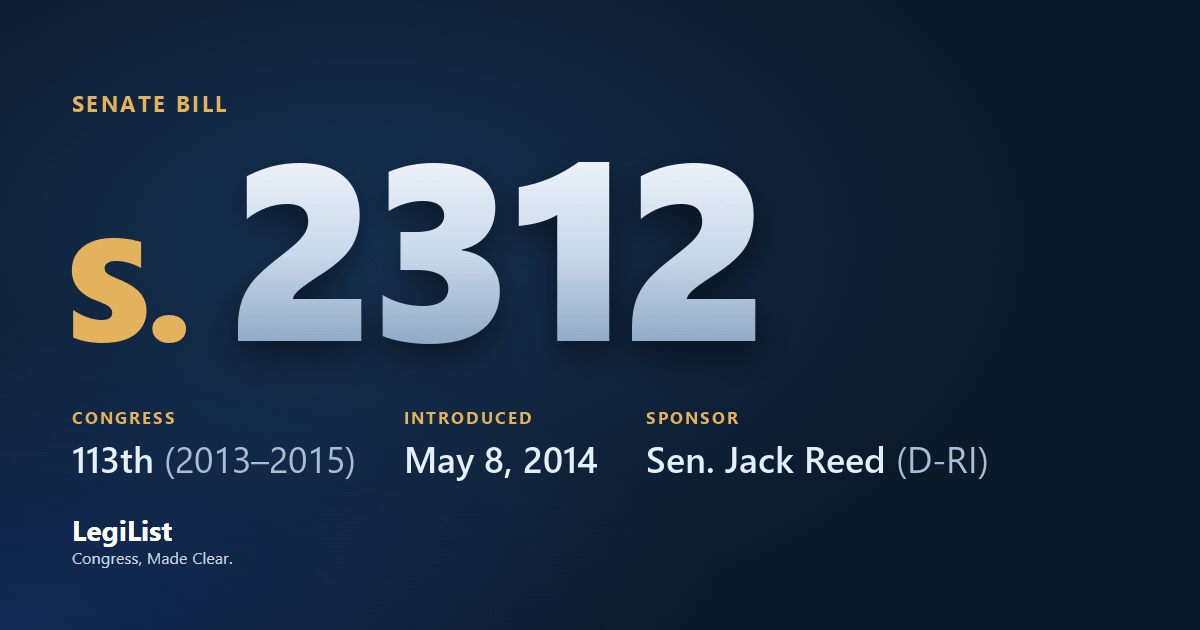
National Guard Technician Equity Act
Latest action · May 8, 2014 Read twice and referred to the Committee on Armed Services.
Progress
Where this bill reached, and when. A stage with no date was not reached; one that failed a vote and later carried shows the date it carried.
- IntroducedMay 8, 2014
- Passed SenateNot reached
- Passed HouseNot reached
- To the PresidentNot reached
- Became lawNot reached
Summary
National Guard Technician Equity Act - Provides a person the right to be employed as a non-dual status technician if: (1) the technician position has been designated to be filled only by a non-dual status technician, or (2) the person occupying the technician position has at least 20 years of service as a dual status military technician.
Repeals: (1) the permanent limitation on the number of non-dual status technicians, and (2) the prohibition against overtime pay for National Guard technicians.
Allows military technicians who were hired as dual status technicians but are no longer members of the Selected Reserve to continue to receive compensation.
Requires dual status military technicians who are fully qualified for, and properly performing, the duties of such position to be: (1) retained in the Armed Forces, (2) exempt from consideration for involuntary separation by a military retention board, and (3) entitled to re-enlist as enlisted members so as to maintain their eligibility for continued employment as dual status military technicians.
Provides for a technician's rights of grievance, arbitration, appeal, and review beyond the current stage of the adjutant general of the jurisdiction concerned.
Prohibits federal employees who volunteer for active National Guard and Reserve duty from accruing military leave at the rate of 15 days each fiscal year for active duty, inactive duty training, or funeral honors duty in the National Guard or Reserves.
Directs the Comptroller General to evaluate the feasibility of converting military technicians from coverage under the Federal Employees Health Benefits Program (FEHBP) to coverage under the TRICARE Reserve Select option of the TRICARE program.
Cosponsors
Members who signed on, in the order they did.
Committees 1
Where it was sent and what each committee and subcommittee did with it, in order.
| Chamber | Committee | What it did |
|---|---|---|
| Senate | Armed Services Committee | Referred May 8, 2014 |
Actions 3
Everything that happened, newest first.
- May 8, 2014Introduced in Senate
- May 8, 2014Sponsor introductory remarks on measure. (CR S2878)
- May 8, 2014Read twice and referred to the Committee on Armed Services.
In the Congressional Record 1
Days the Record’s own index lists this bill, newest first, with the pages and the members it names. Pages starting H are the House, S the Senate, E Extensions of Remarks.
Research
What has been written about this bill: committee reports, cost estimates, the sponsor’s authority statement, printed hearings and the Congressional Research Service’s work.
CRS reports 1
Congressional Research Service work that CRS links to this bill or the law it became, newest first.
Cite it 1
Products on other subjects that cite it, usually among other measures.
| Product | Title | Kind | Published |
|---|---|---|---|
| R45968 | Limits on TRICARE for Reservists: Frequently Asked Questions | Report | Jan 28, 2025 |
Titles 2
Every title it has carried, official and short, at each stage.
- Official Title as Introduced
- A bill to amend titles 5, 10, and 32, United States Code, to eliminate inequities in the treatment of National Guard technicians, and for other purposes.
- Short Titles as Introduced
- National Guard Technician Equity Act
Subjects
Assigned by the Library of Congress. Policy area: Armed Forces and National Security.
Text 1
Each version as it was printed, newest first.
- May 8, 2014Introduced in Senate
Support LegiList
This page is free, carries no paywall, and is built and maintained by one person. If the record here is useful to you, a few dollars keeps it going.
Everything here is as published by Congress: the summary is the Congressional Research Service's, the action wording is the clerks', and the subjects are the Library of Congress's. How far it got is read from the actions themselves, taking the most recent one of each kind, so a bill that failed a vote and later passed is shown as having passed. Records come from this bill on Congress.gov and govinfo.gov; cost estimates are the Congressional Budget Office's, and the hearings are the printed hearings GovInfo publishes, which can appear months after the hearing.