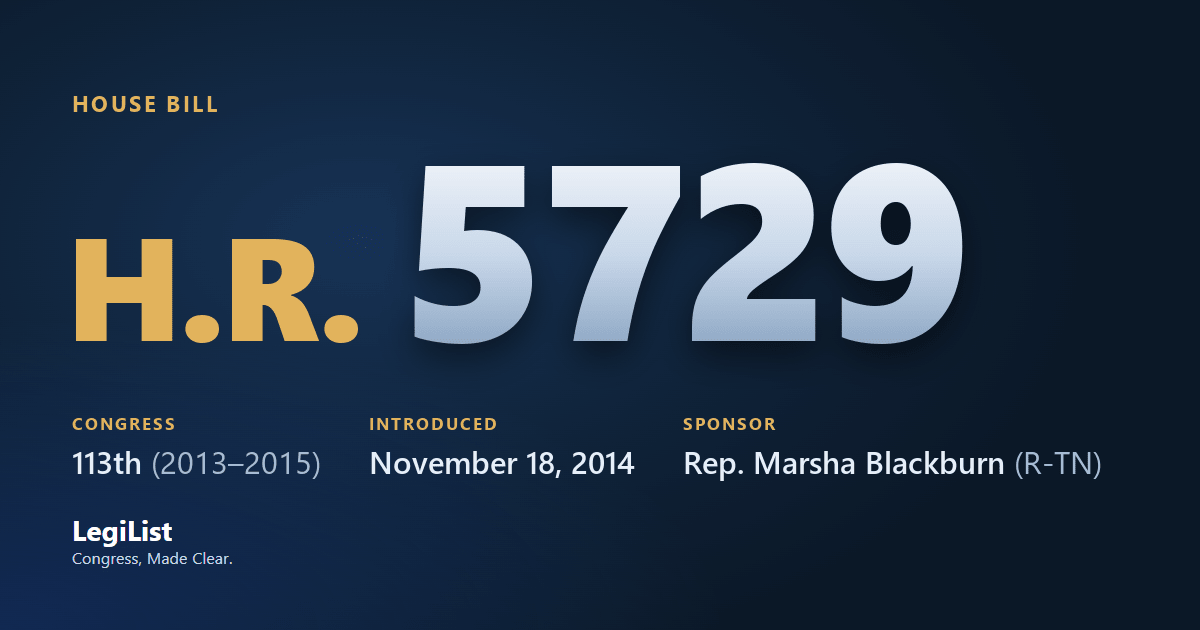
Adding Ebola to the FDA Priority Review Voucher Program Act
Latest action · Nov 21, 2014 Referred to the Subcommittee on Health.
Progress
Where this bill reached, and when. A stage with no date was not reached; one that failed a vote and later carried shows the date it carried.
- IntroducedNov 18, 2014
- Passed HouseNot reached
- Passed SenateNot reached
- To the PresidentNot reached
- Became lawNot reached
Summary
Adding Ebola to the FDA Priority Review Voucher Program Act - Amends the Federal Food, Drug, and Cosmetic Act to add filoviruses, a family of viruses that includes the Ebola virus, to the list of tropical diseases under the priority review voucher program, which awards vouchers to sponsors of human drug applications that are approved to prevent or treat tropical diseases. (A voucher entitles the holder to have a future human drug application acted upon by the Food and Drug Administration (FDA) within six months.)
Changes the process by which infectious diseases that do not significantly impact developed nations and disproportionately affect poor and marginalized populations can be designated as tropical diseases from rulemaking to order of the Secretary of Health and Human Services (HHS).
Allows priority review vouchers to be transferred between sponsors of human drug applications any number of times.
Reduces from 365 days to 90 days the advance notice required before submitting a human drug application subject to a priority review voucher.Cosponsors 4
Members who signed on, in the order they did. All signed on Nov 18, 2014.
| Seat | Cosponsor | Signed on | |
|---|---|---|---|
| R-TN | Charles J. "Chuck" Fleischmann | Original | Nov 18, 2014 |
| D-NC | G. K. Butterfield | Original | Nov 18, 2014 |
| D-TX | Gene Green | Original | Nov 18, 2014 |
| R-TX | Michael T. McCaul | Original | Nov 18, 2014 |
Committees 1
Where it was sent and what each committee and subcommittee did with it, in order.
| Chamber | Committee | What it did |
|---|---|---|
| House | Energy and Commerce Committee | Referred Nov 18, 2014 |
| Health Subcommittee | Referred Nov 21, 2014 |
Actions 3
Everything that happened, newest first.
- Nov 21, 2014Referred to the Subcommittee on Health.
- Nov 18, 2014Introduced in House
- Nov 18, 2014Referred to the House Committee on Energy and Commerce.
Research
What has been written about this bill: committee reports, cost estimates, the sponsor’s authority statement, printed hearings and the Congressional Research Service’s work.
Constitutional authority
The sponsor’s statement, as printed in the page H8071.
Printed hearings 1
Hearings whose printed record names this bill, newest first: hearings on it, and wider hearings where it came up.
| Number | Hearing | Committee | Held |
|---|---|---|---|
| Serial No. 113-182 | EXAMINING MEDICAL PRODUCT DEVELOPMENT IN THE WAKE OF THE EBOLA EPIDEMIC134 pages | Energy and Commerce Committee | Nov 19, 2014 |
Related bills 1
Companion bills and other measures the record links to this one.
| Bill | Title | Relationship | Latest action |
|---|---|---|---|
| S 2917 | Adding Ebola to the FDA Priority Review Voucher Program Act | Identical bill | Dec 16, 2014 |
Titles 2
Every title it has carried, official and short, at each stage.
- Official Title as Introduced
- To expand the program of priority review to encourage treatments for tropical diseases.
- Short Titles as Introduced
- Adding Ebola to the FDA Priority Review Voucher Program Act
Subjects
Assigned by the Library of Congress. Policy area: Health.
Text 1
Each version as it was printed, newest first.
- Nov 18, 2014Introduced in House
Support LegiList
This page is free, carries no paywall, and is built and maintained by one person. If the record here is useful to you, a few dollars keeps it going.
Everything here is as published by Congress: the summary is the Congressional Research Service's, the action wording is the clerks', and the subjects are the Library of Congress's. How far it got is read from the actions themselves, taking the most recent one of each kind, so a bill that failed a vote and later passed is shown as having passed. Records come from this bill on Congress.gov and govinfo.gov; cost estimates are the Congressional Budget Office's, and the hearings are the printed hearings GovInfo publishes, which can appear months after the hearing.