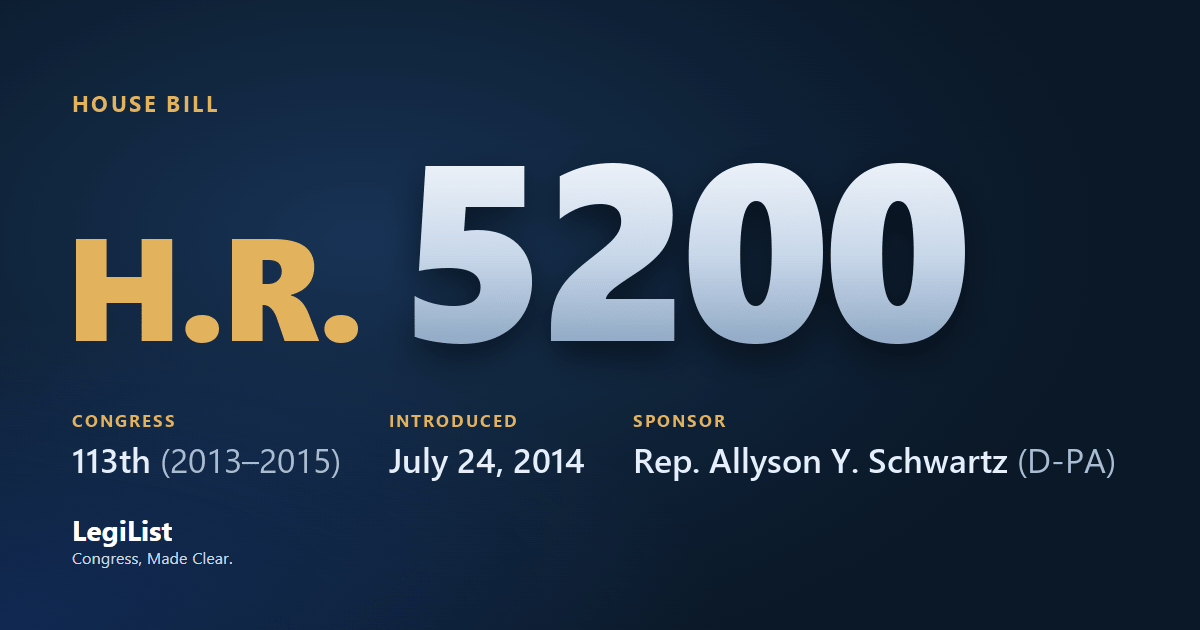
Care Coordination for Older Americans Act of 2014
Latest action · Nov 17, 2014 Referred to the Subcommittee on Higher Education and Workforce Training.
Progress
Where this bill reached, and when. A stage with no date was not reached; one that failed a vote and later carried shows the date it carried.
- IntroducedJul 24, 2014
- Passed HouseNot reached
- Passed SenateNot reached
- To the PresidentNot reached
- Became lawNot reached
Summary
Care Coordination for Older Americans Act of 2014 - Amends the Older Americans Act of 1965 to make it a duty and function of the Administration on Aging (AOA) in the Department of Health and Human Services (HHS) to provide technical assistance to, and share best practices with, states, area agencies on aging, Aging and Disability Resource Centers, and service providers to carry out outreach and coordinate activities with health care entities in order to assure better care coordination for individuals with multiple chronic illnesses. Requires AOA also to coordinate activities with other federal agencies working to improve care coordination and developing new models and best practices.
Requires the designated state agency to promote the development and implementation of a state system to: (1) address the care coordination needs of older individuals with multiple chronic illnesses; and (2) work with acute care providers, area agencies on aging, service providers, and federal agencies to ensure that the system uses best practices.
Requires area and state plans to provide assurances that the area agencies on aging will facilitate the area-wide development and implementation of an area-wide system to address the care coordination needs of older individuals with multiple chronic illnesses.
Cosponsors 4
Members who signed on, in the order they did. Signatures ran from Jul 24, 2014 to Jul 25, 2014; 3 are original cosponsors, there from the day it was introduced.
| Seat | Cosponsor | Signed on | |
|---|---|---|---|
| D-FL | Alan Grayson | Original | Jul 24, 2014 |
| D-CA | Lucille Roybal-Allard | Original | Jul 24, 2014 |
| D-FL | Theodore E. Deutch | Original | Jul 24, 2014 |
| D-CA | Doris O. Matsui | Jul 25, 2014 |
Committees 1
Where it was sent and what each committee and subcommittee did with it, in order.
| Chamber | Committee | What it did |
|---|---|---|
| House | Education and Workforce Committee | Referred Jul 24, 2014 |
| Higher Education and Workforce Development Subcommittee | Referred Nov 17, 2014 |
Actions 3
Everything that happened, newest first.
- Nov 17, 2014Referred to the Subcommittee on Higher Education and Workforce Training.
- Jul 24, 2014Introduced in House
- Jul 24, 2014Referred to the House Committee on Education and the Workforce.
Research
What has been written about this bill: committee reports, cost estimates, the sponsor’s authority statement, printed hearings and the Congressional Research Service’s work.
Constitutional authority
The sponsor’s statement, as printed in the page H6815.
Titles 2
Every title it has carried, official and short, at each stage.
- Official Title as Introduced
- To amend the Older Americans Act of 1965 to define care coordination, include care coordination as a fully restorative service, and detail the care coordination functions of the Assistant Secretary, and for other purposes.
- Short Titles as Introduced
- Care Coordination for Older Americans Act of 2014
Subjects
Assigned by the Library of Congress. Policy area: Health.
Text 1
Each version as it was printed, newest first.
- Jul 24, 2014Introduced in House
Support LegiList
This page is free, carries no paywall, and is built and maintained by one person. If the record here is useful to you, a few dollars keeps it going.
Everything here is as published by Congress: the summary is the Congressional Research Service's, the action wording is the clerks', and the subjects are the Library of Congress's. How far it got is read from the actions themselves, taking the most recent one of each kind, so a bill that failed a vote and later passed is shown as having passed. Records come from this bill on Congress.gov and govinfo.gov; cost estimates are the Congressional Budget Office's, and the hearings are the printed hearings GovInfo publishes, which can appear months after the hearing.