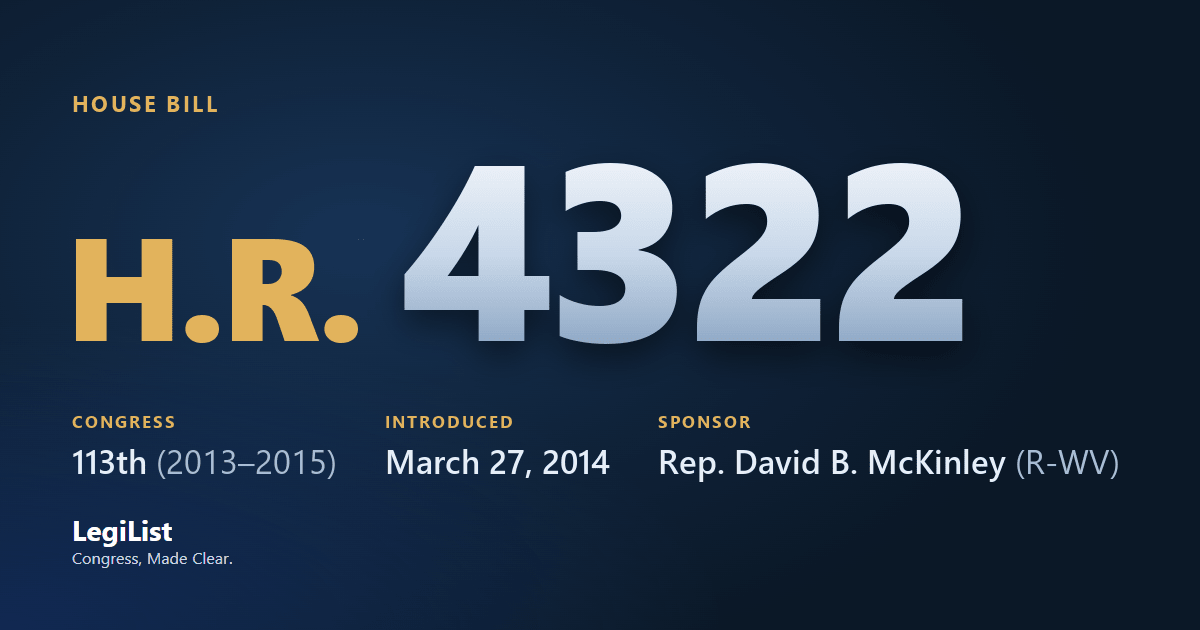
American Manufacturing and Worker Protection Act of 2014
Latest action · Mar 27, 2014 Referred to the House Committee on Ways and Means.
Progress
Where this bill reached, and when. A stage with no date was not reached; one that failed a vote and later carried shows the date it carried.
- IntroducedMar 27, 2014
- Passed HouseNot reached
- Passed SenateNot reached
- To the PresidentNot reached
- Became lawNot reached
Summary
American Manufacturing and Worker Protection Act of 2014 - Amends the Tariff Act of 1930 to direct the Commissioner of the U.S. Customs and Border Protection (CBP) to distribute semiannually all funds (including any interest earned) from duties assessed pursuant to a countervailing duty order or antidumping duty order or finding (antidumping and subsidy protection amount) to affected domestic producers for qualifying expenditures and cash to eligible employees.
Defines "affected domestic producer" to mean a currently operating manufacturer or producer that was a petitioner or interested party in support of a petition for which an antidumping duty order, finding, or countervailing duty order has been entered.
Defines "eligible employee" of an affected domestic producer as an individual who: (1) has been totally or partially separated from employment with that producer because of dumping or a subsidy for which an antidumping duty order, finding, or countervailing duty order has been entered; or (2) is an employee of the affected domestic producer at the time a distribution is made.
Defines "qualifying expenditures" to mean certain expenditures incurred by an affected domestic producer after the issuance of an antidumping duty order, finding, or countervailing duty order.
Requires the CBP Commissioner to establish in the Treasury a special account for each such order or finding and to deposit in those accounts all funds (including any interest earned) from antidumping or countervailing duties assessed on or after October 1, 2014.
Declares that the requirements of this Act shall apply with respect to goods from Canada and Mexico.
Cosponsors 1
Members who signed on, in the order they did. All signed on Mar 27, 2014.
| Seat | Cosponsor | Signed on | |
|---|---|---|---|
| D-IL | Bobby L. Rush | Original | Mar 27, 2014 |
Committees 1
Where it was sent and what each committee and subcommittee did with it, in order.
| Chamber | Committee | What it did |
|---|---|---|
| House | Ways and Means Committee | Referred Mar 27, 2014 |
Actions 2
Everything that happened, newest first.
- Mar 27, 2014Introduced in House
- Mar 27, 2014Referred to the House Committee on Ways and Means.
Research
What has been written about this bill: committee reports, cost estimates, the sponsor’s authority statement, printed hearings and the Congressional Research Service’s work.
Constitutional authority
The sponsor’s statement, as printed in the page H2745.
Printed hearings 2
Hearings whose printed record names this bill, newest first: hearings on it, and wider hearings where it came up.
| Number | Hearing | Committee | Held |
|---|---|---|---|
| Serial No. 113-186 | EXAMINING FDA'S ROLE IN THE REGULATION OF GENETICALLY MODIFIED FOOD INGREDIENTS144 pages | Energy and Commerce Committee | Dec 10, 2014 |
| S. Hrg. 113-423 | IMPROVING THE TRUST SYSTEM: CONTINUING OVERSIGHT OF THE DEPARTMENT OF THE INTERIOR'S LAND BUY-BACK PROGRAM54 pages | Indian Affairs Committee | Jul 16, 2014 |
Titles 2
Every title it has carried, official and short, at each stage.
- Official Title as Introduced
- To amend the Tariff Act of 1930 to provide for the payment to affected producers and their employees of duties that are collected pursuant to countervailing and antidumping duty orders, and for other purposes.
- Short Titles as Introduced
- American Manufacturing and Worker Protection Act of 2014
Subjects
Assigned by the Library of Congress. Policy area: Foreign Trade and International Finance.
Text 1
Each version as it was printed, newest first.
- Mar 27, 2014Introduced in House
Support LegiList
This page is free, carries no paywall, and is built and maintained by one person. If the record here is useful to you, a few dollars keeps it going.
Everything here is as published by Congress: the summary is the Congressional Research Service's, the action wording is the clerks', and the subjects are the Library of Congress's. How far it got is read from the actions themselves, taking the most recent one of each kind, so a bill that failed a vote and later passed is shown as having passed. Records come from this bill on Congress.gov and govinfo.gov; cost estimates are the Congressional Budget Office's, and the hearings are the printed hearings GovInfo publishes, which can appear months after the hearing.