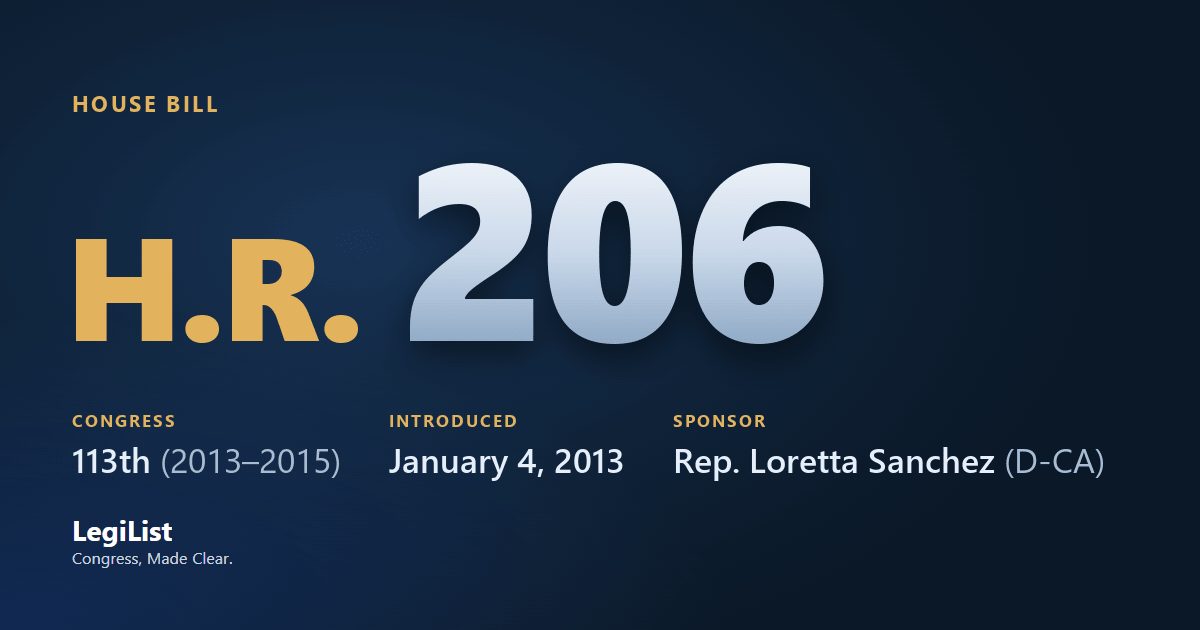
STALKERS Act of 2013
Latest action · Jan 25, 2013 Referred to the Subcommittee on Crime, Terrorism, Homeland Security, And Investigations.
Progress
Where this bill reached, and when. A stage with no date was not reached; one that failed a vote and later carried shows the date it carried.
- IntroducedJan 4, 2013
- Passed HouseNot reached
- Passed SenateNot reached
- To the PresidentNot reached
- Became lawNot reached
Summary
STALKERS Act of 2013 - Amends the federal criminal code to revise the definition of stalking and impose criminal penalties on anyone who, with intent to kill, physically injure, harass, or intimidate a person or to place a person under surveillance with the intent to kill, physically injure, harass, or intimidate such person, travels in interstate or foreign commerce or within the special maritime and territorial jurisdiction of the United States or enters or leaves Indian country and: (1) causes or attempts to cause bodily injury or serious emotional distress to another person, or (2) engages in conduct that would be reasonably expected to cause serious emotional distress to another person.
Imposes the same criminal penalties on anyone who, with intent to kill, physically injure, harass, or intimidate a person, engages in a course of conduct in or substantially affecting interstate or foreign commerce that: (1) causes or attempts to cause bodily injury or serious emotional distress to another person, or (2) occurs in circumstances where the conduct would be reasonably expected to cause another person serious emotional distress.
Increases penalties for stalking offenses if: (1) the offense involves conduct in violation of a protection order, or (2) the victim of the offense is under the age of 18 or over the age of 65.
Requires the annual report of the Attorney General to include an evaluation of efforts to enforce laws relating to stalking and to identify and describe elements of such efforts that constitute the best practices for the enforcement of such laws.
Provides for compliance of the budgetary effects of this Act with the Statutory Pay-As-You-Go Act of 2010.
Cosponsors 1
Members who signed on, in the order they did. All signed on Jan 4, 2013.
| Seat | Cosponsor | Signed on | |
|---|---|---|---|
| R-NC | Virginia Foxx | Original | Jan 4, 2013 |
Committees 2
Where it was sent and what each committee and subcommittee did with it, in order.
| Chamber | Committee | What it did |
|---|---|---|
| House | Judiciary Committee | Referred Jan 4, 2013 |
| Crime and Federal Government Surveillance Subcommittee | Referred Jan 25, 2013 | |
| House | Budget Committee | Referred Jan 4, 2013 |
Actions 3
Everything that happened, newest first.
- Jan 25, 2013Referred to the Subcommittee on Crime, Terrorism, Homeland Security, And Investigations.
- Jan 4, 2013Introduced in House
- Jan 4, 2013Referred to the Committee on the Judiciary, and in addition to the Committee on the Budget, for a period to be subsequently determined by the Speaker, in each case for consideration of such provisions as fall within the jurisdiction of the committee concerned.
Research
What has been written about this bill: committee reports, cost estimates, the sponsor’s authority statement, printed hearings and the Congressional Research Service’s work.
Constitutional authority
The sponsor’s statement, as printed in the page H55.
Titles 2
Every title it has carried, official and short, at each stage.
- Official Title as Introduced
- To amend title 18, United States Code, with respect to the offense of stalking.
- Short Titles as Introduced
- STALKERS Act of 2013
Subjects
Assigned by the Library of Congress. Policy area: Crime and Law Enforcement.
Text 1
Each version as it was printed, newest first.
- Jan 4, 2013Introduced in House
Support LegiList
This page is free, carries no paywall, and is built and maintained by one person. If the record here is useful to you, a few dollars keeps it going.
Everything here is as published by Congress: the summary is the Congressional Research Service's, the action wording is the clerks', and the subjects are the Library of Congress's. How far it got is read from the actions themselves, taking the most recent one of each kind, so a bill that failed a vote and later passed is shown as having passed. Records come from this bill on Congress.gov and govinfo.gov; cost estimates are the Congressional Budget Office's, and the hearings are the printed hearings GovInfo publishes, which can appear months after the hearing.