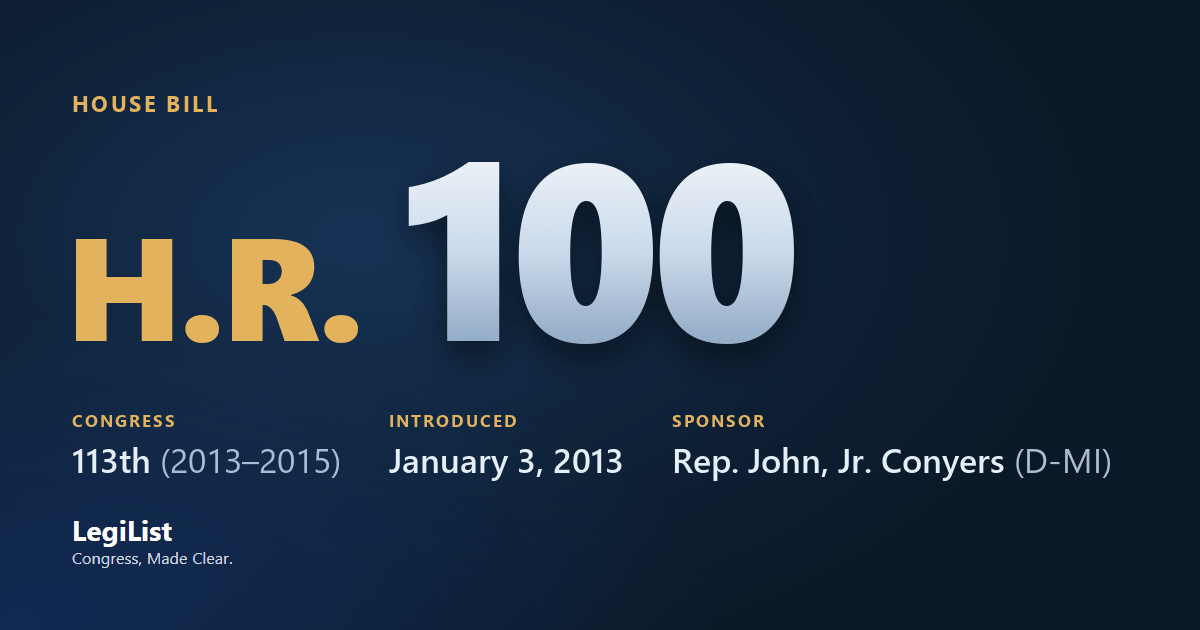
Protecting Employees and Retirees in Business Bankruptcies Act of 2013
Latest action · Jan 25, 2013 Referred to the Subcommittee on Regulatory Reform, Commercial And Antitrust Law.
Progress
Where this bill reached, and when. A stage with no date was not reached; one that failed a vote and later carried shows the date it carried.
- IntroducedJan 3, 2013
- Passed HouseNot reached
- Passed SenateNot reached
- To the PresidentNot reached
- Became lawNot reached
Summary
Protecting Employees and Retirees in Business Bankruptcies Act of 2013 - Amends federal bankruptcy law governing expenses and claims to increase to $20,000: (1) allowed unsecured claims in the fourth order of priority (wages, salaries, or commissions); and (2) the factor multiplied by the number of employees covered with respect to employee benefit plan contributions in the fifth order of priority.
Includes within the scope of a claim in bankruptcy certain equity securities held in a defined contribution plan for the benefit of certain individuals, but only if an employer or plan sponsor who has commenced a case in bankruptcy has committed fraud regarding the plan or has otherwise breached a duty to the participant that has proximately caused the loss of value.
Allows as an administrative expense of the estate: (1) severance pay owed to certain employees of the debtor for layoff or termination (which pay shall be deemed earned in full), and (2) damages as a result of violation of law by the debtor.
Includes among prerequisites for confirmation of a business reorganization bankruptcy plan (Chapter 11) provision for: (1) recovery of damages payable for the rejection of a collective bargaining agreement, or other financial returns as negotiated by the debtor and the authorized representative; (2) continued payment of retiree benefits maintained or established by the debtor before the petition filing date if no modifications are made before confirmation of the plan; and (3) recovery of claims arising from the modification of retiree benefits or for certain financial returns, as negotiated by the debtor and the authorized representative.
Revises requirements governing: (1) rejection of collective bargaining agreements; (2) payment of insurance benefits to retired employees, including benefit modifications proposed by the trustee; and (3) a trustee's administrative power to dispose of property. Requires the court, in approving a sale of business assets, to consider the extent to which a bidder has offered to maintain existing jobs, preserve terms and conditions of employment, and assume or match pension and retiree health benefit obligations in determining whether an offer constitutes the highest or best offer for such property.
Requires the bankruptcy court to allow certain claims asserted by an active or retired participant, or by a labor organization representing such participant, for any shortfall in pension benefits accrued as a result of the termination of the plan and limitations upon the payment of certain statutory benefits.
States that, if employees have not received wages and benefits for services rendered on and after the date of the commencement of the case in bankruptcy, such unpaid obligations shall be deemed necessary costs and expenses of preserving, or disposing of, property securing an allowed secured claim and shall be recovered even if the trustee has otherwise waived certain provisions under an agreement with the holder of the allowed secured claim.
Allows reduction of a debtor's time frame for filing a Chapter 11 bankruptcy plan in the event of: (1) the filing of a motion seeking rejection of a collective bargaining agreement if a plan based upon an alternative proposal by the labor organization is reasonably likely to be confirmed within a reasonable time; or (2) the proposed filing of a plan by a proponent other than the debtor, which incorporates the terms of a settlement with a labor organization, if such plan is reasonably likely to be confirmed within a reasonable time.
Modifies requirements for confirmation of a Chapter 11 bankruptcy plan to prohibit approval of: (1) payments or other distributions for the benefit of insiders, senior executive officers, and certain highly compensated employees or consultants providing services to the debtor, except as part of those generally applicable to the debtor's employees if the court determines that such payments are not excessive or disproportionate compared to distributions to the debtor's nonmanagement workforce; and (2) insider compensation unless approved by the court as reasonable according to specified criteria.
Restricts: (1) certain executive compensation enhancements as part of the allowance of administrative expenses; (2) trustee assumption of certain deferred compensation arrangements for the benefit of insiders, senior executive officers, or certain highly compensated employees of the debtor; and (3) trustee assumption of retiree benefits for insiders, senior executive officers, or certain highly compensated employees of the debtor if the debtor has obtained relief to impose reductions in retiree benefits, or health benefits of active employees of the debtor, or has reduced or eliminated health benefits for active or retired employees within 180 days before the date of the commencement of the case.
Requires the court, where a debtor has obtained relief by which it reduces the cost of its obligations under a collective bargaining agreement or a retiree plan, fund, or program of retiree benefits, to determine before granting relief the percentage diminution in the value of the obligations when compared to the debtor's obligations under the collective bargaining agreement, or with respect to retiree benefits.
Authorizes the trustee in bankruptcy to avoid a transfer made in anticipation of bankruptcy to or for the benefit of an insider, including certain consultants who were formerly insiders and who are retained to provide services to an entity that becomes a debtor.
Grants a labor organization creditor status for purposes of filing a proof of claim.
Declares that the filing of a petition for relief does not operate as an automatic stay of the commencement or continuation of a dispute resolution proceeding established by a collective bargaining agreement that was or could have been commenced against the debtor before the filing of a petition, including payment or enforcement of an award or settlement under such proceeding.
Cosponsors 13
Members who signed on, in the order they did. Signatures ran from Jan 3, 2013 to Apr 9, 2014; 7 are original cosponsors, there from the day it was introduced.
| Seat | Cosponsor | Signed on | |
|---|---|---|---|
| D-CA | George Miller | Original | Jan 3, 2013 |
| D-GA | Henry C. "Hank" Johnson, Jr. | Original | Jan 3, 2013 |
| D-NY | Jerrold Nadler | Original | Jan 3, 2013 |
| D-NC | Melvin L. Watt | Original | Jan 3, 2013 |
| D-TX | Sheila Jackson Lee | Original | Jan 3, 2013 |
| D-TN | Steve Cohen | Original | Jan 3, 2013 |
| D-FL | Theodore E. Deutch | Original | Jan 3, 2013 |
| D-MI | John D. Dingell | Jan 4, 2013 | |
| D-CA | Linda T. Sánchez | Jan 4, 2013 | |
| D-CA | Zoe Lofgren | Jan 4, 2013 | |
| D-CA | Barbara Lee | Jan 14, 2013 | |
| D-CA | Karen Bass | Feb 6, 2013 | |
| D-CA | Eric Swalwell | Apr 9, 2014 |
Committees 1
Where it was sent and what each committee and subcommittee did with it, in order.
| Chamber | Committee | What it did |
|---|---|---|
| House | Judiciary Committee | Referred Jan 3, 2013 |
| Administrative State, Regulatory Reform, and Antitrust Subcommittee | Referred Jan 25, 2013 |
Actions 4
Everything that happened, newest first.
- Jan 25, 2013Referred to the Subcommittee on Regulatory Reform, Commercial And Antitrust Law.
- Jan 3, 2013Introduced in House
- Jan 3, 2013Sponsor introductory remarks on measure. (CR E5-8)
- Jan 3, 2013Referred to the House Committee on the Judiciary.
In the Congressional Record 1
Days the Record’s own index lists this bill, newest first, with the pages and the members it names. Pages starting H are the House, S the Senate, E Extensions of Remarks.
| Where | In the Record | Members | Date |
|---|---|---|---|
| Extensions | Debate and remarks E5Explanations E5–E8 | John Conyers, Jr. D-MI | Jan 3, 2013 |
Research
What has been written about this bill: committee reports, cost estimates, the sponsor’s authority statement, printed hearings and the Congressional Research Service’s work.
Constitutional authority
The sponsor’s statement, as printed in the page H36.
Related bills 1
Companion bills and other measures the record links to this one.
| Bill | Title | Relationship | Latest action |
|---|---|---|---|
| S 2589 | Protecting Employees and Retirees in Business Bankruptcies Act of 2014 | Related bill | Jul 10, 2014 |
Titles 2
Every title it has carried, official and short, at each stage.
- Official Title as Introduced
- To amend title 11, United States Code, to improve protections for employees and retirees in business bankruptcies.
- Short Titles as Introduced
- Protecting Employees and Retirees in Business Bankruptcies Act of 2013
Subjects
Assigned by the Library of Congress. Policy area: Finance and Financial Sector.
Text 1
Each version as it was printed, newest first.
- Jan 3, 2013Introduced in House
Everything here is as published by Congress: the summary is the Congressional Research Service's, the action wording is the clerks', and the subjects are the Library of Congress's. How far it got is read from the actions themselves, taking the most recent one of each kind, so a bill that failed a vote and later passed is shown as having passed. Records come from this bill on Congress.gov and govinfo.gov; cost estimates are the Congressional Budget Office's, and the hearings are the printed hearings GovInfo publishes, which can appear months after the hearing.