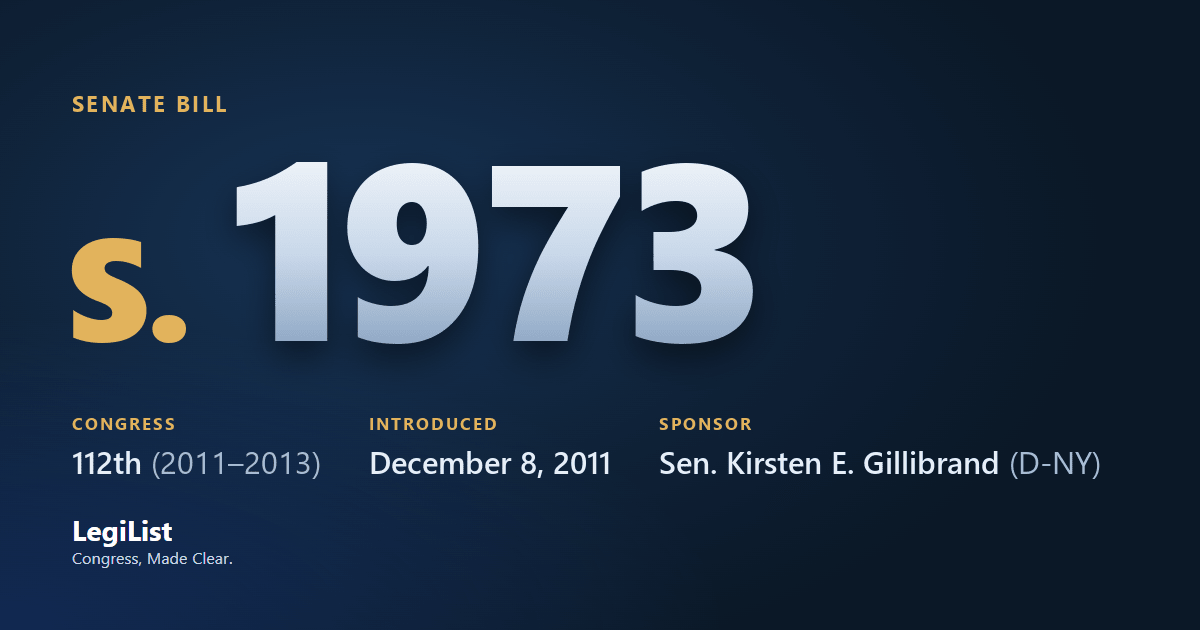
Gun Trafficking Prevention Act of 2012
Latest action · Dec 8, 2011 Read twice and referred to the Committee on the Judiciary.
Progress
Where this bill reached, and when. A stage with no date was not reached; one that failed a vote and later carried shows the date it carried.
- IntroducedDec 8, 2011
- Passed SenateNot reached
- Passed HouseNot reached
- To the PresidentNot reached
- Became lawNot reached
Summary
Gun Trafficking Prevention Act of 2012 - Amends the federal criminal code to impose a fine and/or 20-year prison term on any person who: (1) knowingly provides or receives from another person two or more firearms if such person knows or has reasonable cause to believe that such transfer would violate a federal, state, or local law punishable by a prison term of more than one year (i.e., a felony); (2) makes materially false statements to a licensed firearm importer, dealer, or manufacturer relating to the purchase, receipt, or acquisition of two or more firearms; or (3) directs, promotes, or facilitates such illegal activity.
Increases penalties on licensed firearms importers, dealers, or manufacturers who knowingly violate firearms restrictions under the federal criminal code, including recordkeeping requirements. Expands the authority of the Attorney General to revoke or suspend the license of a firearms dealer for failure to have secure gun storage or safety devices, for transporting armor piercing ammunition, or for violating other federal prohibitions on gun trafficking. Requires the Attorney General to identify licensed firearms dealers who have a heightened risk of firearms being diverted to criminal use.
Requires the Comptroller General to study and report to Congress on firearms that are lost or stolen during commercial shipping.
Authorizes the Director of the Bureau of Alcohol, Tobacco, Firearms, and Explosives (ATF) to hire additional personnel to enable inspections of gun dealers on a three-year cycle and requires the Director to hire additional investigators and special agents to address trafficking in firearms.
Cosponsors 4
Members who signed on, in the order they did. Signatures ran from Dec 8, 2011 to Mar 13, 2012; 3 are original cosponsors, there from the day it was introduced.
| Seat | Cosponsor | Signed on | |
|---|---|---|---|
| D-NY | Charles E. Schumer | Original | Dec 8, 2011 |
| D-NJ | Frank R. Lautenberg | Original | Dec 8, 2011 |
| D-MA | John F. Kerry | Original | Dec 8, 2011 |
| D-HI | Daniel K. Akaka | Mar 13, 2012 |
Committees 1
Where it was sent and what each committee and subcommittee did with it, in order.
| Chamber | Committee | What it did |
|---|---|---|
| Senate | Judiciary Committee | Referred Dec 8, 2011 |
Actions 2
Everything that happened, newest first.
- Dec 8, 2011Introduced in Senate
- Dec 8, 2011Read twice and referred to the Committee on the Judiciary.
Research
What has been written about this bill: committee reports, cost estimates, the sponsor’s authority statement, printed hearings and the Congressional Research Service’s work.
CRS reports 1
Congressional Research Service work that CRS links to this bill or the law it became, newest first.
Cite it 1
Products on other subjects that cite it, usually among other measures.
| Product | Title | Kind | Published |
|---|---|---|---|
| RL32842 | Gun Control Legislation Archived | Report | Nov 14, 2012 |
Titles 2
Every title it has carried, official and short, at each stage.
- Official Title as Introduced
- A bill to prevent gun trafficking in the United States.
- Short Titles as Introduced
- Gun Trafficking Prevention Act of 2012
Subjects
Assigned by the Library of Congress. Policy area: Crime and Law Enforcement.
- Congressional oversight
- Crime and Law Enforcement
- Criminal justice information and records
- Criminal procedure and sentencing
- Department of Justice
- Firearms and explosives
- Law enforcement administration and funding
- Law enforcement officers
- Licensing and registrations
- Retail and wholesale trades
- Smuggling and trafficking
Text 1
Each version as it was printed, newest first.
- Dec 8, 2011Introduced in Senate
Everything here is as published by Congress: the summary is the Congressional Research Service's, the action wording is the clerks', and the subjects are the Library of Congress's. How far it got is read from the actions themselves, taking the most recent one of each kind, so a bill that failed a vote and later passed is shown as having passed. Records come from this bill on Congress.gov and govinfo.gov; cost estimates are the Congressional Budget Office's, and the hearings are the printed hearings GovInfo publishes, which can appear months after the hearing.