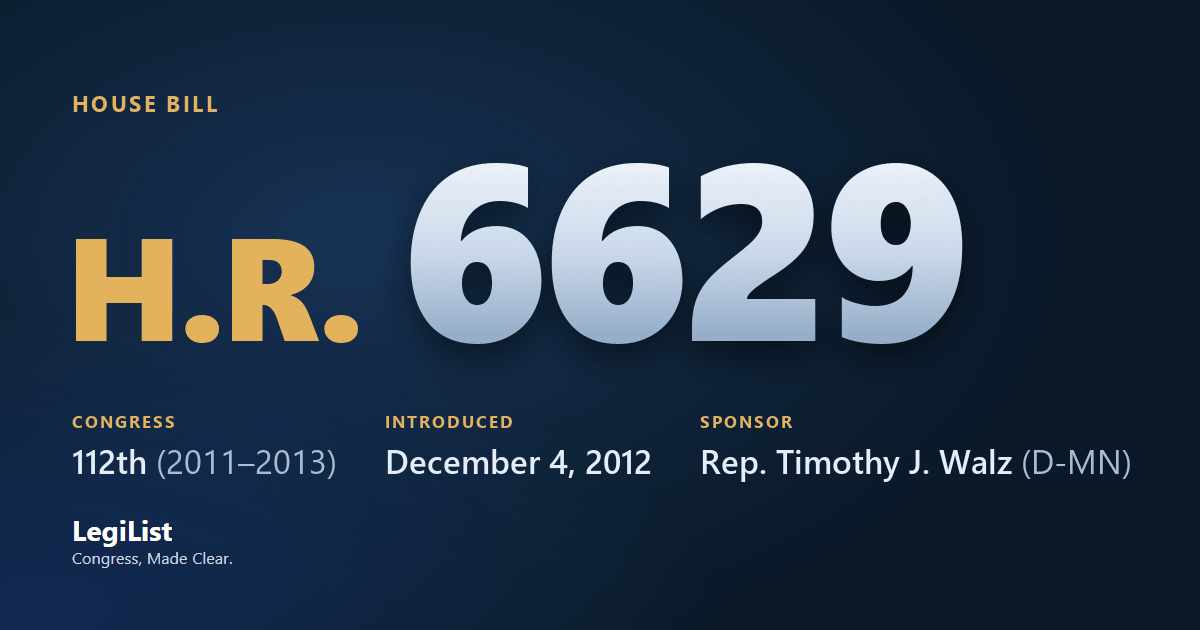
National Child Protection Training Act
Latest action · Dec 7, 2012 Referred to the Subcommittee on Crime, Terrorism, and Homeland Security.
Progress
Where this bill reached, and when. A stage with no date was not reached; one that failed a vote and later carried shows the date it carried.
- IntroducedDec 4, 2012
- Passed HouseNot reached
- Passed SenateNot reached
- To the PresidentNot reached
- Became lawNot reached
Summary
National Child Protection Training Act - Directs the Attorney General, through the Office of Juvenile Justice and Delinquency Prevention, to establish a program to sustain at least four university, college, or community college affiliated regional training centers in coordination with the National Child Protection Training Center.
Requires the regional training centers to: (1) develop model inter-disciplinary undergraduate curricula on recognizing and responding to cases of child maltreatment that consists of at least a three-course certificate program or minor degree; (2) develop related model graduate curricula for medical schools, law schools, seminaries, and other institutions of higher education that instruct students likely to become child protection professionals or other professionals required by law to report cases of child maltreatment; (3) disseminate such curricula, upon the Attorney General's approval, to community colleges, colleges, university, law schools, medical schools, and other institutions of higher education; (4) develop "laboratory" training facilities that allow for simulated, interactive, and intensive training of students preparing for child protection careers as well as child protection professionals currently in the field; (5) assist communities in developing evidence-based prevention programs; and (6) assist states in developing and maintaining forensic interview training programs.
Cosponsors 2
Members who signed on, in the order they did. All signed on Dec 4, 2012.
| Seat | Cosponsor | Signed on | |
|---|---|---|---|
| D-MN | Betty McCollum | Original | Dec 4, 2012 |
| R-AR | Steve Womack | Original | Dec 4, 2012 |
Committees 2
Where it was sent and what each committee and subcommittee did with it, in order.
| Chamber | Committee | What it did |
|---|---|---|
| House | Education and Workforce Committee | Referred Dec 4, 2012 |
| House | Judiciary Committee | Referred Dec 4, 2012 |
| Crime and Federal Government Surveillance Subcommittee | Referred Dec 7, 2012 |
Actions 3
Everything that happened, newest first.
- Dec 7, 2012Referred to the Subcommittee on Crime, Terrorism, and Homeland Security.
- Dec 4, 2012Introduced in House
- Dec 4, 2012Referred to the Committee on Education and the Workforce, and in addition to the Committee on the Judiciary, for a period to be subsequently determined by the Speaker, in each case for consideration of such provisions as fall within the jurisdiction of the committee concerned.
Research
What has been written about this bill: committee reports, cost estimates, the sponsor’s authority statement, printed hearings and the Congressional Research Service’s work.
Constitutional authority
The sponsor’s statement, as printed in the page H6623.
Related bills 1
Companion bills and other measures the record links to this one.
| Bill | Title | Relationship | Latest action |
|---|---|---|---|
| S 3653 | National Child Protection Training Act | Identical bill | Dec 4, 2012 |
Titles 2
Every title it has carried, official and short, at each stage.
- Official Title as Introduced
- To improve the training of child protection professionals.
- Short Titles as Introduced
- National Child Protection Training Act
Subjects
Assigned by the Library of Congress. Policy area: Social Welfare.
Text 1
Each version as it was printed, newest first.
- Dec 4, 2012Introduced in House
Support LegiList
This page is free, carries no paywall, and is built and maintained by one person. If the record here is useful to you, a few dollars keeps it going.
Everything here is as published by Congress: the summary is the Congressional Research Service's, the action wording is the clerks', and the subjects are the Library of Congress's. How far it got is read from the actions themselves, taking the most recent one of each kind, so a bill that failed a vote and later passed is shown as having passed. Records come from this bill on Congress.gov and govinfo.gov; cost estimates are the Congressional Budget Office's, and the hearings are the printed hearings GovInfo publishes, which can appear months after the hearing.