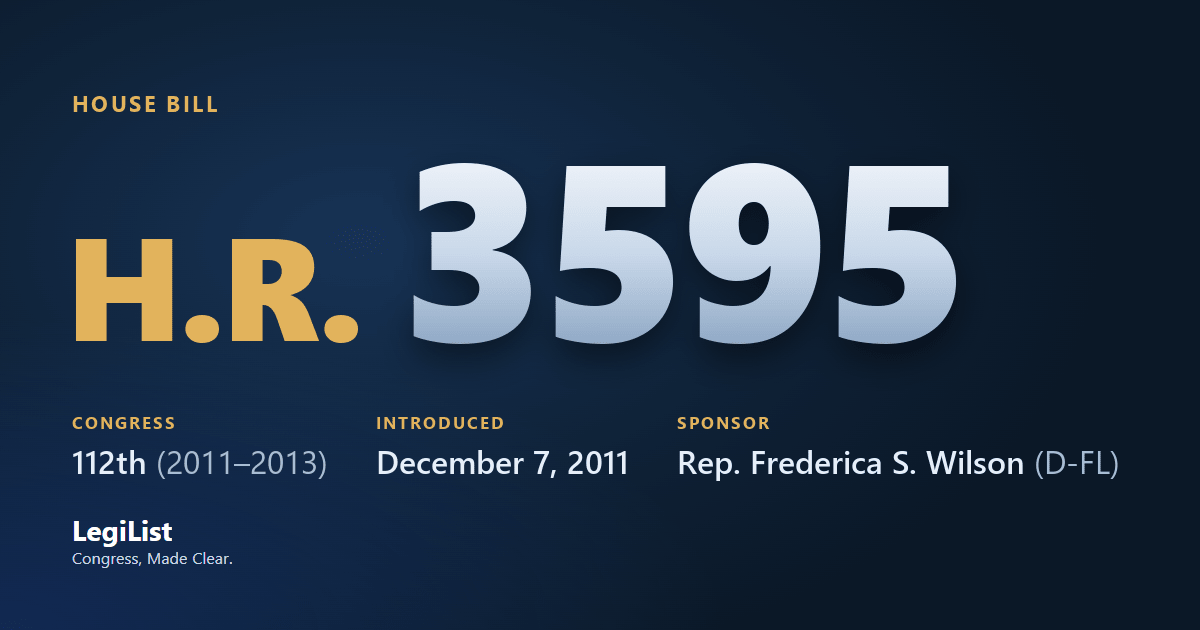
Mandatory Foreclosure Mediation Act
Latest action · Jan 12, 2012 Referred to the Subcommittee on Insurance, Housing and Community Opportunity.
Progress
Where this bill reached, and when. A stage with no date was not reached; one that failed a vote and later carried shows the date it carried.
- IntroducedDec 7, 2011
- Passed HouseNot reached
- Passed SenateNot reached
- To the PresidentNot reached
- Became lawNot reached
Summary
Mandatory Foreclosure Mediation Act - Prohibits a servicer from initiating a foreclosure action against a borrower unless the servicer has: (1) made a reasonable effort to initiate mediation proceedings to determine if the borrower is eligible for a loan modification or an alternative to foreclosure; and (2) offered the borrower, if eligible, such a modification or alternative.
Requires a servicer to suspend a foreclosure action initiated before the enactment of this Act until the servicer: (1) completes such a mediation proceeding; and (2) offers the borrower, if eligible, a modification or alternative.
Prohibits a servicer, during the suspension period, from: (1) sending the borrower a notice of foreclosure, (2) conducting or scheduling a sale of the real property securing the mortgage, or (3) causing final judgment to be entered against the borrower.
Directs the Secretary of Housing and Urban Development (HUD) to establish such a mediation process.
Declares that a servicer is not required to suspend a foreclosure action if the servicer makes a reasonable effort to schedule a mediation proceeding and documents that the borrower has not agreed to one.
Makes a violation of this Act a bar to a foreclosure action. Allows a servicer in compliance with this Act, however, to bring or proceed with a foreclosure action, regardless of any prior violation.
Cosponsors 2
Members who signed on, in the order they did. Signatures ran from Apr 17, 2012 to Sep 11, 2012.
| Seat | Cosponsor | Signed on | |
|---|---|---|---|
| D-OR | Earl Blumenauer | Apr 17, 2012 | |
| D-FL | Debbie Wasserman Schultz | Sep 11, 2012 |
Committees 1
Where it was sent and what each committee and subcommittee did with it, in order.
| Chamber | Committee | What it did |
|---|---|---|
| House | Financial Services Committee | Referred Dec 7, 2011 |
| Housing and Insurance Subcommittee | Referred Jan 12, 2012 |
Actions 3
Everything that happened, newest first.
- Jan 12, 2012Referred to the Subcommittee on Insurance, Housing and Community Opportunity.
- Dec 7, 2011Introduced in House
- Dec 7, 2011Referred to the House Committee on Financial Services.
Research
What has been written about this bill: committee reports, cost estimates, the sponsor’s authority statement, printed hearings and the Congressional Research Service’s work.
Constitutional authority
The sponsor’s statement, as printed in the page H8261.
Related bills 2
Companion bills and other measures the record links to this one.
| Bill | Title | Relationship | Latest action |
|---|---|---|---|
| S 967 | Regulation of Mortgage Servicing Act of 2011 | Related bill | May 12, 2011 |
| HR 3789 | Regulation of Mortgage Servicing Act of 2012 | Related bill | Feb 9, 2012 |
Titles 2
Every title it has carried, official and short, at each stage.
- Official Title as Introduced
- To establish a mandatory mediation process for servicers of residential mortgages and borrowers.
- Short Titles as Introduced
- Mandatory Foreclosure Mediation Act
Subjects
Assigned by the Library of Congress. Policy area: Housing and Community Development.
Text 1
Each version as it was printed, newest first.
- Dec 7, 2011Introduced in House
Everything here is as published by Congress: the summary is the Congressional Research Service's, the action wording is the clerks', and the subjects are the Library of Congress's. How far it got is read from the actions themselves, taking the most recent one of each kind, so a bill that failed a vote and later passed is shown as having passed. Records come from this bill on Congress.gov and govinfo.gov; cost estimates are the Congressional Budget Office's, and the hearings are the printed hearings GovInfo publishes, which can appear months after the hearing.