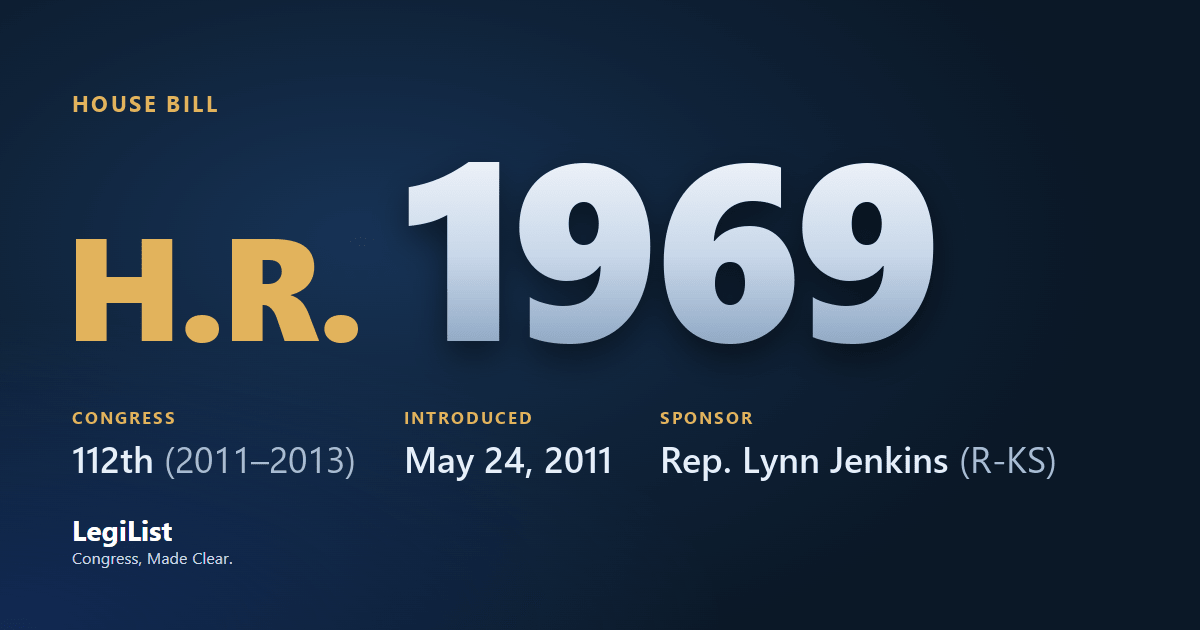
To provide for private-sector solutions to certain pension funding challenges, and for other purposes.
Latest action · Sep 8, 2011 Referred to the Subcommittee on Health, Employment, Labor, and Pensions.
Progress
Where this bill reached, and when. A stage with no date was not reached; one that failed a vote and later carried shows the date it carried.
- IntroducedMay 24, 2011
- Passed HouseNot reached
- Passed SenateNot reached
- To the PresidentNot reached
- Became lawNot reached
Summary
Amends the Employee Retirement Income Security Act of 1974 (ERISA) and the Internal Revenue Code to authorize the Pension Benefit Guaranty Corporation (PBGC), provided certain conditions are met, to allow the sponsor of an underfunded multiemployer benefit plan to accept from an employer a ratified collective bargaining agreement that provides for a reduction in plan employer contributions as well as appropriate reduction in the level of future benefit accruals for plan participants for up to five years during the plan funding adoption period, funding improvement period, rehabilitation adoption period, and rehabilitation period.
Conditions such an allowance upon the PBGC's determination that: (1) the contributing employer will be unable to pay its debts when due and to continue business without a reduction in its contribution rates; (2) the contributing employer's aggregate withdrawal liability with respect to all multiemployer pension plans exceeds $750 million (or an appropriate lower amount as the PBGC may determine); (3) the collectability of the withdrawal liability is very doubtful if the contributing employer were to withdraw from the plan; (4) the reduced contributions are not reasonably expected to have an adverse effect on the PBGC deficit; and (5) other creditors, stakeholders, and parties to which the contributing employer is obligated have accepted comparable reductions.
Cosponsors 5
Members who signed on, in the order they did. Signatures ran from May 24, 2011 to Jul 29, 2011; 2 are original cosponsors, there from the day it was introduced.
| Seat | Cosponsor | Signed on | |
|---|---|---|---|
| D-MO | Emanuel Cleaver | Original | May 24, 2011 |
| R-KS | Kevin Yoder | Original | May 24, 2011 |
| R-MO | Sam Graves | May 31, 2011 | |
| D-GA | John Lewis | Jul 6, 2011 | |
| R-KS | Mike Pompeo | Jul 29, 2011 |
Committees 2
Where it was sent and what each committee and subcommittee did with it, in order.
| Chamber | Committee | What it did |
|---|---|---|
| House | Education and Workforce Committee | Referred May 24, 2011 |
| Health, Employment, Labor, and Pensions Subcommittee | Referred Sep 8, 2011 | |
| House | Ways and Means Committee | Referred May 24, 2011 |
Actions 3
Everything that happened, newest first.
- Sep 8, 2011Referred to the Subcommittee on Health, Employment, Labor, and Pensions.
- May 24, 2011Introduced in House
- May 24, 2011Referred to the Committee on Education and the Workforce, and in addition to the Committee on Ways and Means, for a period to be subsequently determined by the Speaker, in each case for consideration of such provisions as fall within the jurisdiction of the committee concerned.
Research
What has been written about this bill: committee reports, cost estimates, the sponsor’s authority statement, printed hearings and the Congressional Research Service’s work.
Constitutional authority
The sponsor’s statement, as printed in the page H3410.
Titles 1
Every title it has carried, official and short, at each stage.
- Official Title as Introduced
- To provide for private-sector solutions to certain pension funding challenges, and for other purposes.
Subjects
Assigned by the Library of Congress. Policy area: Labor and Employment.
Text 1
Each version as it was printed, newest first.
- May 24, 2011Introduced in House
Everything here is as published by Congress: the summary is the Congressional Research Service's, the action wording is the clerks', and the subjects are the Library of Congress's. How far it got is read from the actions themselves, taking the most recent one of each kind, so a bill that failed a vote and later passed is shown as having passed. Records come from this bill on Congress.gov and govinfo.gov; cost estimates are the Congressional Budget Office's, and the hearings are the printed hearings GovInfo publishes, which can appear months after the hearing.