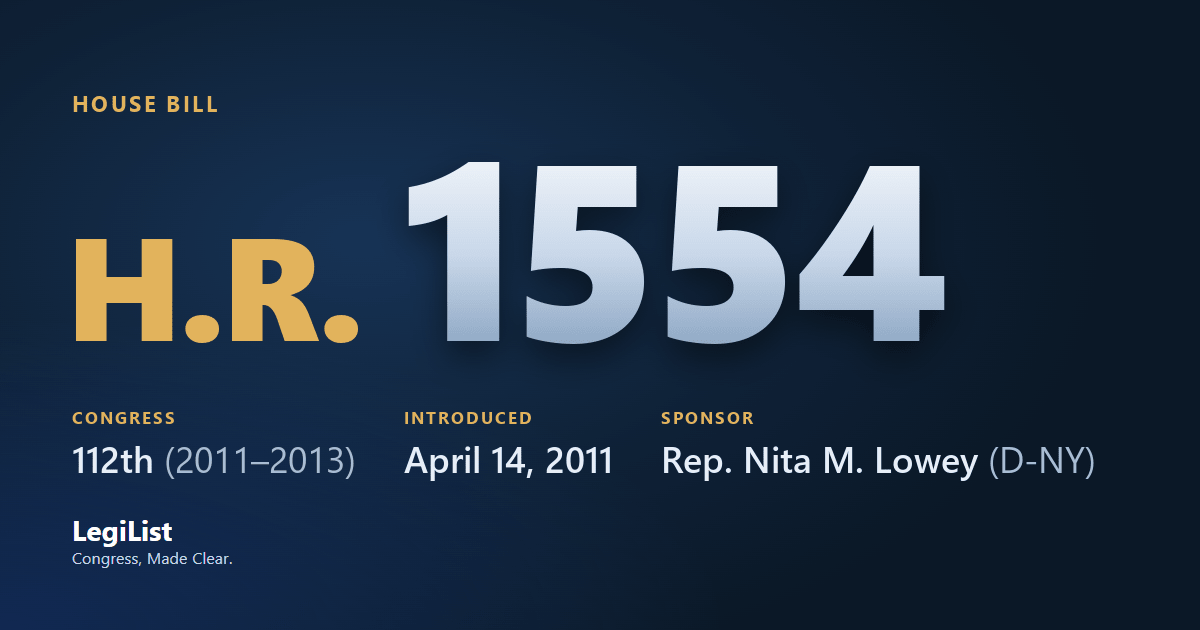
COVERT Act of 2011
Latest action · May 4, 2011 Referred to the Subcommittee on Transportation Security.
Progress
Where this bill reached, and when. A stage with no date was not reached; one that failed a vote and later carried shows the date it carried.
- IntroducedApr 14, 2011
- Passed HouseNot reached
- Passed SenateNot reached
- To the PresidentNot reached
- Became lawNot reached
Summary
Catching Operational Vulnerabilities by Ensuring Random Testing Act of 2011 or COVERT Act of 2011 - Requires the Secretary of Homeland Security (DHS) to make sure that advance notice of a covert test of a transportation security system is not provided to any individual (including any security screener) before completion of the test, except: (1) that such information may be provided to certain federal, state, and local government employees, officers, and contractors (including military personnel); and (2) an individual conducting such a test may disclose his or her status if a security screener or other non-covered employee identifies such tester as a potential threat.
Requires the head of each covert testing office to make sure that a covert testing person or group is accompanied by a cover team to monitor the test and confirm the identity of personnel involved. States, however, that a cover team is not required to be present during a test of the screening of persons or baggage at an aviation security checkpoint if the test: (1) is approved by the Federal Security Director for the airport, and (2) is administered under a DHS aviation screening assessment program.
Directs the Secretary to study the impact of implementing covert testing procedures under this Act on DHS efforts to improve transportation security.
Cosponsors 2
Members who signed on, in the order they did. All signed on Apr 14, 2011.
| Seat | Cosponsor | Signed on | |
|---|---|---|---|
| D-MS | Bennie G. Thompson | Original | Apr 14, 2011 |
| D-TX | Sheila Jackson Lee | Original | Apr 14, 2011 |
Committees 1
Where it was sent and what each committee and subcommittee did with it, in order.
| Chamber | Committee | What it did |
|---|---|---|
| House | Homeland Security Committee | Referred Apr 14, 2011 |
| Transportation and Maritime Security Subcommittee | Referred May 4, 2011 |
Actions 3
Everything that happened, newest first.
- May 4, 2011Referred to the Subcommittee on Transportation Security.
- Apr 14, 2011Introduced in House
- Apr 14, 2011Referred to the House Committee on Homeland Security.
Research
What has been written about this bill: committee reports, cost estimates, the sponsor’s authority statement, printed hearings and the Congressional Research Service’s work.
Constitutional authority
The sponsor’s statement, as printed in the page H2856.
Related bills 1
Companion bills and other measures the record links to this one.
| Bill | Title | Relationship | Latest action |
|---|---|---|---|
| HR 3011 | Transportation Security Administration Authorization Act of 2011 | Related bill | Oct 12, 2011 |
Titles 3
Every title it has carried, official and short, at each stage.
- Official Title as Introduced
- To amend title 49, United States Code, to prohibit advance notice to certain individuals, including security screeners, of covert testing of security screening procedures for the purpose of enhancing transportation security at airports, and for other purposes.
- Short Titles as Introduced
- COVERT Act of 2011
- Catching Operational Vulnerabilities by Ensuring Random Testing Act of 2011
Subjects
Assigned by the Library of Congress. Policy area: Transportation and Public Works.
Text 1
Each version as it was printed, newest first.
- Apr 14, 2011Introduced in House
Support LegiList
This page is free, carries no paywall, and is built and maintained by one person. If the record here is useful to you, a few dollars keeps it going.
Everything here is as published by Congress: the summary is the Congressional Research Service's, the action wording is the clerks', and the subjects are the Library of Congress's. How far it got is read from the actions themselves, taking the most recent one of each kind, so a bill that failed a vote and later passed is shown as having passed. Records come from this bill on Congress.gov and govinfo.gov; cost estimates are the Congressional Budget Office's, and the hearings are the printed hearings GovInfo publishes, which can appear months after the hearing.