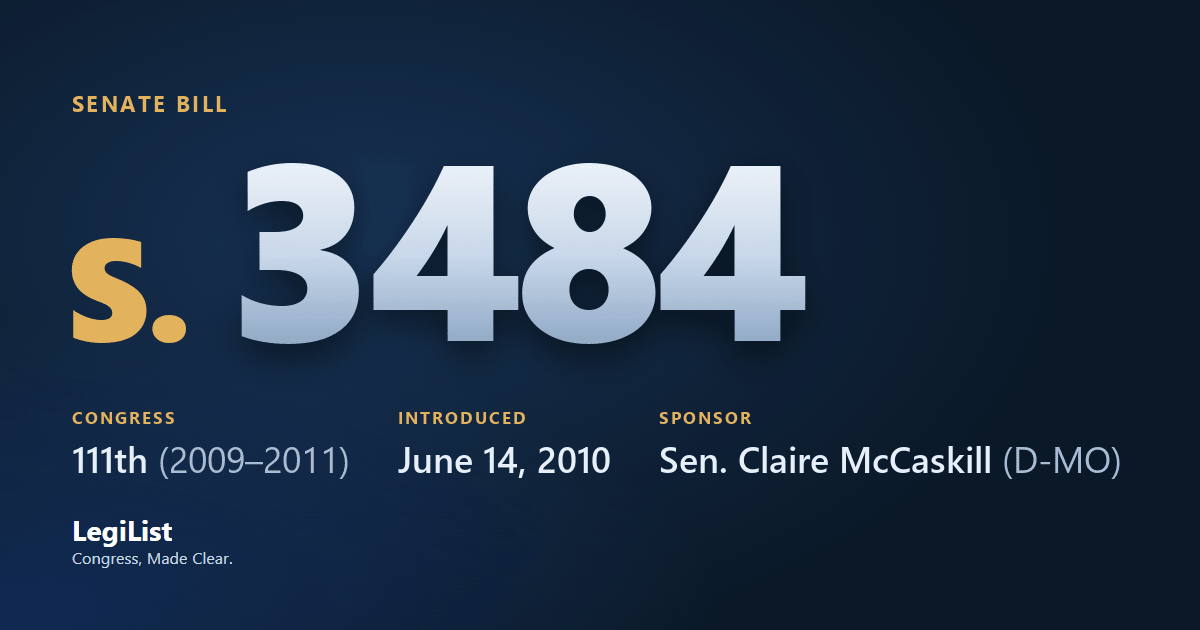
Secure Federal File Sharing Act
Latest action · Jun 14, 2010 Read twice and referred to the Committee on Homeland Security and Governmental Affairs.
Progress
Where this bill reached, and when. A stage with no date was not reached; one that failed a vote and later carried shows the date it carried.
- IntroducedJun 14, 2010
- Passed SenateNot reached
- Passed HouseNot reached
- To the PresidentNot reached
- Became lawNot reached
Summary
Secure Federal File Sharing Act - Requires the Director of the Office of Management and Budget (OMB) to issue guidance to: (1) prohibit the download, installation, or use by government employees and contractors of open-network peer-to-peer file sharing software on all federal computers, computer systems, and networks, unless approved in accordance with procedures under this Act; and (2) address the download, installation, or use by government employees and contractors of such software on home or personal computers as it relates to telework and remotely accessing federal computers, computer systems, and networks.
Requires the Director to develop a procedure for receiving requests from heads or chief information officers of agencies for approval for use by government employees and contractors of specific open-network peer-to-peer file sharing software programs that are: (1) necessary for day-to-day business operations, for use in the course of a law enforcement investigation, or to perform official agency business; or (2) instrumental in completing a particular task or project that directly supports the agency's overall mission.
Requires the Director to direct agencies to: (1) establish or update personal use policies to be consistent with the guidance issued under this Act; (2) require contracts to require contractor compliance with that guidance; (3) update their information technology security or ethics training policies to ensure that all employees are aware of the requirements of that guidance and the consequences of engaging in prohibited conduct; and (4) ensure that proper security controls are in place to prevent, detect, and remove file sharing software that is prohibited.
Provides that nothing in this Act shall be construed to require the disclosure of any information relating to any confidential government operation or investigation.
Cosponsors 1
Members who signed on, in the order they did. All signed on Jun 14, 2010.
| Seat | Cosponsor | Signed on | |
|---|---|---|---|
| R-UT | Robert F. Bennett | Original | Jun 14, 2010 |
Committees 1
Where it was sent and what each committee and subcommittee did with it, in order.
| Chamber | Committee | What it did |
|---|---|---|
| Senate | Homeland Security and Governmental Affairs Committee | Referred Jun 14, 2010 |
Actions 2
Everything that happened, newest first.
- Jun 14, 2010Introduced in Senate
- Jun 14, 2010Read twice and referred to the Committee on Homeland Security and Governmental Affairs.
Related bills 1
Companion bills and other measures the record links to this one.
| Bill | Title | Relationship | Latest action |
|---|---|---|---|
| HR 4098 | Secure Federal File Sharing Act | Related bill | Mar 25, 2010 |
Titles 2
Every title it has carried, official and short, at each stage.
- Official Title as Introduced
- A bill to require the Director of the Office of Management and Budget to issue guidance on the use of peer-to-peer file sharing software to prohibit the personal use of such software by Government employees, and for other purposes.
- Short Titles as Introduced
- Secure Federal File Sharing Act
Subjects
Assigned by the Library of Congress. Policy area: Government Operations and Politics.
- Administrative law and regulatory procedures
- Administrative remedies
- Computer security and identity theft
- Computers and information technology
- Criminal investigation, prosecution, interrogation
- Government employee pay, benefits, personnel management
- Government ethics and transparency, public corruption
- Government information and archives
- Government Operations and Politics
- Internet and video services
- Internet, web applications, social media
- Office of Management and Budget (OMB)
- Public contracts and procurement
Text 1
Each version as it was printed, newest first.
- Jun 14, 2010Introduced in Senate
Support LegiList
This page is free, carries no paywall, and is built and maintained by one person. If the record here is useful to you, a few dollars keeps it going.
Everything here is as published by Congress: the summary is the Congressional Research Service's, the action wording is the clerks', and the subjects are the Library of Congress's. How far it got is read from the actions themselves, taking the most recent one of each kind, so a bill that failed a vote and later passed is shown as having passed. Records come from this bill on Congress.gov and govinfo.gov; cost estimates are the Congressional Budget Office's, and the hearings are the printed hearings GovInfo publishes, which can appear months after the hearing.