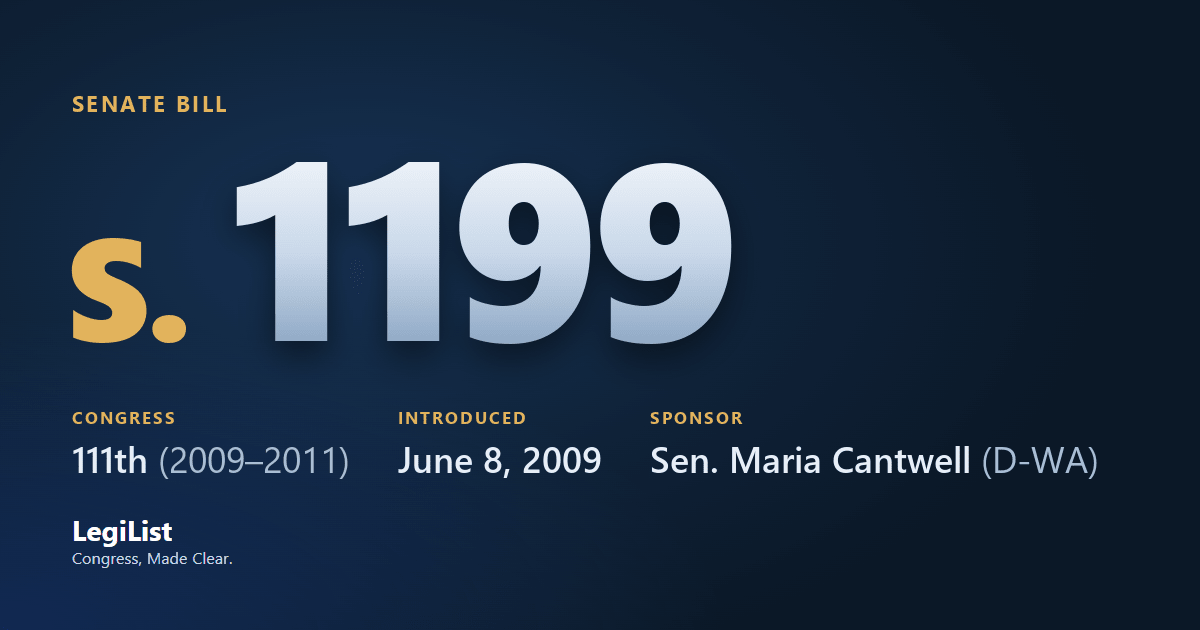
Air Medical Service Safety Improvement Act of 2009
Latest action · Jun 8, 2009 Read twice and referred to the Committee on Commerce, Science, and Transportation.
Progress
Where this bill reached, and when. A stage with no date was not reached; one that failed a vote and later carried shows the date it carried.
- IntroducedJun 8, 2009
- Passed SenateNot reached
- Passed HouseNot reached
- To the PresidentNot reached
- Became lawNot reached
Summary
Air Medical Service Safety Improvement Act of 2009 - Requires helicopter and fixed-wing aircraft certificate holders providing emergency medical services, if there is a medical crew on board, without regard to whether there are patients on board, to comply with federal safety operating requirements governing commuter and on demand operations as well as persons on board aircraft. Prescribes other requirements for such certificate holders when operating under instrument flight rules or carrying out training.
Requires the Administrator of the Federal Aviation Administration (FAA) to initiate a rulemaking to: (1) create a standardized checklist of risk evaluation factors which shall be used by helicopter and fixed-wing aircraft emergency medical service operators to determine whether a mission should be accepted; (2) require such operators to implement and comply with performance-based flight dispatch and flight-following procedures; and (3) develop a method to assess and ensure that such operators comply with the latter requirements.
Requires, not later than one year after enactment of this Act, helicopter or fixed-wing aircraft used for emergency medical service to have on board a terrain awareness and warning system device, and a means of displaying its information, that meet FAA guidelines.
Requires the Administrator to: (1) require certificate holders for helicopters and fixed-wing aircraft used for emergency medical service operations to report annually on the number of such aircraft used, and number of flights and hours flown, to provide air ambulance services; (2) issue a report on the availability, survivability, and costs of devices that record voice communications and flight data information on existing and new helicopters and fixed-wing aircraft used for emergency medical service operations; and (3) issue regulations to require such devices on board such aircraft.
Cosponsors
Members who signed on, in the order they did.
Committees 1
Where it was sent and what each committee and subcommittee did with it, in order.
| Chamber | Committee | What it did |
|---|---|---|
| Senate | Commerce, Science, and Transportation Committee | Referred Jun 8, 2009 |
Actions 2
Everything that happened, newest first.
- Jun 8, 2009Introduced in Senate
- Jun 8, 2009Read twice and referred to the Committee on Commerce, Science, and Transportation.
Research
What has been written about this bill: committee reports, cost estimates, the sponsor’s authority statement, printed hearings and the Congressional Research Service’s work.
Printed hearings 1
Hearings whose printed record names this bill, newest first: hearings on it, and wider hearings where it came up.
| Number | Hearing | Committee | Held |
|---|---|---|---|
| S. Hrg. 111-518 | AVIATION SAFETY: OVERSIGHT OF FAA SAFETY INITIATIVES53 pages | Commerce, Science, and Transportation Committee | Dec 10, 2009 |
Related bills 1
Companion bills and other measures the record links to this one.
| Bill | Title | Relationship | Latest action |
|---|---|---|---|
| S 1451 | FAA Air Transportation Modernization and Safety Improvement Act | Related bill | Sep 29, 2009 |
Titles 2
Every title it has carried, official and short, at each stage.
- Official Title as Introduced
- A bill to increase the safety of the crew and passengers in air ambulances.
- Short Titles as Introduced
- Air Medical Service Safety Improvement Act of 2009
Subjects
Assigned by the Library of Congress. Policy area: Transportation and Public Works.
Text 1
Each version as it was printed, newest first.
- Jun 8, 2009Introduced in Senate
Support LegiList
This page is free, carries no paywall, and is built and maintained by one person. If the record here is useful to you, a few dollars keeps it going.
Everything here is as published by Congress: the summary is the Congressional Research Service's, the action wording is the clerks', and the subjects are the Library of Congress's. How far it got is read from the actions themselves, taking the most recent one of each kind, so a bill that failed a vote and later passed is shown as having passed. Records come from this bill on Congress.gov and govinfo.gov; cost estimates are the Congressional Budget Office's, and the hearings are the printed hearings GovInfo publishes, which can appear months after the hearing.