Excellence and Innovation in Language Learning Act
Latest action · Oct 13, 2010 Referred to the Subcommittee on Higher Education, Lifelong Learning, and Competitiveness.
Progress
Where this bill reached, and when. A stage with no date was not reached; one that failed a vote and later carried shows the date it carried.
- IntroducedJul 30, 2010
- Passed HouseNot reached
- Passed SenateNot reached
- To the PresidentNot reached
- Became lawNot reached
Summary
Excellence and Innovation in Language Learning Act - Directs the Secretary of Education to undertake certain national activities at the elementary and secondary school level that include: (1) expanding the collection and dissemination of information on effective foreign language education; (2) encouraging states to adopt nationally recognized standards for foreign language education and effective assessments that are aligned to such standards; and (3) providing scholarships to students and their teachers for study-abroad opportunities.
Directs the Secretary to award competitive grants to states to improve their elementary and secondary school foreign language programs.
Requires each state grantee to use its grant to: (1) develop foreign language and international education policy and programs; (2) appoint a state foreign language and international education advisory council to assist it in doing so; (3) designate a state language and international education coordinator or coordinators; (4) adopt nationally recognized standards for foreign language education and effective assessments that are aligned to such standards; (5) implement in- and pre-service foreign language teacher training programs; (6) provide scholarships and incentives to recruit new teachers and encourage existing teachers to receive training; and (7) provide technical assistance to elementary and secondary schools.
Directs the Secretary to award competitive matching grants to partnerships between state or local educational agencies and institutions of higher education to develop and maintain, or improve and expand, model programs that ensure the continuity of student progress in foreign language proficiency from kindergarten through grade 12. Requires each model program to include a research and evaluation component.
Cosponsors 5
Members who signed on, in the order they did. Signatures ran from Jul 30, 2010 to Nov 29, 2010; 1 is an original cosponsor, there from the day it was introduced.
| Seat | Cosponsor | Signed on | |
|---|---|---|---|
| D-NY | Paul Tonko | Original | Jul 30, 2010 |
| D-CA | Judy Chu | Sep 14, 2010 | |
| D-NY | Yvette D. Clarke | Nov 15, 2010 | |
| D-OR | David Wu | Nov 18, 2010 | |
| D-TN | Steve Cohen | Nov 29, 2010 |
Committees 1
Where it was sent and what each committee and subcommittee did with it, in order.
| Chamber | Committee | What it did |
|---|---|---|
| House | Education and Workforce Committee | Referred Jul 30, 2010 |
| Early Childhood, Elementary, and Secondary Education Subcommittee | Referred Oct 13, 2010 | |
| Higher Education and Workforce Development Subcommittee | Referred Oct 13, 2010 |
Actions 4
Everything that happened, newest first.
- Oct 13, 2010Referred to the Subcommittee on Early Childhood, Elementary, and Secondary Education.
- Oct 13, 2010Referred to the Subcommittee on Higher Education, Lifelong Learning, and Competitiveness.
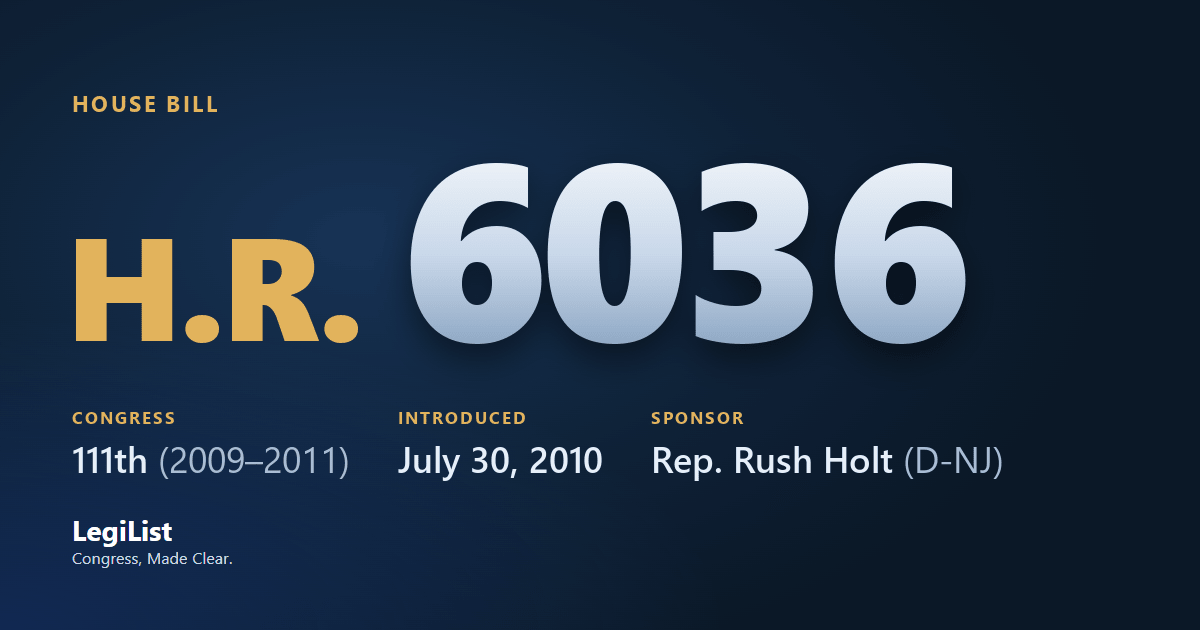
- Jul 30, 2010Introduced in House
- Jul 30, 2010Referred to the House Committee on Education and Labor.
Titles 2
Every title it has carried, official and short, at each stage.
- Official Title as Introduced
- To improve foreign language instruction.
- Short Titles as Introduced
- Excellence and Innovation in Language Learning Act
Subjects
Assigned by the Library of Congress. Policy area: Education.
- Academic performance and assessments
- Advisory bodies
- Area studies and international education
- Education
- Education programs funding
- Elementary and secondary education
- Foreign language and bilingual programs
- State and local government operations
- Student aid and college costs
- Teaching, teachers, curricula
Text 1
Each version as it was printed, newest first.
- Jul 30, 2010Introduced in House
Everything here is as published by Congress: the summary is the Congressional Research Service's, the action wording is the clerks', and the subjects are the Library of Congress's. How far it got is read from the actions themselves, taking the most recent one of each kind, so a bill that failed a vote and later passed is shown as having passed. Records come from this bill on Congress.gov and govinfo.gov; cost estimates are the Congressional Budget Office's, and the hearings are the printed hearings GovInfo publishes, which can appear months after the hearing.