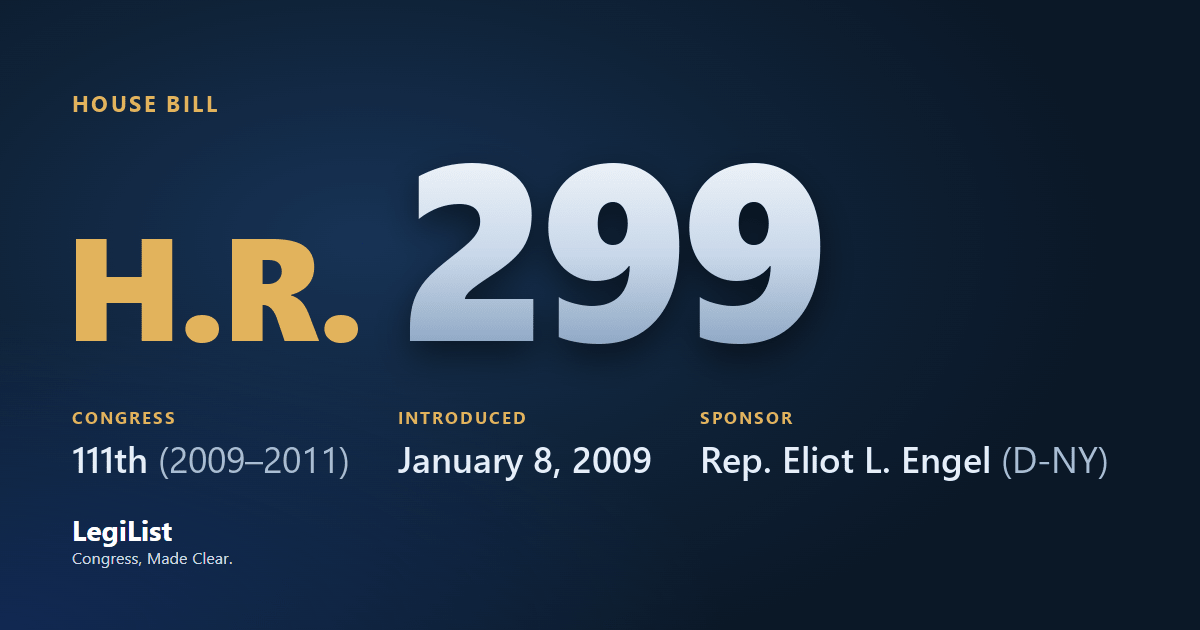
National Digital Television Consumer Education Act
Latest action · Jan 14, 2009 Referred to the Subcommittee on Communications, Technology, and the Internet.
Progress
Where this bill reached, and when. A stage with no date was not reached; one that failed a vote and later carried shows the date it carried.
- IntroducedJan 8, 2009
- Passed HouseNot reached
- Passed SenateNot reached
- To the PresidentNot reached
- Became lawNot reached
Summary
National Digital Television Consumer Education Act - Amends the Communications Act of 1934 to require retail distributors of television receiving equipment (TVs) to place adjacent to each unit displayed for sale a consumer alert in English and Spanish that the TV has only an analog broadcast tuner and will require a converter box after February 17, 2009, to receive over-the-air broadcasts with an antenna. Imposes similar requirements on sellers that use direct mail, catalog, or electronic means such as the Internet. Requires broadcaster public service announcements about the deadline for termination of analog TV broadcasting and the equipment options for consumers following such termination.
Amends the National Telecommunications and Information Administration Organization Act to authorize the Assistant Secretary of Commerce for Communications and Information to establish a temporary grant program to coordinate and lead a nationwide consumer education and outreach campaign regarding America's conversion to digital television.
Amends the Digital Television Transition and Public Safety Act of 2005 to increase funding for the program to provide coupons for digital-to-analog converter boxes.
Cosponsors 2
Members who signed on, in the order they did. All signed on Jun 19, 2009.
| Seat | Cosponsor | Signed on | |
|---|---|---|---|
| D-CA | Bob Filner | Jun 19, 2009 | |
| D-CA | Joe Baca | Jun 19, 2009 |
Committees 1
Where it was sent and what each committee and subcommittee did with it, in order.
| Chamber | Committee | What it did |
|---|---|---|
| House | Energy and Commerce Committee | Referred Jan 8, 2009 |
| Communications and Technology Subcommittee | Referred Jan 14, 2009 |
Actions 3
Everything that happened, newest first.
- Jan 14, 2009Referred to the Subcommittee on Communications, Technology, and the Internet.
- Jan 8, 2009Introduced in House
- Jan 8, 2009Referred to the House Committee on Energy and Commerce.
Research
What has been written about this bill: committee reports, cost estimates, the sponsor’s authority statement, printed hearings and the Congressional Research Service’s work.
Printed hearings 1
Hearings whose printed record names this bill, newest first: hearings on it, and wider hearings where it came up.
| Number | Hearing | Committee | Held |
|---|---|---|---|
| Serial No. 111-154 | PENDING PUBLIC HEALTH LEGISLATION73 pages | Energy and Commerce Committee | Sep 15, 2010 |
Titles 2
Every title it has carried, official and short, at each stage.
- Official Title as Introduced
- To provide American consumers information about the broadcast television transition from an analog to a digital format, and to provide additional funds for the converter box coupon program under the Digital Television Transition and Public Safety Act of 2005.
- Short Titles as Introduced
- National Digital Television Consumer Education Act
Subjects
Assigned by the Library of Congress. Policy area: Science, Technology, Communications.
Text 1
Each version as it was printed, newest first.
- Jan 8, 2009Introduced in House
Support LegiList
This page is free, carries no paywall, and is built and maintained by one person. If the record here is useful to you, a few dollars keeps it going.
Everything here is as published by Congress: the summary is the Congressional Research Service's, the action wording is the clerks', and the subjects are the Library of Congress's. How far it got is read from the actions themselves, taking the most recent one of each kind, so a bill that failed a vote and later passed is shown as having passed. Records come from this bill on Congress.gov and govinfo.gov; cost estimates are the Congressional Budget Office's, and the hearings are the printed hearings GovInfo publishes, which can appear months after the hearing.