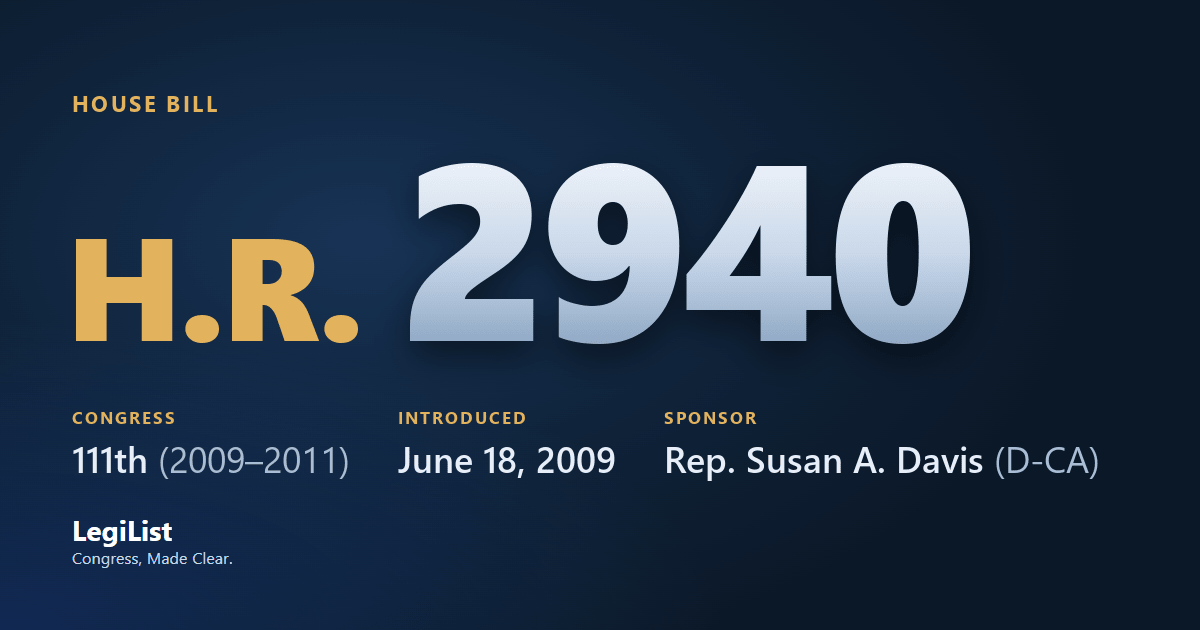
Women's Obstetrician and Gynecologist Medical Access Now Act of 2009
Latest action · Jun 19, 2009 Referred to the Subcommittee on Health.
Progress
Where this bill reached, and when. A stage with no date was not reached; one that failed a vote and later carried shows the date it carried.
- IntroducedJun 18, 2009
- Passed HouseNot reached
- Passed SenateNot reached
- To the PresidentNot reached
- Became lawNot reached
Summary
Women's Obstetrician and Gynecologist Medical Access Now Act of 2009 - Amends the Employee Retirement Income Security Act of 1974 (ERISA), the Public Health Service Act, and the Internal Revenue Code to require a group health plan to allow a participant or beneficiary the option to seek obstetrical and gynecological physician services directly from a participating provider without a referral.
States that this Act does not prevent a plan or issuer from establishing: (1) reasonable requirements for a participating provider to communicate with the participant's or beneficiary's primary care physician and surgeon regarding the participant's or beneficiary's condition and treatment; or (2) reasonable provisions governing utilization protocols and the use of obstetricians and gynecologists, or family practice physicians and surgeons, participating in the plan or issuer network.
Applies such requirements to coverage offered in the individual market.
Cosponsors 1
Members who signed on, in the order they did. All signed on Jun 18, 2009.
| Seat | Cosponsor | Signed on | |
|---|---|---|---|
| R-IL | Judy Biggert | Original | Jun 18, 2009 |
Committees 3
Where it was sent and what each committee and subcommittee did with it, in order.
| Chamber | Committee | What it did |
|---|---|---|
| House | Energy and Commerce Committee | Referred Jun 18, 2009 |
| Health Subcommittee | Referred Jun 19, 2009 | |
| House | Education and Workforce Committee | Referred Jun 18, 2009 |
| House | Ways and Means Committee | Referred Jun 18, 2009 |
Actions 7
Everything that happened, newest first.
- Jun 19, 2009Referred to the Subcommittee on Health.
- Jun 18, 2009Introduced in House
- Jun 18, 2009Sponsor introductory remarks on measure. (CR E1497)
- Jun 18, 2009Referred to House Energy and Commerce
- Jun 18, 2009Referred to the Committee on Energy and Commerce, and in addition to the Committees on Education and Labor, and Ways and Means, for a period to be subsequently determined by the Speaker, in each case for consideration of such provisions as fall within the jurisdiction of the committee concerned.
- Jun 18, 2009Referred to House Education and Labor
- Jun 18, 2009Referred to House Ways and Means
In the Congressional Record 2
Days the Record’s own index lists this bill, newest first, with the pages and the members it names. Pages starting H are the House, S the Senate, E Extensions of Remarks.
| Where | In the Record | Members | Date |
|---|---|---|---|
| House | Debate and remarks H2891 | Susan A. Davis D-CA | Apr 27, 2010 |
| Extensions | Debate and remarks E1497 | Susan A. Davis D-CA | Jun 18, 2009 |
Titles 2
Every title it has carried, official and short, at each stage.
- Official Title as Introduced
- To amend the Employee Retirement Income Security Act of 1974, the Public Health Service Act, and the Internal Revenue Code of 1986 to require that group and individual health insurance coverage and group health plans permit enrollees direct access to services of obstetrical and gynecological physician services directly and without a referral.
- Short Titles as Introduced
- Women's Obstetrician and Gynecologist Medical Access Now Act of 2009
Subjects
Assigned by the Library of Congress. Policy area: Health.
Text 1
Each version as it was printed, newest first.
- Jun 18, 2009Introduced in House
Everything here is as published by Congress: the summary is the Congressional Research Service's, the action wording is the clerks', and the subjects are the Library of Congress's. How far it got is read from the actions themselves, taking the most recent one of each kind, so a bill that failed a vote and later passed is shown as having passed. Records come from this bill on Congress.gov and govinfo.gov; cost estimates are the Congressional Budget Office's, and the hearings are the printed hearings GovInfo publishes, which can appear months after the hearing.