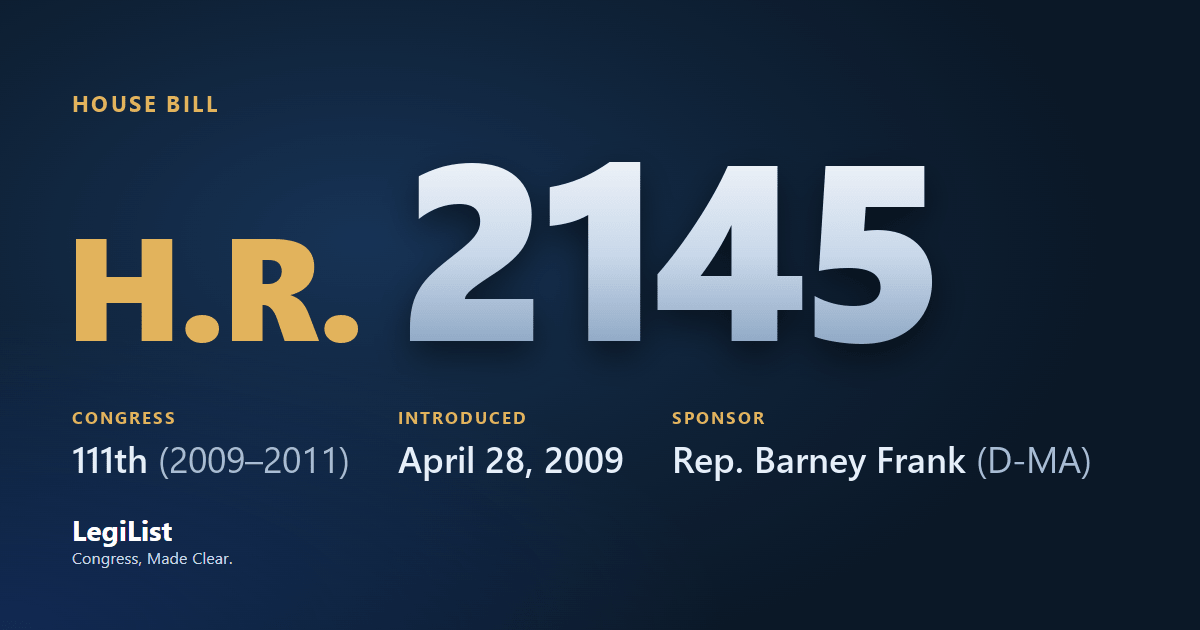
Windfall Elimination Provision Relief Act of 2009
Latest action · Apr 28, 2009 Referred to the House Committee on Ways and Means.
Progress
Where this bill reached, and when. A stage with no date was not reached; one that failed a vote and later carried shows the date it carried.
- IntroducedApr 28, 2009
- Passed HouseNot reached
- Passed SenateNot reached
- To the PresidentNot reached
- Became lawNot reached
Summary
Windfall Elimination Provision Relief Act of 2009 - Amends title II (Old Age, Survivors and Disability Insurance) (OASDI) of the Social Security Act to: (1) restrict the application of the windfall elimination requirement to individuals whose combined monthly income from the primary OASDI insurance amount and the portion of the monthly periodic payment attributable to noncovered service performed after 1956 exceeds the cost-of-living adjusted amount of $2,500; and (2) provide for a graduated implementation of such requirement on amounts above such threshold by applying applicable percentages determined according to a specified formula.
Cosponsors 1
Members who signed on, in the order they did. All signed on Jul 30, 2010.
| Seat | Cosponsor | Signed on | |
|---|---|---|---|
| D-DC | Eleanor Holmes Norton | Jul 30, 2010 |
Actions 2
Everything that happened, newest first.
- Apr 28, 2009Introduced in House
- Apr 28, 2009Referred to the House Committee on Ways and Means.
Subjects
Assigned by the Library of Congress. Policy area: Social Welfare.
Text 1
Each version as it was printed, newest first.
- Apr 28, 2009Introduced in House
Everything here is as published by Congress: the summary is the Congressional Research Service's, the action wording is the clerks', and the subjects are the Library of Congress's. How far it got is read from the actions themselves, taking the most recent one of each kind, so a bill that failed a vote and later passed is shown as having passed. Records come from this bill on Congress.gov and govinfo.gov.