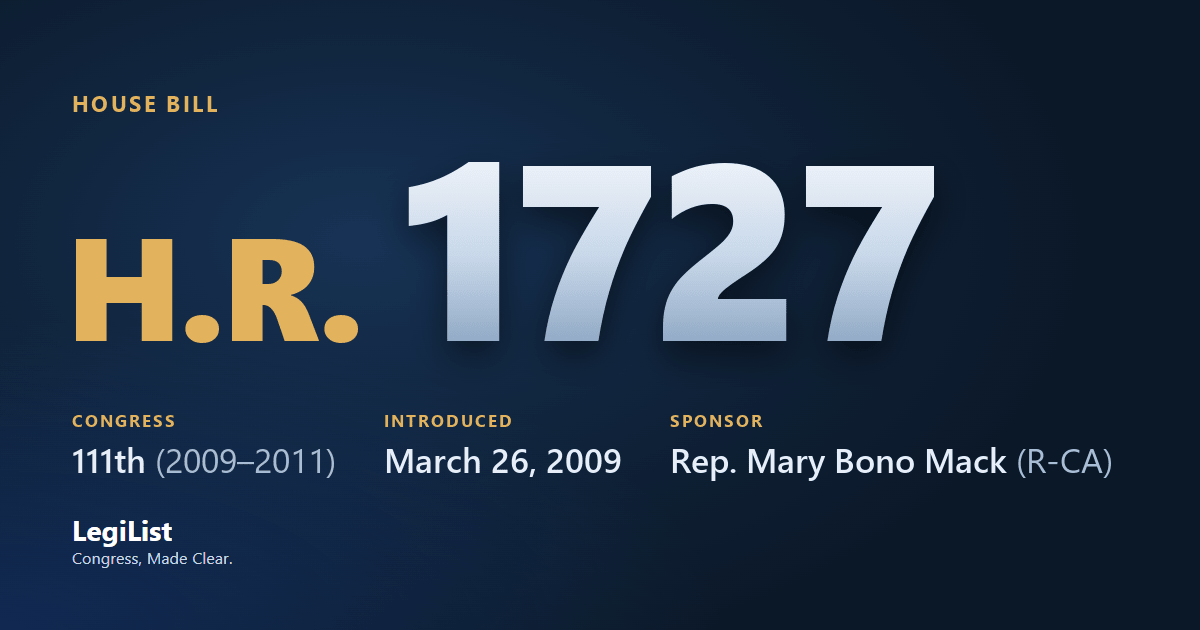
Managing Arson Through Criminal History (MATCH) Act of 2009
Latest action · Oct 1, 2009 Received in the Senate and Read twice and referred to the Committee on the Judiciary.
Progress
Where this bill reached, and when. A stage with no date was not reached; one that failed a vote and later carried shows the date it carried.
- IntroducedMar 26, 2009
- Passed HouseSep 30, 2009
- Passed SenateNot reached
- To the PresidentNot reached
- Became lawNot reached
Summary
Managing Arson Through Criminal History (MATCH) Act of 2009 - Directs the Attorney General to maintain at the Bureau of Alcohol, Tobacco, Firearms and Explosives (ATF) a national database for each criminal arsonist or bomber (an individual convicted of an arson or bombing offense), to be known as the National Criminal Arsonist and Criminal Bomber Registry. Limits the use of such Registry and disclosures therefrom to law enforcement purposes.
Requires the Attorney General to: (1) ensure that updated information about a criminal arsonist or bomber is immediately available to all relevant jurisdictions (i.e., states, the District of Columbia, territories and possessions, and federally recognized Indian tribes); (2) provide notification to a jurisdiction in which the criminal arsonist or bomber is an employee, a student, or a resident; (3) establish and maintain a national arsonist and bomber Internet site which includes relevant information for each criminal arsonist or bomber; (4) establish guidelines for correction of erroneous information in the Registry or Internet site; and (5) develop and support software to enable jurisdictions to participate in the Registry and Internet site. Prohibits access by the public to information on the Internet site.
Sets forth the information required to be included in the Registry by the arsonist or bomber and by jurisdictions, including identifying information, physical descriptions, photographs, and fingerprints. Allows expungement of information from the Registry for juveniles after five years. Requires notification to criminal arsonists and bombers of registration requirements and the duty to register.
Requires jurisdictions to participate in the Registry before the later of three years after the enactment of this Act or one year after software provided by the Attorney General is made available to such jurisdictions. Reduces criminal justice assistance grants for jurisdictions that fail to comply with the requirements of this Act. Allows federally recognized Indian tribes to elect to participate in the Registry.
Grants the federal government and jurisdictions immunity from liability for good faith conduct under this Act.
Directs the Attorney General to establish and implement a Criminal Arsonist and Bomber Management Assistance program to award grants to jurisdictions to offset the costs of implementing this Act. Allows increased grant payments to jurisdictions that exceed deadlines for compliance with this Act.
Authorizes appropriations for FY2010-FY2014.
Cosponsors 7
Members who signed on, in the order they did. Signatures ran from Mar 26, 2009 to Sep 22, 2009; 1 is an original cosponsor, there from the day it was introduced.
| Seat | Cosponsor | Signed on | |
|---|---|---|---|
| D-CA | Adam B. Schiff | Original | Mar 26, 2009 |
| R-CA | Jerry Lewis | Apr 30, 2009 | |
| D-CA | Brad Sherman | May 5, 2009 | |
| R-CA | Ken Calvert | May 11, 2009 | |
| R-NC | Howard Coble | May 13, 2009 | |
| R-CA | John Campbell | May 21, 2009 | |
| R-CA | George Radanovich | Sep 22, 2009 |
Committees 2
Where it was sent and what each committee and subcommittee did with it, in order.
| Chamber | Committee | What it did |
|---|---|---|
| House | Judiciary Committee | Referred Mar 26, 2009 |
| Crime and Federal Government Surveillance Subcommittee | Referred Apr 27, 2009 | |
| Senate | Judiciary Committee | Referred Oct 1, 2009 |
Actions 9
Everything that happened, newest first.
- Oct 1, 2009Received in the Senate and Read twice and referred to the Committee on the Judiciary.
- Sep 30, 2009Mr. Schiff moved to suspend the rules and pass the bill, as amended.
- Sep 30, 2009Considered under suspension of the rules. (consideration: CR H10094-10099)
- Sep 30, 2009DEBATE - The House proceeded with forty minutes of debate on H.R. 1727.
- Sep 30, 2009Passed/agreed to in House: On motion to suspend the rules and pass the bill, as amended Agreed to by voice vote. (text: CR H10094-10097)
- Sep 30, 2009Motion to reconsider laid on the table Agreed to without objection.
- Apr 27, 2009Referred to the Subcommittee on Crime, Terrorism, and Homeland Security.
- Mar 26, 2009Introduced in House
- Mar 26, 2009Referred to the House Committee on the Judiciary.
In the Congressional Record 1
Days the Record’s own index lists this bill, newest first, with the pages and the members it names. Pages starting H are the House, S the Senate, E Extensions of Remarks.
| Where | In the Record | Members | Date |
|---|---|---|---|
| House | Debate and remarks H10094–H10099Text printed H10094–H10097 | Adam B. Schiff D-CA, Mary Bono R-CA, Ted Poe R-TX | Sep 30, 2009 |
Related bills 1
Companion bills and other measures the record links to this one.
| Bill | Title | Relationship | Latest action |
|---|---|---|---|
| S 1684 | Managing Arson Through Criminal History (MATCH) Act of 2010 | Related bill | Jul 22, 2010 |
Titles 3
Every title it has carried, official and short, at each stage.
- Official Title as Introduced
- To establish guidelines and incentives for States to establish criminal arsonist and criminal bomber registries and to require the Attorney General to establish a national criminal arsonist and criminal bomber registry program, and for other purposes.
- Short Titles as Introduced
- Managing Arson Through Criminal History (MATCH) Act of 2009
- Short Titles as Passed House
- Managing Arson Through Criminal History (MATCH) Act of 2009
Subjects
Assigned by the Library of Congress. Policy area: Crime and Law Enforcement.
Text 3
Each version as it was printed, newest first.
- Oct 1, 2009Referred in Senate
- Sep 30, 2009Engrossed in House
- Mar 26, 2009Introduced in House
Everything here is as published by Congress: the summary is the Congressional Research Service's, the action wording is the clerks', and the subjects are the Library of Congress's. How far it got is read from the actions themselves, taking the most recent one of each kind, so a bill that failed a vote and later passed is shown as having passed. Records come from this bill on Congress.gov and govinfo.gov; cost estimates are the Congressional Budget Office's, and the hearings are the printed hearings GovInfo publishes, which can appear months after the hearing.