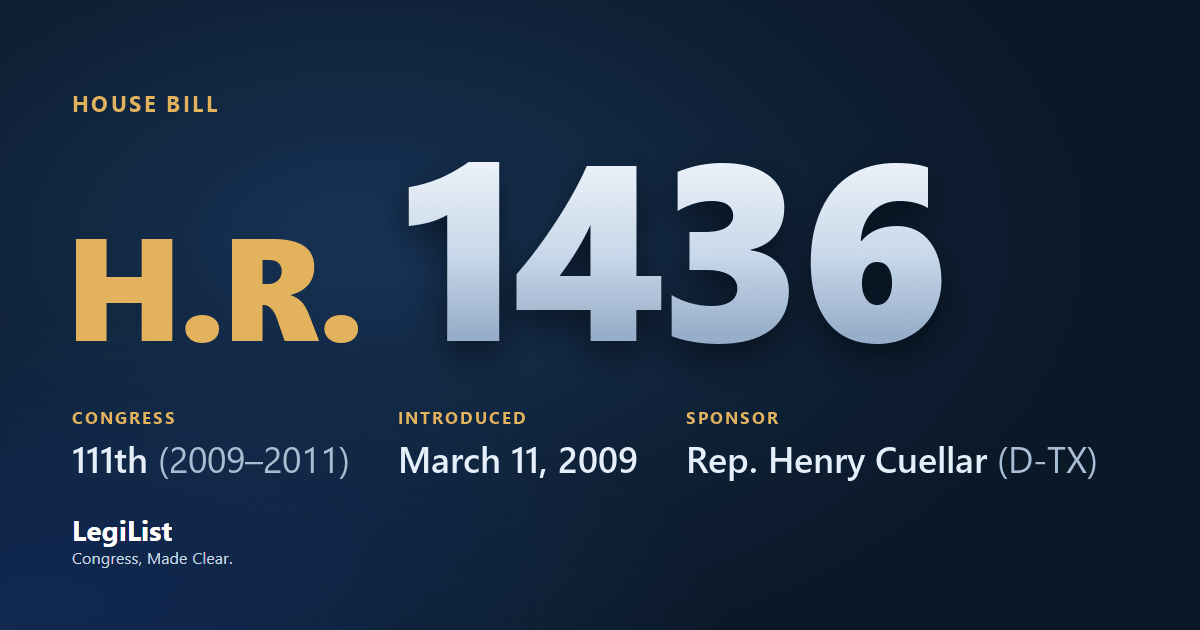
Government Efficiency, Effectiveness, and Accountability Act
Latest action · May 4, 2009 Referred to the Subcommittee on Government Management, Organization, and Procurement.
Progress
Where this bill reached, and when. A stage with no date was not reached; one that failed a vote and later carried shows the date it carried.
- IntroducedMar 11, 2009
- Passed HouseNot reached
- Passed SenateNot reached
- To the PresidentNot reached
- Became lawNot reached
Summary
Government Efficiency, Effectiveness, and Accountability Act - Expresses the sense of Congress that: (1) the President should establish government-wide strategic and performance plans; and (2) each federal agency head should consult with the congressional committees with jurisdiction over the agency at the beginning of each Congress regarding the agency's performance plan.
Requires each agency head to: (1) conduct an assessment of each agency program at least once every five fiscal years; (2) determine how assessment information can help save taxpayers money; (3) develop a plan for merging programs with duplicative missions; (3) identify program best practices for allocating resources; and (4) determine program performance levels and ways to improve low performance.
Requires assessment results and resulting agency actions to be submitted in a report to Congress at the same time the President submits the annual federal budget.
Requires the Director of the Office of Management and Budget (OMB) to: (1) develop a government-wide system to cross reference programs within each agency to make programs more effective and efficient; (2) provide notice of, and an opportunity for public comment on, each program to be assessed; and (3) develop a process for controlling the quality of program assessment data and certify the quality of such data.
Changes: (1) the date by which the heads of each federal agency are required to submit strategic plans for program activities to September 30 of each year following a presidential election; and (2) the period of coverage for strategic plans from five to four years.
Cosponsors
Members who signed on, in the order they did.
Actions 3
Everything that happened, newest first.
- May 4, 2009Referred to the Subcommittee on Government Management, Organization, and Procurement.
- Mar 11, 2009Introduced in House
- Mar 11, 2009Referred to the House Committee on Oversight and Government Reform.
Subjects
Assigned by the Library of Congress. Policy area: Government Operations and Politics.
Text 1
Each version as it was printed, newest first.
- Mar 11, 2009Introduced in House
Everything here is as published by Congress: the summary is the Congressional Research Service's, the action wording is the clerks', and the subjects are the Library of Congress's. How far it got is read from the actions themselves, taking the most recent one of each kind, so a bill that failed a vote and later passed is shown as having passed. Records come from this bill on Congress.gov and govinfo.gov.