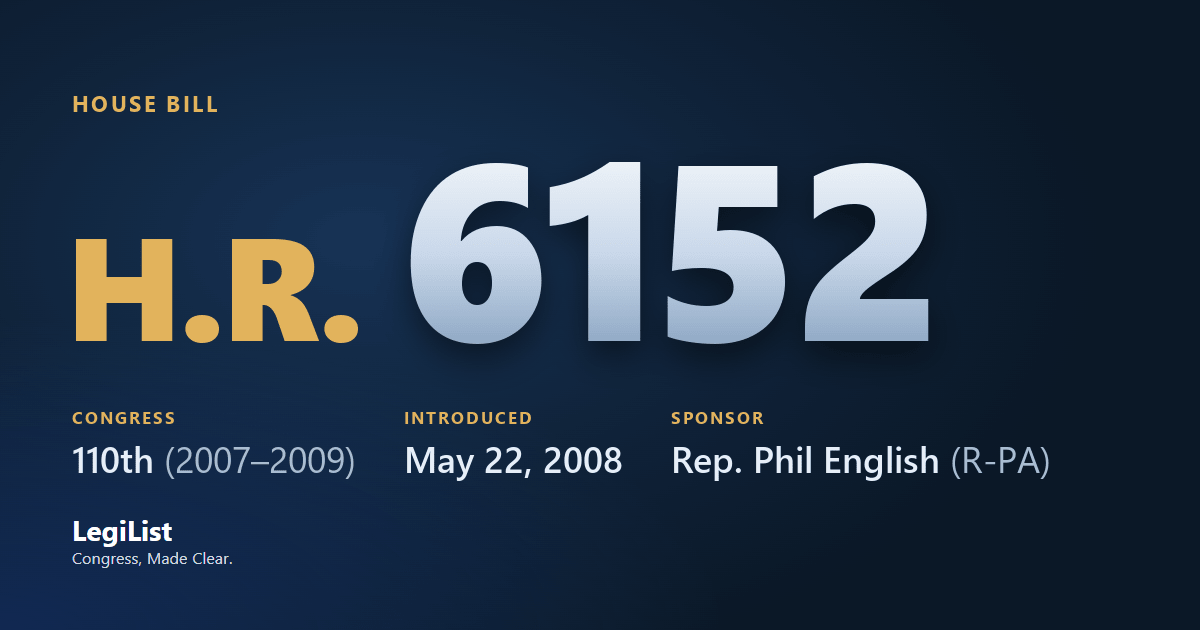
Family Relief and Economic Stimulus Act
Latest action · Jun 2, 2008 Referred to the Subcommittee on Income Security and Family Support.
Progress
Where this bill reached, and when. A stage with no date was not reached; one that failed a vote and later carried shows the date it carried.
- IntroducedMay 22, 2008
- Passed HouseNot reached
- Passed SenateNot reached
- To the PresidentNot reached
- Became lawNot reached
Summary
Family Relief and Economic Stimulus Act - Allows federal-state agreements for payment of emergency unemployment compensation to individuals who have exhausted their rights to such compensation.
Amends the Internal Revenue Code to: (1) allow individuals who are facing foreclosure to make penalty-free withdrawals from tax-exempt retirement plans; (2) extend through 2008 the tax deduction for dividends received from controlled foreign corporations; (3) suspend the excise tax on gasoline, diesel fuel, and kerosene for a specified period in 2008; and (4) adjust the basis of certain capital assets for inflation for purposes of determining gain or loss for income tax purposes.
Provides additional funding to state and local governments for the redevelopment of abandoned and foreclosed upon residences and for the weatherization of homes of low-income families.
Cosponsors 1
Members who signed on, in the order they did. All signed on May 22, 2008.
| Seat | Cosponsor | Signed on | |
|---|---|---|---|
| R-PA | Jim Gerlach | Original | May 22, 2008 |
Committees 2
Where it was sent and what each committee and subcommittee did with it, in order.
| Chamber | Committee | What it did |
|---|---|---|
| House | Ways and Means Committee | Referred May 22, 2008 |
| Work and Welfare Subcommittee | Referred Jun 2, 2008 | |
| House | Financial Services Committee | Referred May 22, 2008 |
Actions 3
Everything that happened, newest first.
- Jun 2, 2008Referred to the Subcommittee on Income Security and Family Support.
- May 22, 2008Introduced in House
- May 22, 2008Referred to the Committee on Ways and Means, and in addition to the Committee on Financial Services, for a period to be subsequently determined by the Speaker, in each case for consideration of such provisions as fall within the jurisdiction of the committee concerned.
Research
What has been written about this bill: committee reports, cost estimates, the sponsor’s authority statement, printed hearings and the Congressional Research Service’s work.
CRS reports 1
Congressional Research Service work that CRS links to this bill or the law it became, newest first.
Cite it 1
Products on other subjects that cite it, usually among other measures.
| Product | Title | Kind | Published |
|---|---|---|---|
| R48948 | Suspension of the Federal Gas Tax: In Brief | Report | Oct 13, 2026 |
Titles 2
Every title it has carried, official and short, at each stage.
- Official Title as Introduced
- To stimulate the economy of the United States and provide financial relief to low-income families in the United States.
- Short Titles as Introduced
- Family Relief and Economic Stimulus Act
Subjects
Assigned by the Library of Congress. Policy area: Economics and Public Finance.
- Capital gains tax
- Diesel motor
- Dividends
- Economics and Public Finance
- Energy
- Energy conservation
- Energy efficiency
- Excise tax
- Federal aid to housing
- Federal-state relations
- Finance and Financial Sector
- Foreclosure
- Foreign corporations
- Gasoline
- Government Operations and Politics
- Home repair and improvement
- Housing and Community Development
- Housing finance
- Income tax
- Individual retirement accounts
- Inflation
- Labor and Employment
- Losses
- Low-income housing
- Real estate development
- Residential rehabilitation
- Social Welfare
- Tax deductions
- Tax exclusion
- Tax exemption
- Taxation
- Transportation and Public Works
- Unemployment insurance
- Valuation
Text 1
Each version as it was printed, newest first.
- May 22, 2008Introduced in House
Everything here is as published by Congress: the summary is the Congressional Research Service's, the action wording is the clerks', and the subjects are the Library of Congress's. How far it got is read from the actions themselves, taking the most recent one of each kind, so a bill that failed a vote and later passed is shown as having passed. Records come from this bill on Congress.gov and govinfo.gov; cost estimates are the Congressional Budget Office's, and the hearings are the printed hearings GovInfo publishes, which can appear months after the hearing.