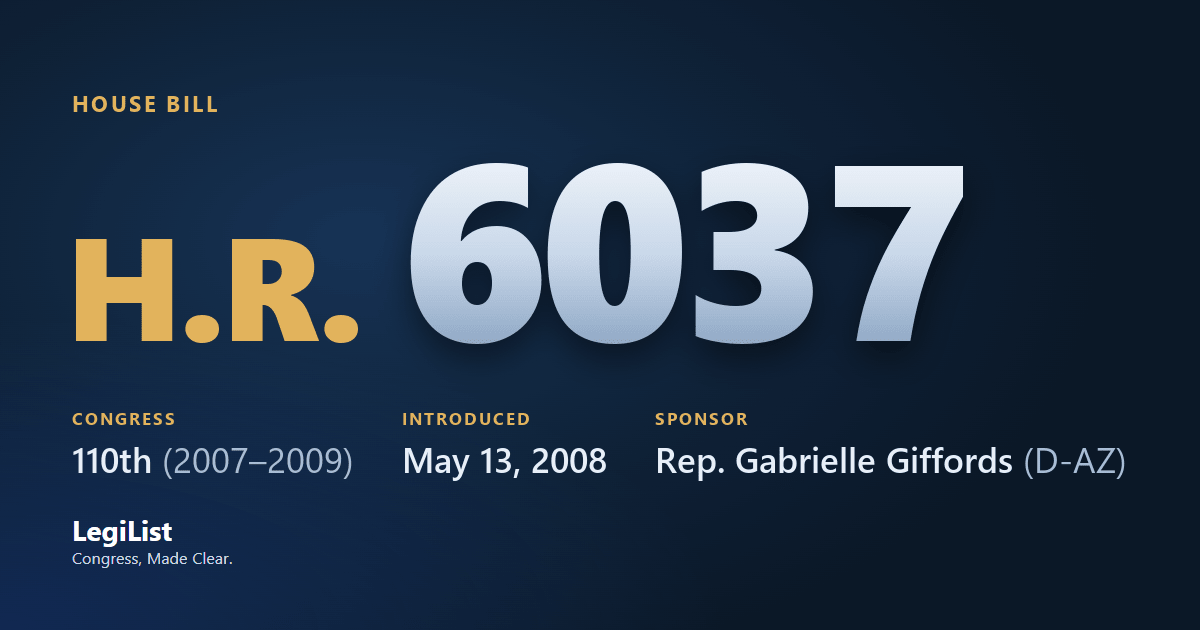
National Security Culture and Language Training Act
Latest action · May 23, 2008 Referred to the Subcommittee on Terrorism, Unconventional Threats and Capabilities.
Progress
Where this bill reached, and when. A stage with no date was not reached; one that failed a vote and later carried shows the date it carried.
- IntroducedMay 13, 2008
- Passed HouseNot reached
- Passed SenateNot reached
- To the PresidentNot reached
- Became lawNot reached
Summary
National Security Culture and Language Training Act - Establishes an: (1) Assistant Secretary of Defense for Irregular Warfare, Cultural Training, and Social Sciences Initiatives; and (2) Office of Irregular Warfare, Cultural Training, and Social Sciences Initiatives. Requires the Office to, among other things: (1) devise and implement a training doctrine that includes the development of cultural, sociological, and psychological knowledge and skills for members of the Armed Forces; and (2) use existing military cultural training programs to expand training efforts for all military personnel.
Authorizes the Secretary of the military department concerned (Secretary concerned) to pay: (1) a skill proficiency bonus to a regular or reserve member in training to acquire proficiency in a foreign language or expertise in foreign cultural studies or a related skill designated as critical by the Secretary concerned; and (2) incentive pay to a person enrolled in an officer training program to also participate in an education or training program to acquire such proficiency.
Directs the Secretary of Defense to conduct a pilot program to provide a skill proficiency bonus to a member of the reserves receiving compensation for inactive-duty training while participating in an education or training program to acquire such proficiency.
Cosponsors 2
Members who signed on, in the order they did. All signed on May 13, 2008.
| Seat | Cosponsor | Signed on | |
|---|---|---|---|
| D-NH | Carol Shea-Porter | Original | May 13, 2008 |
| D-GA | Henry C. "Hank" Johnson, Jr. | Original | May 13, 2008 |
Committees 1
Where it was sent and what each committee and subcommittee did with it, in order.
| Chamber | Committee | What it did |
|---|---|---|
| House | Armed Services Committee | Referred May 13, 2008 |
| Intelligence and Special Operations Subcommittee | Referred May 23, 2008 |
Actions 3
Everything that happened, newest first.
- May 23, 2008Referred to the Subcommittee on Terrorism, Unconventional Threats and Capabilities.
- May 13, 2008Introduced in House
- May 13, 2008Referred to the House Committee on Armed Services.
Titles 2
Every title it has carried, official and short, at each stage.
- Official Title as Introduced
- To amend titles 10 and 37, United States Code, to create the position of Assistant Secretary of Defense for Irregular Warfare, Cultural Training, and Social Science Initiatives and to authorize a new skill incentive pay and proficiency bonus to encourage members of the Armed Forces to train in critical foreign languages and foreign cultural studies.
- Short Titles as Introduced
- National Security Culture and Language Training Act
Subjects
Assigned by the Library of Congress. Policy area: Armed Forces and National Security.
- Area studies
- Armed Forces and National Security
- Armed forces reserves
- Arts, Culture, Religion
- Cultural relations
- Department of Defense
- Education
- Executive reorganization
- Fringe benefits
- Government Operations and Politics
- Health
- Higher education
- Labor and Employment
- Language and languages
- Military pay
- Military personnel
- Military training
- Officer personnel
- Psychology
- Sociology
- Unconventional warfare
Text 1
Each version as it was printed, newest first.
- May 13, 2008Introduced in House
Support LegiList
This page is free, carries no paywall, and is built and maintained by one person. If the record here is useful to you, a few dollars keeps it going.
Everything here is as published by Congress: the summary is the Congressional Research Service's, the action wording is the clerks', and the subjects are the Library of Congress's. How far it got is read from the actions themselves, taking the most recent one of each kind, so a bill that failed a vote and later passed is shown as having passed. Records come from this bill on Congress.gov and govinfo.gov; cost estimates are the Congressional Budget Office's, and the hearings are the printed hearings GovInfo publishes, which can appear months after the hearing.