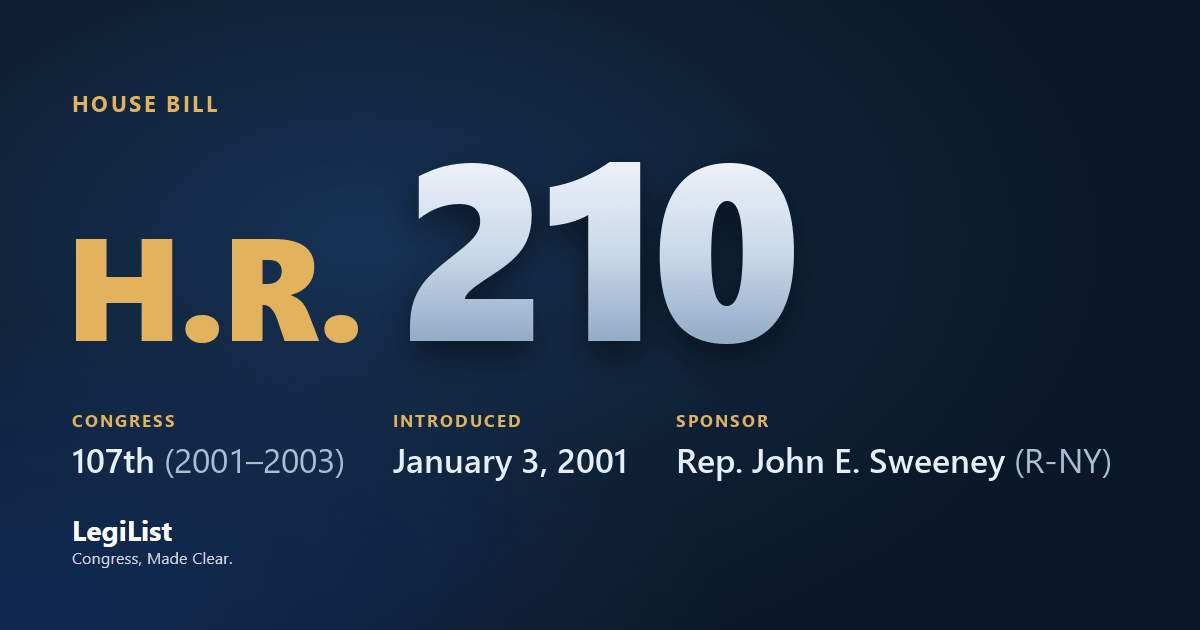
Social Security Decedent's Family Relief Act of 2001
Latest action · Feb 7, 2001 Referred to the Subcommittee on Social Security.
Progress
Where this bill reached, and when. A stage with no date was not reached; one that failed a vote and later carried shows the date it carried.
- IntroducedJan 3, 2001
- Passed HouseNot reached
- Passed SenateNot reached
- To the PresidentNot reached
- Became lawNot reached
Summary
Provides that such individual's benefit shall be payable for such month only in proportion to the number of days preceding the date of such individual's death.
Provides for disregard of such benefits for the individual for the month of death under provisions for determining maximum family benefits.
Cosponsors 6
Members who signed on, in the order they did. Signatures ran from Feb 6, 2001 to Feb 26, 2002.
| Seat | Cosponsor | Signed on | |
|---|---|---|---|
| R-OH | Paul E. Gillmor | Feb 6, 2001 | |
| D-WV | Nick J. Rahall II | May 15, 2001 | |
| R-AZ | J. D. Hayworth | May 21, 2001 | |
| D-CA | Bob Filner | Jun 5, 2001 | |
| D-FL | Alcee L. Hastings | Jul 24, 2001 | |
| R-PA | George W. Gekas | Feb 26, 2002 |
Actions 3
Everything that happened, newest first.
- Feb 7, 2001Referred to the Subcommittee on Social Security.
- Jan 3, 2001Introduced in House
- Jan 3, 2001Referred to the House Committee on Ways and Means.
Subjects
Assigned by the Library of Congress. Policy area: Social Welfare.
Everything here is as published by Congress: the summary is the Congressional Research Service's, the action wording is the clerks', and the subjects are the Library of Congress's. How far it got is read from the actions themselves, taking the most recent one of each kind, so a bill that failed a vote and later passed is shown as having passed. Records come from this bill on Congress.gov and govinfo.gov.