Proclamation
Imposing a Temporary Import Surcharge To Address Fundamental International Payments Problems
Document ID
doc_600980b1ea85de0b
Number
2026-03824
Citation
91 FR 9339
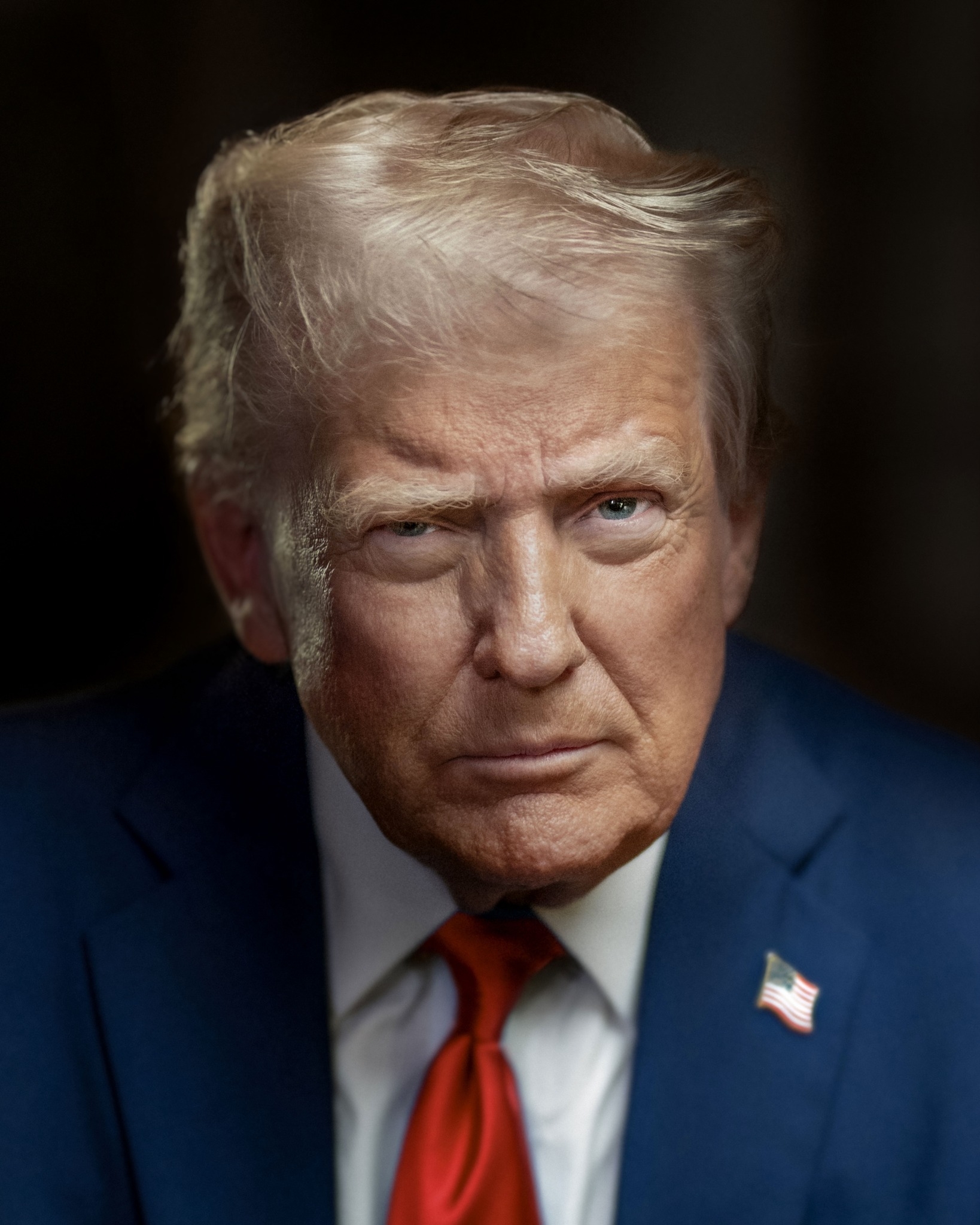
Context
- TypeProclamation
- President Donald J. Trump
- IssuedFebruary 20, 2026
- PublishedFebruary 25, 2026
Summary
Proclamation: Imposing a Temporary Import Surcharge To Address Fundamental International Payments Problems
Document Text
Proclamation 11012 of February 20, 2026

Imposing a Temporary Import Surcharge To Address
Fundamental International Payments Problems

By the President of the United States of America

A Proclamation

1. The United States plays a pivotal role in shaping
the global economy. At the same time, the United States
faces various threats to its own economy and national
interests. Sometimes, the United States faces
fundamental international payments problems, such as
large and serious balance-of-payments deficits, an
imminent and significant depreciation of its currency
in foreign exchange markets, or an international
balance-of-payments disequilibrium. These problems can,
among other things, endanger the ability of the United
States to finance its spending, erode investor
confidence in the economy, and distress the financial
markets.

2. Special import measures to restrict imports, such as
surcharges and quotas, are key tools to protect the
economy and national security of the United States,
and, in certain circumstances, they are required to
deal with fundamental international payments problems.

3. Given the gravity of fundamental international
payments problems and the importance of import
restrictions as economic, national security, and
foreign policy tools, Federal law, including section
122 of the Trade Act of 1974 (19 U.S.C. 2132) (section
122), empowers the President to take action through
surcharges and other special import restrictions to
address fundamental international payments problems.

4. I have received certain requested information and
opinions from senior officials on whether any
fundamental international payments problems exist and
the extent to which such problems could impair United
States national interests, including economic and
national security interests. The information and
opinions discuss, among other things, the state of the
balance of payments of the United States, the standing
of the United States dollar in foreign exchange
markets, and the state of international balances of
payments. I have also received opinions and
recommendations from senior officials on whether
special import measures to restrict imports are
required to address any fundamental international
payments problems. These opinions address, among other
things, whether a surcharge in the form of ad valorem
duties is required to restrict imports to deal with
large and serious United States balance-of-payments
deficits, to prevent an imminent and significant
depreciation of the United States dollar in foreign
exchange markets, or to cooperate with other countries
in correcting an international balance-of-payments
disequilibrium.

5. These senior officials have informed me that
fundamental international payments problems within the
meaning of section 122 exist and that special import
measures to restrict imports are required to address
these problems. Specifically, my advisors have
determined that an import surcharge in the form of ad
valorem duties is required to deal with large and
serious United States balance-of-payments deficits. My
advisors have also opined that certain products should
not be subject to the surcharge because of the needs of
the United States economy and that the recommended
exceptions are consistent with the limitations of
section 122, the purposes of section 122, and the
national interest of the United States.

6. Among other things, I have been informed by my
advisors that the United States balance-of-payments
position, under any reasonable understanding of the
term in the context of section 122, is currently a
large and serious deficit. My advisors have studied
different methods of evaluating balance-of-payments
deficits, including calculations based on current-
account statistics. In my advisors' opinions, under any
of these methods, the United States balance-of-payments
position is a large and serious deficit.

7. For instance, my advisors have informed me that the
United States runs a deficit in selling goods and
services overseas, as reported by the United States
Bureau of Economic Analysis (BEA) in the ``balance on
goods and services''; has recently reflected quarterly
deficits in its return on investment or labor, as
reported by the BEA in the ``balance on primary
income''; and runs a deficit in voluntary transfers,
such as remittances, as reported by the BEA in the
``balance on secondary income.'' In other words, the
United States runs a trade deficit, does not currently
make a net income from the capital and labor that it
deploys abroad, and experiences more transfer payments,
on net, flowing out of the country than into the
country.

8. As my advisors have informed me, the United States
runs a substantial trade deficit. The large,
persistent, and serious annual United States goods
trade deficit has grown by over 40 percent in the past
5 years alone, reaching $1.2 trillion in 2024. In 2025,
the United States goods trade deficit remained at
approximately $1.2 trillion. The effects of this
deficit are serious, and this deficit contributes to
the fundamental international payments problems facing
the United States.

9. As my advisors have also informed me, the annual
balance on the United States primary income turned
negative for the first time since at least 1960 in
2024. From 1960 to 2023, the United States ran a
surplus in its annual balance on primary income. That
positive balance on primary income served as a
stabilizing force for the United States balance-of-
payments position even in the face of large and
persistent trade deficits. In 2024, however, the
balance on primary income turned negative and thus
ceased to serve as a counterweight to the trade deficit
in the United States current account. Indeed, in 2024,
the United States maintained a current account deficit
of 4.0 percent of gross domestic product (GDP), almost
double the current account deficit of approximately 2.0
percent that prevailed between 2013 and 2019, and
larger than that which prevailed from 2019 to 2023. As
a share of GDP, the staggering deficit of 4.0 percent
represented the biggest annual current account deficit
since 2008.

10. As my advisors have also informed me, the net
international-investment position of the United States
is in an ongoing decline. According to the BEA, at the
end of 2024, the net international-investment position
of the United States, as a share of GDP, was negative
90 percent, a sharp deterioration from the average of
negative 41 percent in the decade between 2010 and
2020. In my advisors' view, this is a highly atypical
position for a country, particularly the United States.
Indeed, both in terms of United States dollars and as a
share of GDP, this represents one of the most negative
net international-investment positions of any developed
country. Because the current account is one of the
primary drivers of changes in the net international-
investment position, the atypically large negative net
international-investment position of the United States
shows that the United States balance-of-payments
deficit is large and serious.

11. Further, as my advisors have informed me, the
balance on secondary income of the United States has
been persistently in a deficit since the 1960s.

12. According to my advisors, an import surcharge in
the form of ad valorem duties is required to address
these fundamental international payments problems. In
my advisors' opinions, imposing an import surcharge
would deal with the large and serious United States
balance-of-payments deficit. My advisors have further
recommended that certain products should not be subject
to the surcharge because of the needs of the United
States economy

and have opined that a surcharge with certain
exceptions would more effectively deal with the
balance-of-payments deficit than would a surcharge
without the exceptions.

13. After considering the information, opinions, and
recommendations that have been provided to me by senior
officials, among other relevant information and
considerations, I find that fundamental international
payments problems within the meaning of section 122
exist; that those problems significantly harm United
States national interests, including economic and
national security interests; and that special measures
to restrict imports are required to address those
problems, as authorized by section 122. Specifically, I
find that a surcharge in the form of ad valorem duties
on certain imports is required to deal with the United
States' large and serious balance-of-payments deficit.
Accordingly, I impose, for a period of 150 days, a
temporary import surcharge of 10 percent ad valorem, as
described below, on articles imported into the United
States, effective February 24, 2026.

14. Because of the needs of the United States economy,
I determine that the surcharge imposed in this
proclamation shall not apply to the following products,
as further detailed in Annexes I and II to this
proclamation:

(a) certain critical minerals;

(b) metals used in currency and bullion;

(c) energy and energy products;

(d) natural resources and fertilizers that cannot be
grown, mined, or otherwise produced in the United
States or grown, mined, or otherwise produced in
sufficient quantities to meet domestic demand;

(e) certain agricultural products, including beef,
tomatoes, and oranges;

(f) pharmaceuticals and pharmaceutical ingredients;

(g) certain electronics;

(h) passenger vehicles, certain light trucks, certain
medium- and heavy-duty vehicles, buses, and certain
parts of passenger vehicles, light trucks, medium- and
heavy-duty vehicles, and buses;

(i) certain aerospace products;

(j) information materials, donations, and accompanied
baggage;

(k) all articles and parts of articles currently or
that later become subject to additional import
restrictions imposed pursuant to section 232 of the
Trade Expansion Act of 1962, as amended (19 U.S.C.
1862) (section 232);

(l) articles that are entered free of duty as a good of
Canada or Mexico under the terms of general note 11 to
the Harmonized Tariff Schedule of the United States
(HTSUS), including any treatment set forth in
subchapter XXIII of chapter 98 and subchapter XXII of
chapter 99 of the HTSUS, as related to the Agreement
between the United States of America, United Mexican
States, and Canada; and

(m) textile and apparel articles that are entered free
of duty as a good of Costa Rica, the Dominican
Republic, El Salvador, Guatemala, Honduras, or
Nicaragua under the Dominican Republic-Central America
Free Trade Agreement.

15. I find that each exception described in paragraph
14 of this proclamation--in whole or in part,
separately or in any combination--is consistent with
the limitations of section 122. These exceptions, which
are further detailed in Annexes I and II to this
proclamation, reflect my determination that each
product covered by each exception should not be subject
to a surcharge because of (1) the unavailability of
domestic supply at reasonable prices, the necessary
importation of raw materials, the avoidance of serious
dislocations in the supply of imported goods, or other
similar factors; or (2) the fact that the surcharge
would be unnecessary or ineffective in carrying out the
purposes of section 122, such as with respect to
articles already

subject to import restrictions or goods in transit,
which--for purposes of this proclamation--are goods
that (i) were loaded onto a vessel at the port of
loading and in transit on the final mode of transit
prior to entry into the United States, before 12:01
a.m. eastern standard time on February 24, 2026; and
(ii) are entered for consumption, or withdrawn from
warehouse for consumption, before 12:01 a.m. eastern
standard time, February 28, 2026. I have determined
that each exception described in paragraph 14 of this
proclamation--in whole or in part, separately or in any
combination--is consistent with the purposes of section
122 and will best serve the purposes of section 122.
Each of my determinations to except an import from the
surcharge imposed in this proclamation is independent
from the other. The import-restricting action and the
exceptions in this proclamation are not made for the
purpose of protecting individual domestic industries
from import competition.

16. In my judgment, the surcharge imposed in this
proclamation is consistent with the purposes of section
122, the national interest of the United States, and
the needs of the economy of the United States.
Restricting imports through the surcharge imposed in
this proclamation is required to address the
fundamental international payments problems within the
meaning of section 122 that I have found to exist. The
surcharge imposed in this proclamation will deal with
the large and serious United States balance-of-payments
deficit.

17. Section 122 authorizes the President to impose, for
a period not exceeding 150 days unless extended by an
Act of the Congress, a temporary import surcharge up to
15 percent ad valorem and other temporary limitations
on articles imported into the United States in
situations of fundamental international payments
problems.

18. Section 604 of the Trade Act of 1974, as amended
(19 U.S.C. 2483) (section 604), authorizes the
President to embody in the HTSUS the substance of
statutes affecting import treatment, and actions
thereunder, including the removal, modification,
continuance, or imposition of any rate of duty or other
import restriction.

NOW, THEREFORE, I, DONALD J. TRUMP, President of the
United States of America, by the authority vested in me
by the Constitution and the laws of the United States,
including section 122, section 301 of title 3, United
States Code, and section 604, do hereby proclaim as
follows:

(1) Except as otherwise provided in this proclamation, as set forth in
Annexes I and II to this proclamation, all articles imported into the
United States shall be subject to a 10 percent ad valorem duty rate.

(2) The surcharge imposed in this proclamation shall not apply to imports
of articles listed in paragraph 2 of Annex I to this proclamation and as
enumerated in Annex II to this proclamation.

(3) Except as otherwise provided in this proclamation, the surcharge
imposed in this proclamation is in addition to any other duties, taxes,
fees, exactions, and charges applicable to such products.

(4) The surcharge imposed in this proclamation shall not apply in addition
to tariffs imposed under section 232. To the extent a tariff imposed under
section 232 applies to part of an import, the surcharge imposed in this
proclamation shall apply to the part of the import to which section 232
tariffs do not apply but shall not apply to the part of the import to which
section 232 tariffs do apply.

(5) The surcharge imposed in this proclamation shall be treated as a
regular customs duty.

(6) Any article subject to the surcharge imposed in this proclamation,
except those articles eligible for admission under ``domestic status'' as
described in 19 CFR 146.43, that is subject to the surcharge imposed in
this proclamation and that is admitted into a United States foreign trade
zone on or after the effective date of this proclamation must be

admitted as ``privileged foreign status,'' as described in 19 CFR 146.41,
and will be subject upon entry for consumption to any ad valorem rate of
duty related to the classification under the applicable HTSUS subheading.

(7) The HTSUS shall be modified as provided in Annex I to this
proclamation. The modifications shall be effective with respect to goods
entered for consumption, or withdrawn from warehouse for consumption, on or
after 12:01 a.m. eastern standard time on February 24, 2026, and shall
continue in effect through 12:01 a.m. eastern daylight time on July 24,
2026, unless the surcharge imposed in this proclamation is expressly
suspended, modified, or terminated on an earlier date, or unless the
effective period of such surcharge is extended by an Act of the Congress.

(8) The head of each executive department and agency (agency) is authorized
to and shall take all appropriate measures within the agency's authority to
implement this proclamation. The head of each agency may, consistent with
applicable law, including section 301 of title 3, United States Code,
redelegate the authority to take such appropriate measures within the
agency.

(9) The United States Trade Representative (Trade Representative), in
consultation with any senior official he deems appropriate, shall monitor
and review the status of conditions related to the fundamental
international payments problems of the United States, the effect of the
surcharge imposed in this proclamation, and any factors he deems relevant.
The Trade Representative shall also inform the President of any
circumstance that, in the Trade Representative's opinion, might indicate
the need for further action by the President, including under section 122.
And the Trade Representative shall inform the President of any circumstance
that, in the Trade Representative's opinion, might indicate that the
surcharge imposed in this proclamation should be suspended, modified, or
terminated.

(10) The Trade Representative, in consultation with the Chair of the United
States International Trade Commission and the Commissioner of U.S. Customs
and Border Protection (CBP), shall determine whether any additional
modifications to the HTSUS are necessary to effectuate this proclamation
and shall make such modifications to the HTSUS through notice in the
Federal Register, including any technical correction to Annexes I and II to
this proclamation.

(11) The Commissioner of CBP may take any necessary or appropriate measures
to administer the surcharge imposed by this proclamation.

(12) (a) Any provision of previous proclamations and Executive Orders that
is inconsistent with this proclamation is superseded to the extent of such
inconsistency. If any provision of this proclamation or the application of
any provision to any individual or circumstance is held to be invalid, the
remainder of this proclamation and the application of its provisions to any
other individuals or circumstances shall not be affected.

(b) If any exception to the surcharge imposed in this
proclamation is held to be invalid in whole or in part,
only that exception or that part of the exception shall
be treated as invalid. The surcharge imposed in this
proclamation shall apply to imports to which the
invalidated exception or the invalidated part of the
exception applied before its invalidation, but to the
extent consistent with law, the surcharge shall be
collected only prospectively from the date of the
invalidation. No other exception, part of an exception,
or application of an exception shall be treated as
invalid. This severability provision shall operate even
if the surcharge must be applied retroactively to
imports to which the invalidated exception or the
invalidated part of the exception applied before its
invalidation. I would adopt each exception in this
proclamation in whole or in part, separately, or in any
combination. Each exception, in whole or in part, in
this proclamation is supported by the needs of the
United States economy and one or more of the factors
described in section 122 and is consistent with the
national interest of the United States and the purposes
of section 122.

(c) This severability provision reflects my
determination that the surcharge imposed in this
proclamation should remain operative until July 24,
2026, in a way that is consistent with law, including
the limitations of section 122, to deal with the large
and serious United States balance-of-payments deficits
found in this proclamation, regardless of whether any
exception or exceptions, in whole or in part, are
invalidated. The surcharge imposed in this
proclamation--with any combination of the exceptions in
paragraph 14 of this proclamation, or even without any
of the exceptions in paragraph 14 of this
proclamation--is required to deal with the large and
serious United States balance-of-payments deficits
found in this proclamation.

IN WITNESS WHEREOF, I have hereunto set my hand this
twentieth day of February, in the year of our Lord two
thousand twenty-six, and of the Independence of the
United States of America the two hundred and fiftieth.

[GRAPHIC] [TIFF OMITTED] TD25FE26.000

[GRAPHIC] [TIFF OMITTED] TD25FE26.001

[GRAPHIC] [TIFF OMITTED] TD25FE26.002

[GRAPHIC] [TIFF OMITTED] TD25FE26.003

[GRAPHIC] [TIFF OMITTED] TD25FE26.004

[GRAPHIC] [TIFF OMITTED] TD25FE26.005

[GRAPHIC] [TIFF OMITTED] TD25FE26.006

[GRAPHIC] [TIFF OMITTED] TD25FE26.007

[GRAPHIC] [TIFF OMITTED] TD25FE26.008

[GRAPHIC] [TIFF OMITTED] TD25FE26.009

[GRAPHIC] [TIFF OMITTED] TD25FE26.010

[GRAPHIC] [TIFF OMITTED] TD25FE26.011

[GRAPHIC] [TIFF OMITTED] TD25FE26.012

[GRAPHIC] [TIFF OMITTED] TD25FE26.013

[GRAPHIC] [TIFF OMITTED] TD25FE26.014

[GRAPHIC] [TIFF OMITTED] TD25FE26.015

[GRAPHIC] [TIFF OMITTED] TD25FE26.016

[GRAPHIC] [TIFF OMITTED] TD25FE26.017

[GRAPHIC] [TIFF OMITTED] TD25FE26.018

[GRAPHIC] [TIFF OMITTED] TD25FE26.019

[GRAPHIC] [TIFF OMITTED] TD25FE26.020

[GRAPHIC] [TIFF OMITTED] TD25FE26.021

[GRAPHIC] [TIFF OMITTED] TD25FE26.022

[GRAPHIC] [TIFF OMITTED] TD25FE26.023

[GRAPHIC] [TIFF OMITTED] TD25FE26.024

[GRAPHIC] [TIFF OMITTED] TD25FE26.025

[GRAPHIC] [TIFF OMITTED] TD25FE26.026

[GRAPHIC] [TIFF OMITTED] TD25FE26.027

[GRAPHIC] [TIFF OMITTED] TD25FE26.028

[GRAPHIC] [TIFF OMITTED] TD25FE26.029

[GRAPHIC] [TIFF OMITTED] TD25FE26.030

[GRAPHIC] [TIFF OMITTED] TD25FE26.031

[GRAPHIC] [TIFF OMITTED] TD25FE26.032

[GRAPHIC] [TIFF OMITTED] TD25FE26.033

[GRAPHIC] [TIFF OMITTED] TD25FE26.034

[GRAPHIC] [TIFF OMITTED] TD25FE26.035

[GRAPHIC] [TIFF OMITTED] TD25FE26.036

[GRAPHIC] [TIFF OMITTED] TD25FE26.037

[GRAPHIC] [TIFF OMITTED] TD25FE26.038

[GRAPHIC] [TIFF OMITTED] TD25FE26.039

[GRAPHIC] [TIFF OMITTED] TD25FE26.040

[GRAPHIC] [TIFF OMITTED] TD25FE26.041

[GRAPHIC] [TIFF OMITTED] TD25FE26.042

[GRAPHIC] [TIFF OMITTED] TD25FE26.043

[GRAPHIC] [TIFF OMITTED] TD25FE26.044

[GRAPHIC] [TIFF OMITTED] TD25FE26.045

[GRAPHIC] [TIFF OMITTED] TD25FE26.046

[GRAPHIC] [TIFF OMITTED] TD25FE26.047

[GRAPHIC] [TIFF OMITTED] TD25FE26.048

[GRAPHIC] [TIFF OMITTED] TD25FE26.049

[GRAPHIC] [TIFF OMITTED] TD25FE26.050

[GRAPHIC] [TIFF OMITTED] TD25FE26.051

[GRAPHIC] [TIFF OMITTED] TD25FE26.052

[GRAPHIC] [TIFF OMITTED] TD25FE26.053

[GRAPHIC] [TIFF OMITTED] TD25FE26.054

[GRAPHIC] [TIFF OMITTED] TD25FE26.055

[GRAPHIC] [TIFF OMITTED] TD25FE26.056

[GRAPHIC] [TIFF OMITTED] TD25FE26.057

[GRAPHIC] [TIFF OMITTED] TD25FE26.058

[GRAPHIC] [TIFF OMITTED] TD25FE26.059

[GRAPHIC] [TIFF OMITTED] TD25FE26.060

[GRAPHIC] [TIFF OMITTED] TD25FE26.061

[GRAPHIC] [TIFF OMITTED] TD25FE26.062

[GRAPHIC] [TIFF OMITTED] TD25FE26.063

[GRAPHIC] [TIFF OMITTED] TD25FE26.064

[GRAPHIC] [TIFF OMITTED] TD25FE26.065

[GRAPHIC] [TIFF OMITTED] TD25FE26.066

[GRAPHIC] [TIFF OMITTED] TD25FE26.067

[GRAPHIC] [TIFF OMITTED] TD25FE26.068

[GRAPHIC] [TIFF OMITTED] TD25FE26.069

[GRAPHIC] [TIFF OMITTED] TD25FE26.070

[GRAPHIC] [TIFF OMITTED] TD25FE26.071

[GRAPHIC] [TIFF OMITTED] TD25FE26.072

[GRAPHIC] [TIFF OMITTED] TD25FE26.073

[GRAPHIC] [TIFF OMITTED] TD25FE26.074

[GRAPHIC] [TIFF OMITTED] TD25FE26.075

[GRAPHIC] [TIFF OMITTED] TD25FE26.076

[GRAPHIC] [TIFF OMITTED] TD25FE26.077

[GRAPHIC] [TIFF OMITTED] TD25FE26.078

[GRAPHIC] [TIFF OMITTED] TD25FE26.079

[GRAPHIC] [TIFF OMITTED] TD25FE26.080

[GRAPHIC] [TIFF OMITTED] TD25FE26.081

[GRAPHIC] [TIFF OMITTED] TD25FE26.082

[GRAPHIC] [TIFF OMITTED] TD25FE26.083

[GRAPHIC] [TIFF OMITTED] TD25FE26.084

[GRAPHIC] [TIFF OMITTED] TD25FE26.085

[GRAPHIC] [TIFF OMITTED] TD25FE26.086

[GRAPHIC] [TIFF OMITTED] TD25FE26.087